When it lands
Users describe lively prose, faster turns, fewer generation wipes, and a result that can feel comparable to other mid-to-high tier chat models.
DeepSeek V4 Flash · roleplay field guide
DeepSeek V4 Flash can be a fast, low-cost RP model, yet community reports split sharply. Some users get lively prose and fewer rewrites. Others see filler, repeated details, stalled scenes, or a character that quietly changes its mind. This guide gives you a small test before you commit to a long chat.
Community reports are experience, not a benchmark. This page does not provide jailbreaks or instructions to bypass safety controls.
What users actually report
Recent r/SillyTavernAI discussions describe a model that can be detailed and creative, but inconsistent across presets, reasoning settings, and scenes.
Users describe lively prose, faster turns, fewer generation wipes, and a result that can feel comparable to other mid-to-high tier chat models.
Reports include repeating lights, smells, clothing, or body details while the plot stays still. Dialogue can become long without adding a decision or consequence.
A character may start well, then soften, explain itself, or ignore a constraint. Instruction following is often the first thing to check.
High or maximum reasoning can improve planning for some users, but it can also add latency and make a scene over-analyzed. Reasoning-disabled tests are worth running.
A 15-minute evaluation
Use the same character card, opening message, context length, and output cap for every run. Rate what the answer does, not how impressive one paragraph sounds.
Write five facts: character goal, voice, current location, what just changed, and one forbidden assumption. Ask for 250 to 450 words and one action that changes the scene.
Send the same opening with reasoning off, then with the model default or high setting. Do not swipe until you record the first answer. Continue each branch for two turns.
Give 0, 1, or 2 points for character voice, plot movement, instruction retention, and repetition control. A strong branch keeps the character specific and leaves you a clear next move.
Try one system prompt or preset change at a time. If temperature does not affect thinking mode, do not mistake a parameter change for a real experiment.
SillyTavern path
SillyTavern gives you character cards, lorebooks, presets, and group chat. The model endpoint and the frontend each add their own failure modes.
Preset names such as Frankenstein are community references. Get files from their authors and check the license. A preset is not a universal fix.
DeepSeek documents an OpenAI-compatible Chat Completions API. Confirm that your connector lists deepseek-v4-flash and is not using a leftover text-completion template.
Put the character facts and scene state in the card or system prompt. If you test a roleplay thinking instruction, put it in the first message and compare it against a clean control branch.
Run one branch with reasoning disabled and another with the available default or high setting. Record latency, length, and scene movement. Do not expose or treat hidden reasoning as a quality guarantee.
Add a short output rule such as “advance the scene with one concrete change; do not repeat sensory details from the last two turns.” Then test whether the model follows it.
Browser route
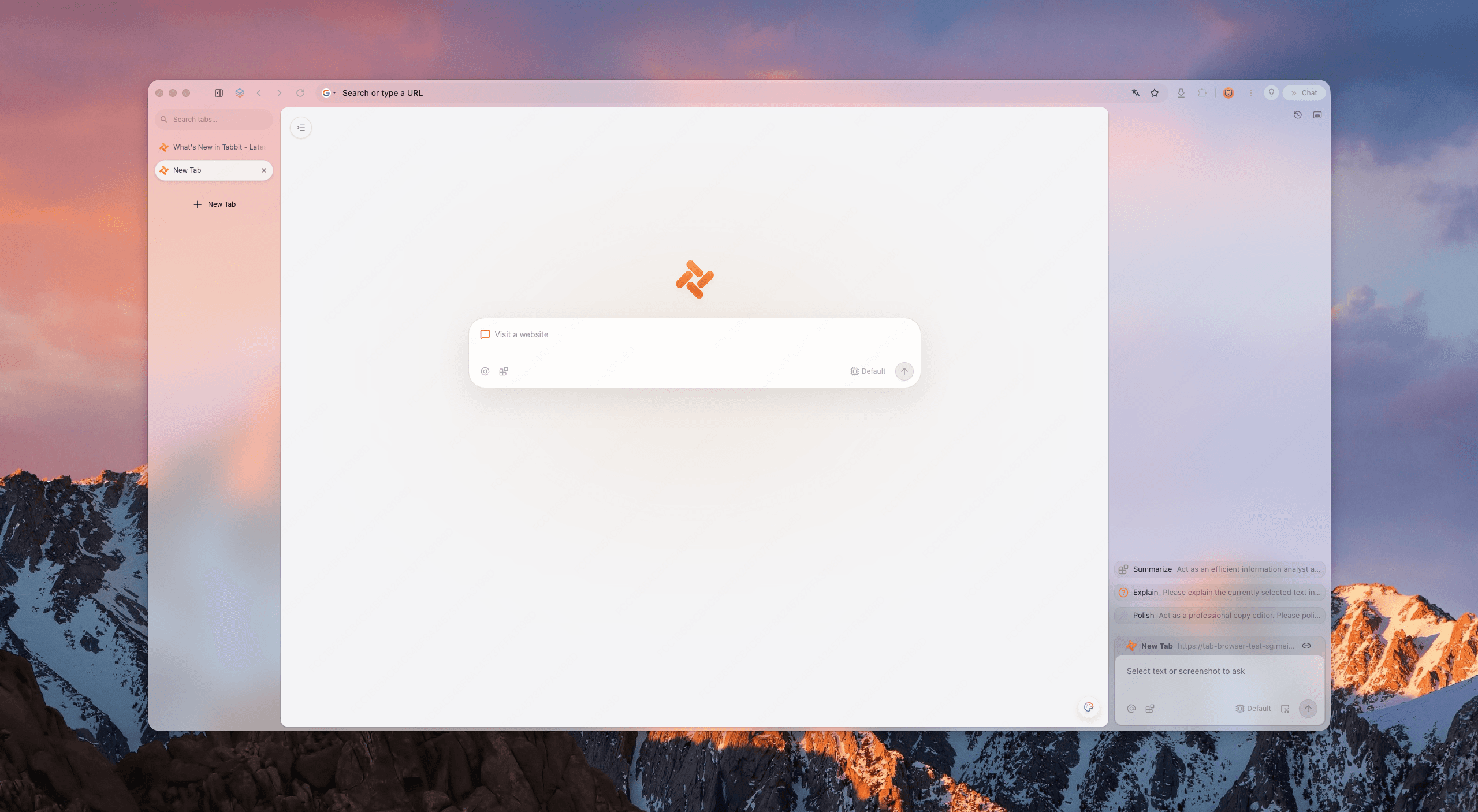
Tabbit keeps the browser and the conversation together. Choose DeepSeek V4 Flash in the in-product model selector when it is available for your edition, then bring a character wiki, setting sheet, or writing reference into the chat.
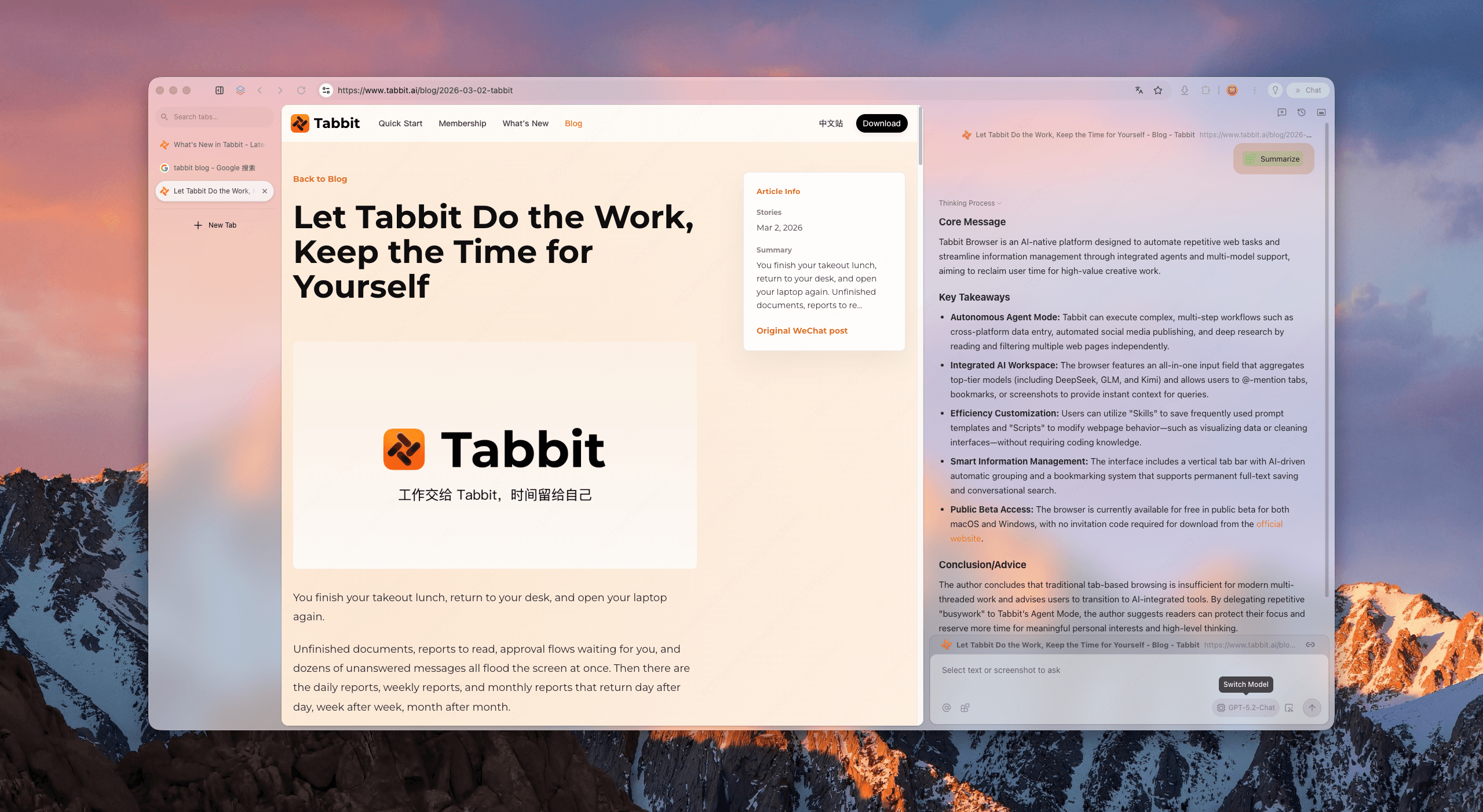
Keep the character sheet, lore page, or your own scene outline in a tab. You can work from the page instead of copying every paragraph into a chat box.
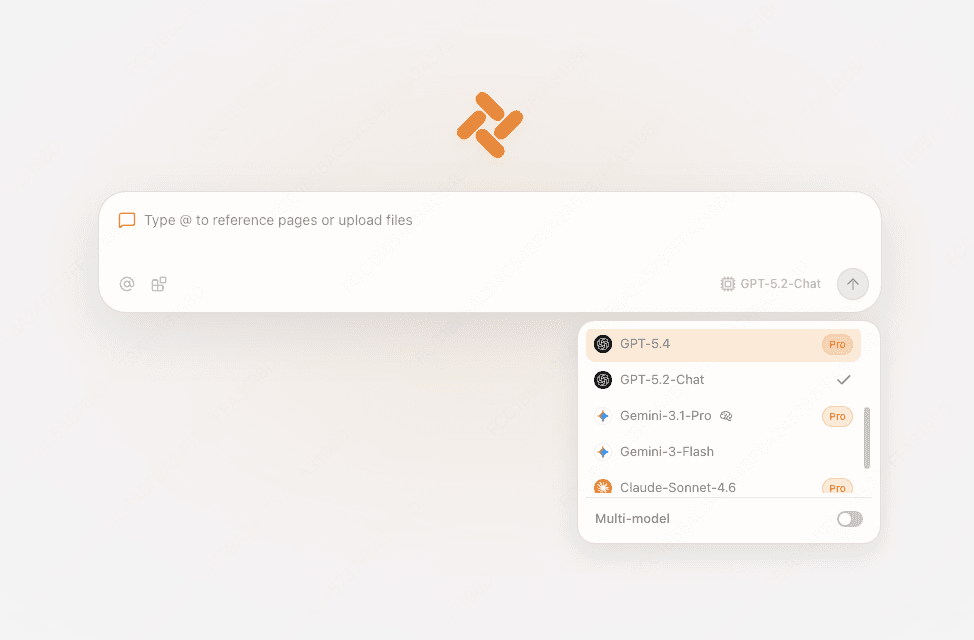
Open Tabbit’s model selector and choose DeepSeek V4 Flash if it appears. Availability can vary by edition, region, account, and rollout.
Type @ to reference an open tab, screenshot, or file. Ask for a short scene continuation, a consistency check, or a rewrite that keeps the page facts.
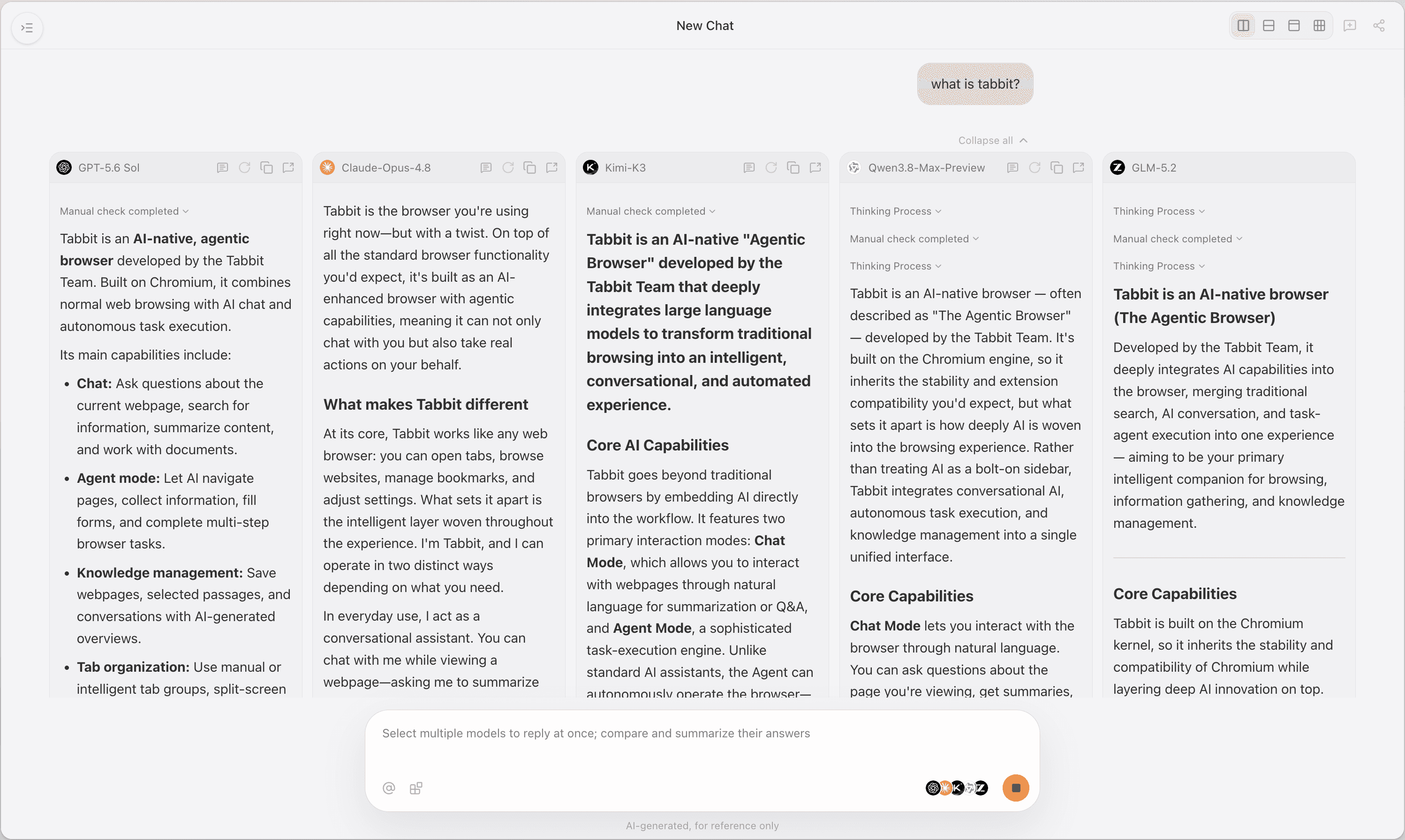
Use multi-model chat for a second opinion on voice or scene movement. Treat the screenshot as a product workflow example, not proof that every model is available in every account.
Pick the right front end
They solve different parts of the workflow. SillyTavern is the dedicated RP cockpit. Tabbit is useful when your character material already lives across web pages and files.
| Need | SillyTavern | Tabbit |
|---|---|---|
| Character cards and lorebooks | Built for it | Reference a page or file |
| Preset and prompt control | Deep control | System prompt and Skills |
| Web research beside RP | Extensions or copy and paste | Open tabs become context with @ |
| Model comparison | Configure providers or extensions | Multi-model chat in the browser |
| First setup | Frontend, endpoint, key, preset | Install, then check the model selector |
Tabbit
Compare a branch
01
Keep the character sheet, lore page, or your own scene outline in a tab. You can work from the page instead of copying every paragraph into a chat box.
02
Multi-model chat in the browser
03
Type @ to reference an open tab, screenshot, or file. Ask for a short scene continuation, a consistency check, or a rewrite that keeps the page facts.
Keep the claim honest
The Reddit threads mix versions, presets, reasoning settings, character cards, and personal taste. Use them as hypotheses for your own controlled test.
Agent or coding scores do not measure character voice, humor, pacing, or consistency in your card. Keep benchmark claims separate from RP impressions.
A roleplay guide can discuss boundaries and prompt behavior without helping evade safety systems. Write clear, legitimate scene limits instead.
The model selector is the source of truth for Tabbit. This page does not promise that DeepSeek V4 Flash is visible in every edition or account.
Read the evidence
The quotes and observations above come from public community discussions and official documentation. Open the source to see the full context.
FAQ
It can be. Community reports praise speed, price, lively prose, and some successful long chats, while other users report repetition, scene stalling, or weak instruction retention. Test your own card with a fixed three-turn comparison.
Repetition can come from the card, preset, context, or model behavior. Track repeated sensory details across turns, then change one variable and add a short scene-advancement rule.
There is no universal answer. High or maximum reasoning may help planning, but it can add delay or over-analysis. Compare one branch with reasoning disabled against one with the available default or high setting.
Yes, where your provider exposes the model. DeepSeek documents an OpenAI-compatible API, but the connector must list deepseek-v4-flash and use the endpoint mode it supports.
Choose DeepSeek V4 Flash in Tabbit’s model selector when it is available for your edition. Then reference a character page, tab, screenshot, or file with @. Availability is not identical for every account.
No. It covers legitimate prompt structure, evaluation, and scene boundaries. It does not provide instructions to bypass safety controls.
Install Tabbit for macOS or Windows, check the model selector, and bring your character material into a browser conversation.
Supported models and access terms may vary by edition and rollout.