What Is Harpa AI and What Are the Alternatives?
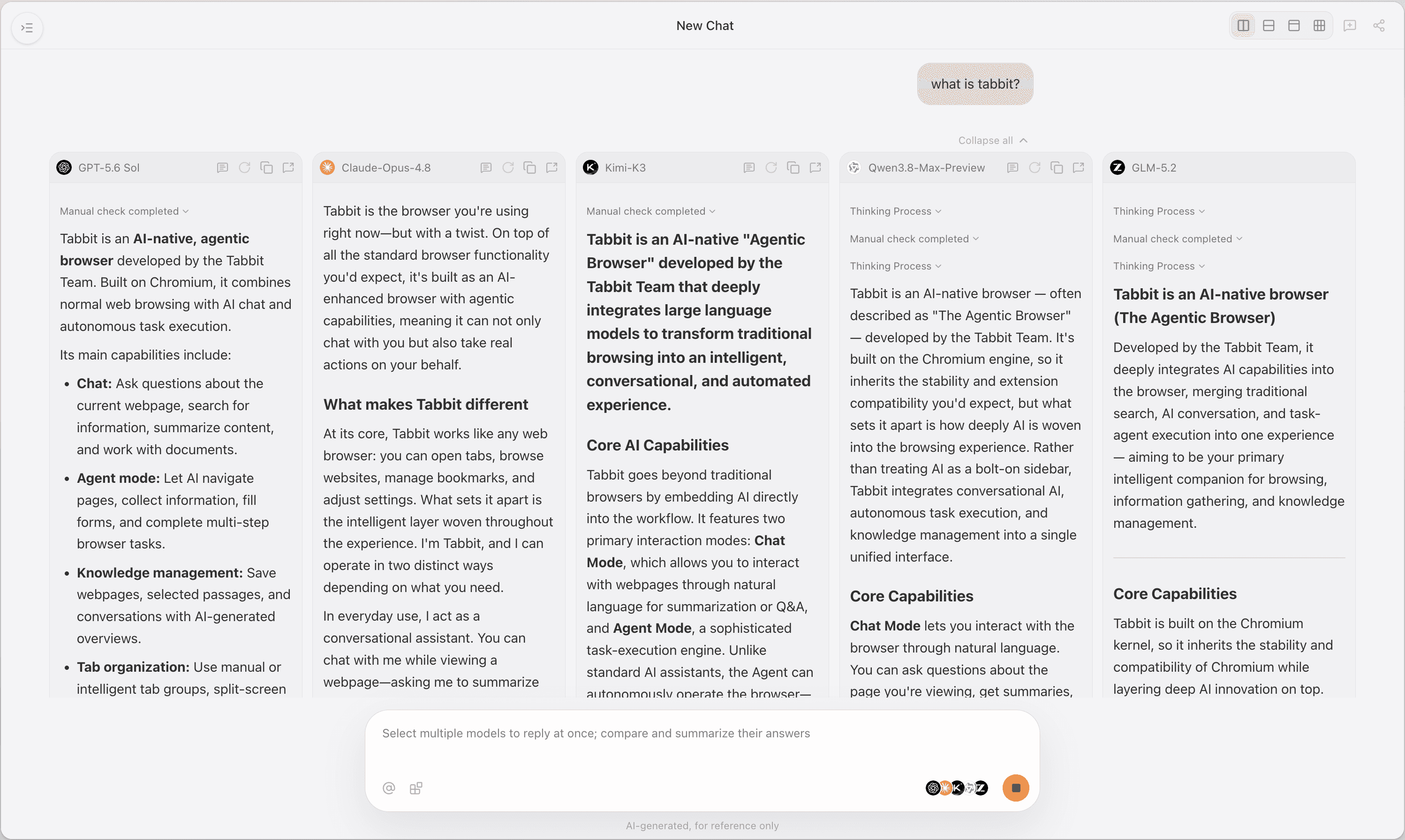
Harpa AI is a Chrome extension that adds a page-aware AI assistant to your browser — summarizing articles, drafting emails, scraping data, and automating repetitive web tasks. It's powerful, but it's also an extension layered on top of another browser. Tabbit is a native AI browser that does the same work with far less setup: no command syntax to learn, no separate model accounts to juggle.
Tabbit is a free AI-native browser for macOS & Windows. See how Harpa AI compares below, then try Tabbit for the same workflow without the learning curve.
What is Harpa AI?
Harpa AI (often written “harpa ia” in Spanish and Portuguese) is a browser extension, not a standalone browser. It sits inside Chrome or Edge and layers an AI assistant on top of the pages you visit. The name comes from “High Availability Robotic Process Automation.”
01
Hybrid AI engine
Connects to GPT, Claude, Gemini, DeepSeek, Perplexity and Llama — through web sessions, cloud tokens, or your own API keys.
02
Page-aware answers
Reads the page you're viewing so its answers have context, instead of replying from memory.
03
Web automation
Automates repetitive browser tasks like filling forms, extracting data, and monitoring page changes.
04
Writing & SEO tools
Generates articles, emails, social posts and SEO audits with a tone you can customize.
05
It's an add-on
Works inside Chrome or Edge, which means an extra layer of permissions, performance cost, and its own learning curve.
What can you do with Harpa AI?
In practice, Harpa AI is used for a handful of repeated tasks. Here's where it shines — and where a native browser can do the same work without the add-on.
Summarize long content
Turn hours-long YouTube videos, dense PDFs, and long blog posts into quick takeaways.
Draft emails and posts
Generate emails, tweets, LinkedIn posts, and cover letters in a tone that mimics your writing.
Extract and monitor data
Scrape structured data from websites, watch pages for updates, and track price drops.
Write and audit SEO content
Produce long articles and run SEO audits to find keywords and outrank competitors.
Answer questions about a page
Ask questions with the page as context, with source citations.
Automate repetitive workflows
Chain browser actions into scripts that fill forms, move data, and run on a schedule (on paid plans).
Where Harpa AI falls short
The same features that make Harpa AI powerful also make it hard to just sit down and use. These are the pain points users report most often.
Steep learning curve
Between Alt+A shortcuts, // commands, page-aware toggles, connection setup, and saved commands, there is a lot to learn before it feels productive.
Pricing is confusing
Free plans are limited, advanced automation needs a higher tier, and mixing web sessions, cloud tokens, and your own API keys makes the real cost hard to predict.
Extension permissions
As an extension it runs inside Chrome, adding permissions, potential performance overhead, and one more thing to update.
Multiple model accounts
To use it comfortably you often need accounts or keys for several AI providers, each with its own limits.
Harpa AI vs Tabbit: which should you use?
Both tools bring AI into your daily browsing. The difference is where that AI lives: Harpa AI is an extension layered on Chrome; Tabbit is a native browser with AI built in.
| Feature | Harpa AI | Tabbit Browser |
|---|---|---|
| Product type | Chrome/Edge extension | Native AI browser (macOS & Windows) |
| Installation | Install extension, create account, connect models | Download and open — models included |
| Page context | Page-aware mode you toggle | @ mention — what you see is the context |
| Agent automation | Advanced automation on higher plans | Built-in Agent Mode, runs in its own tab group |
| Models | BYO keys / web sessions / paid cloud tokens | Top models included free |
| Price | Free tier limited; paid from ~€14.6/mo | Free, no invite code |
| Learning curve | Commands, shortcuts, connections | Natural language in one omnibox |
| Workspaces | Depends on the host browser | Vertical tabs + auto tab groups |
Why Tabbit is the simpler AI browser
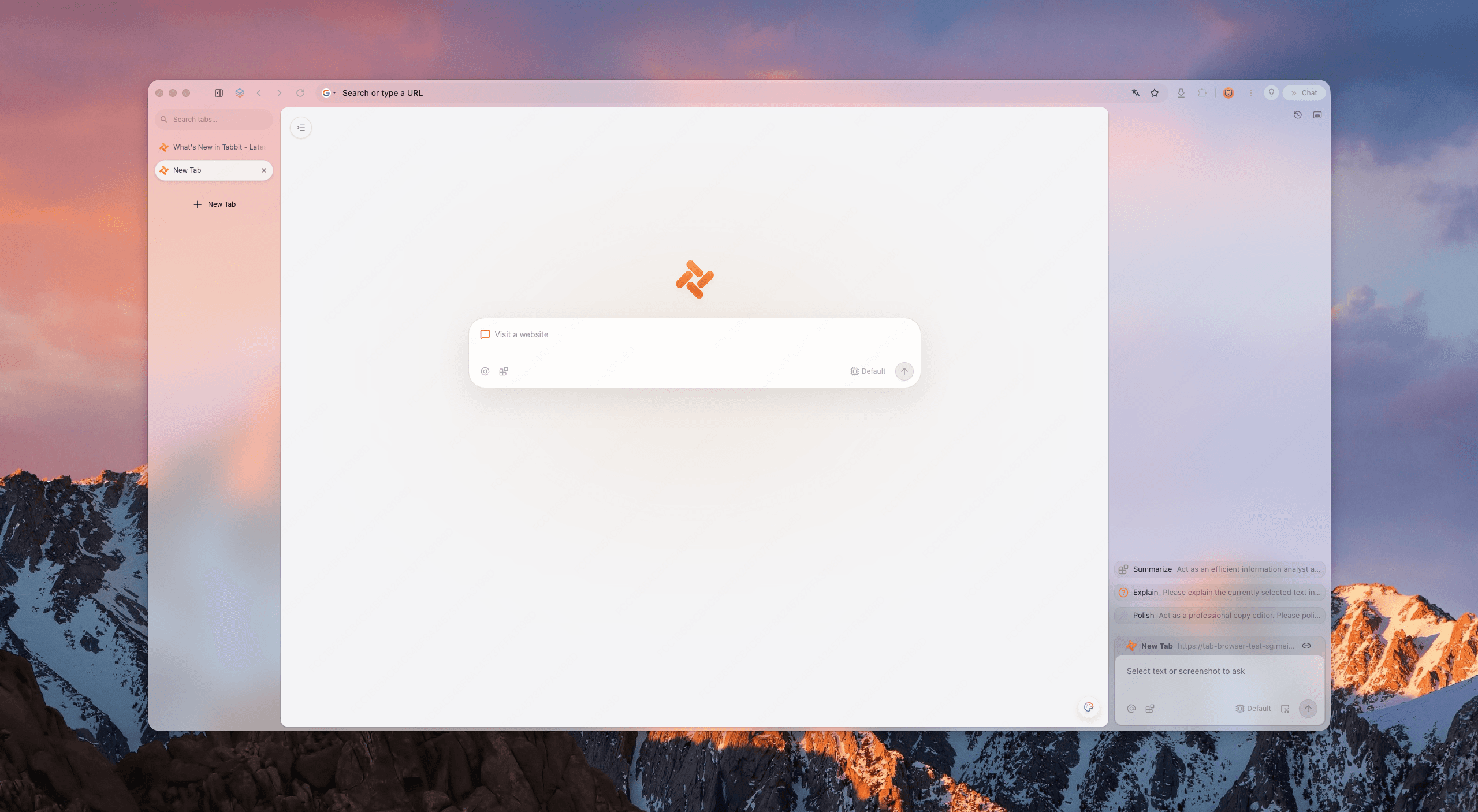
Tabbit was built as an AI-native browser from the ground up — not as a plugin. That means the AI is part of the browser itself, and the workflows Harpa AI needs commands for are just how you browse.
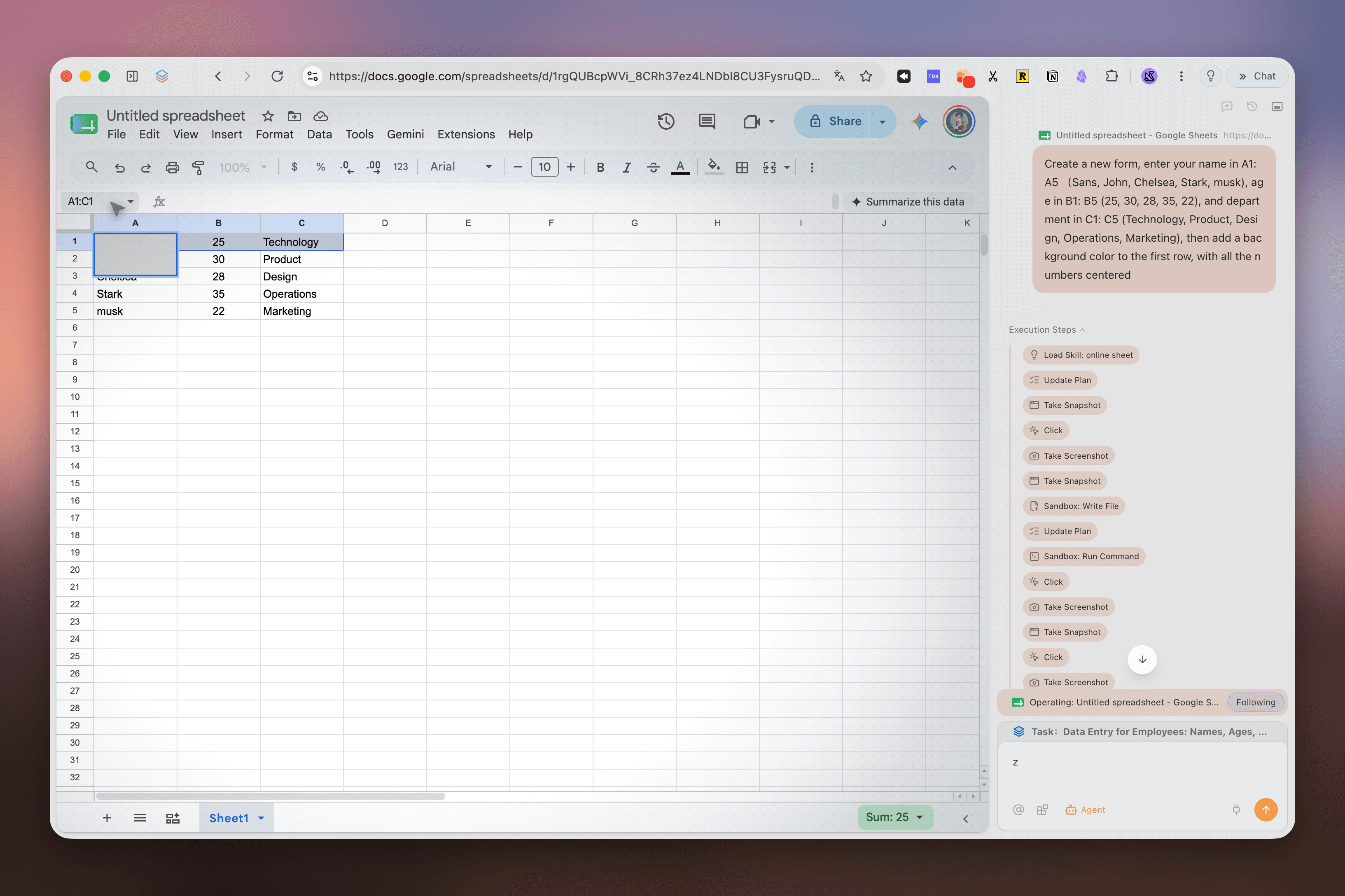
Agent Mode runs real workflows
Tell Tabbit what you need in plain language. It reads pages, fills forms, extracts data, and runs multi-step research in its own tab group — no scripts to write.
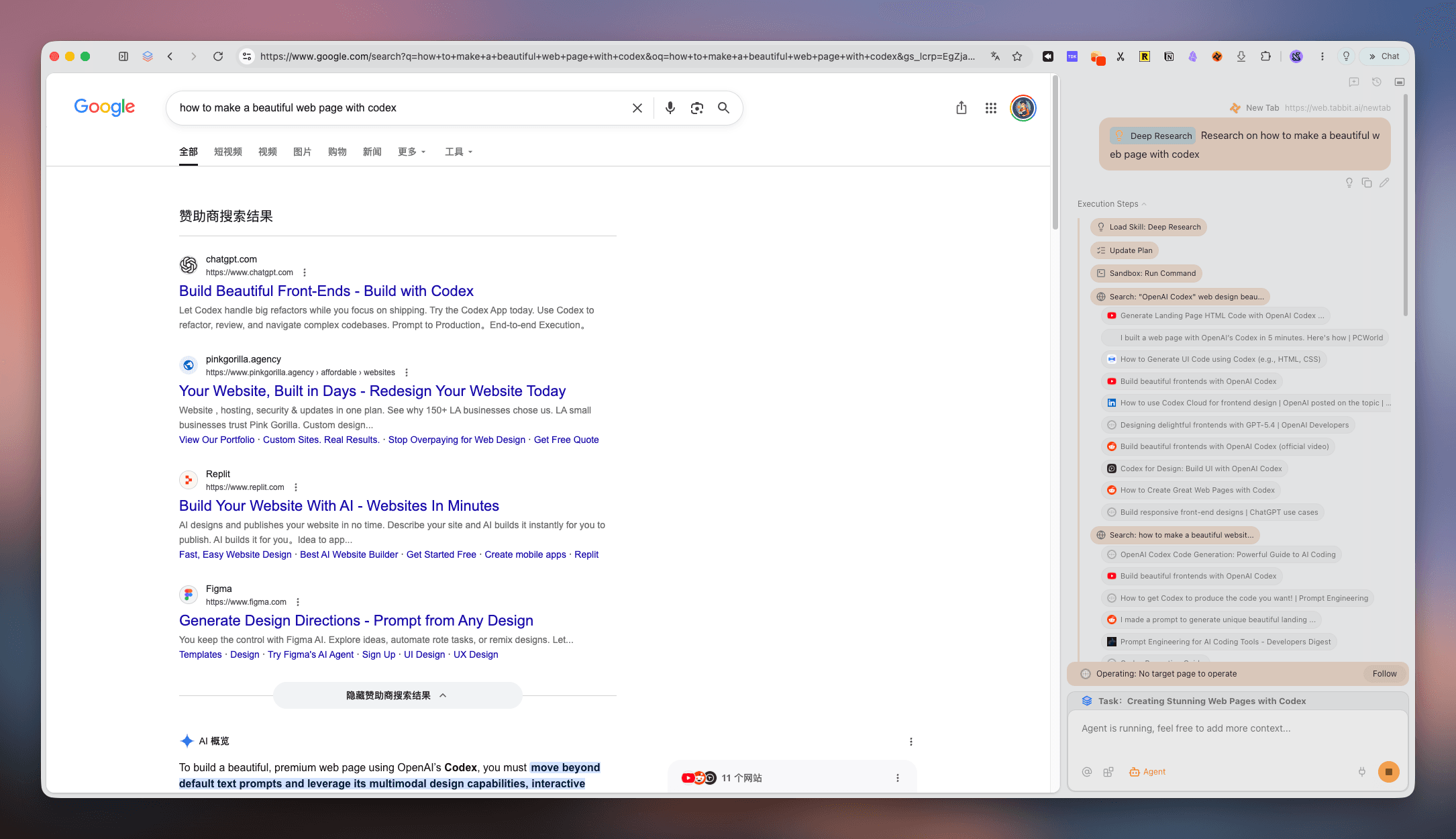
Deep research that delivers a report
Turn a broad question into a structured research report with sources, steps, and citations — handled by the browser, not a single page prompt.
@ context, not page-aware toggles
Type @ in the omnibox to reference the tab, tab group, screenshot, bookmark, or local file you are looking at. What you see is the context — no toggle to remember.
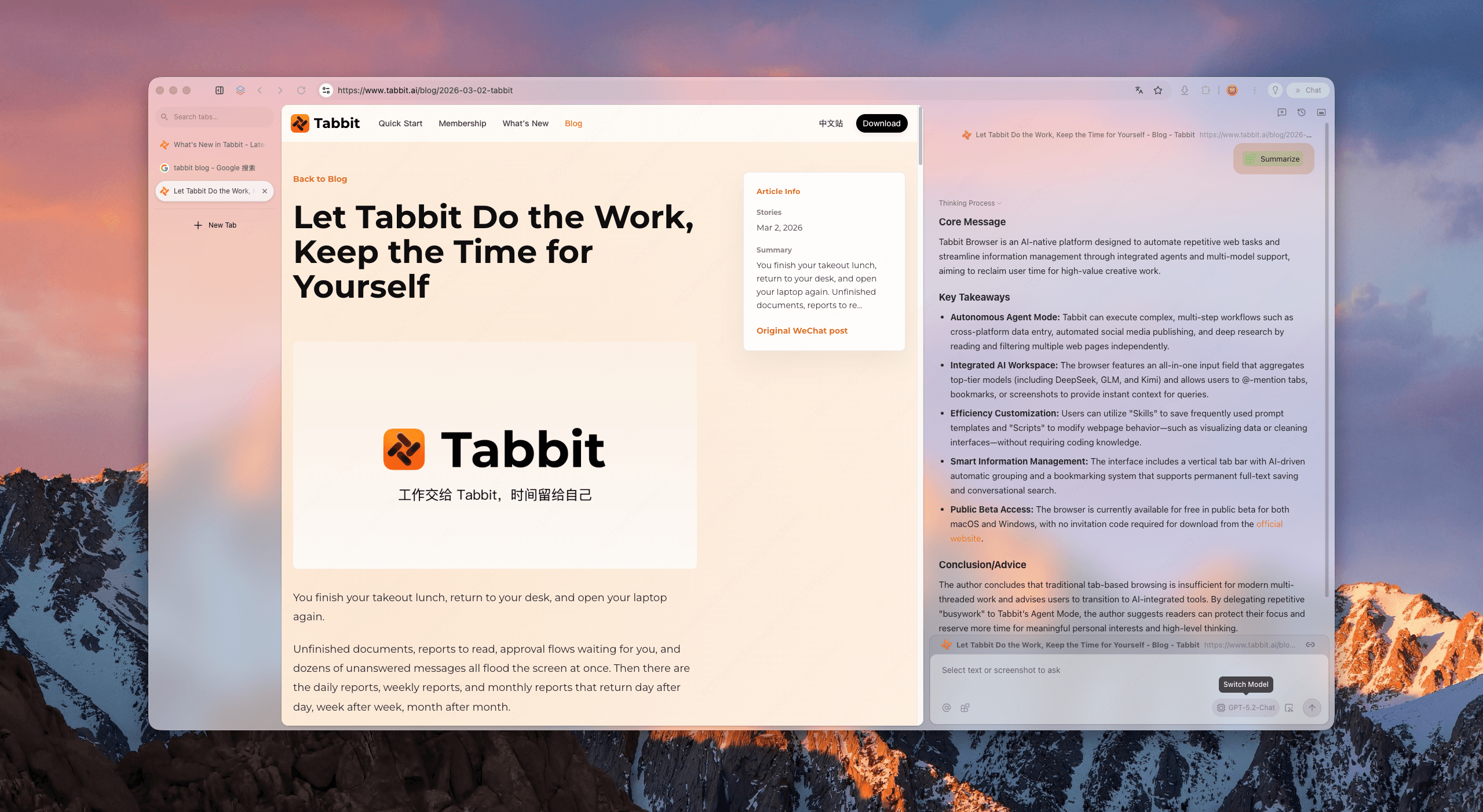
Top models included, free
Access leading models without juggling accounts and API keys. Tabbit is free and open to everyone — no invite code required.
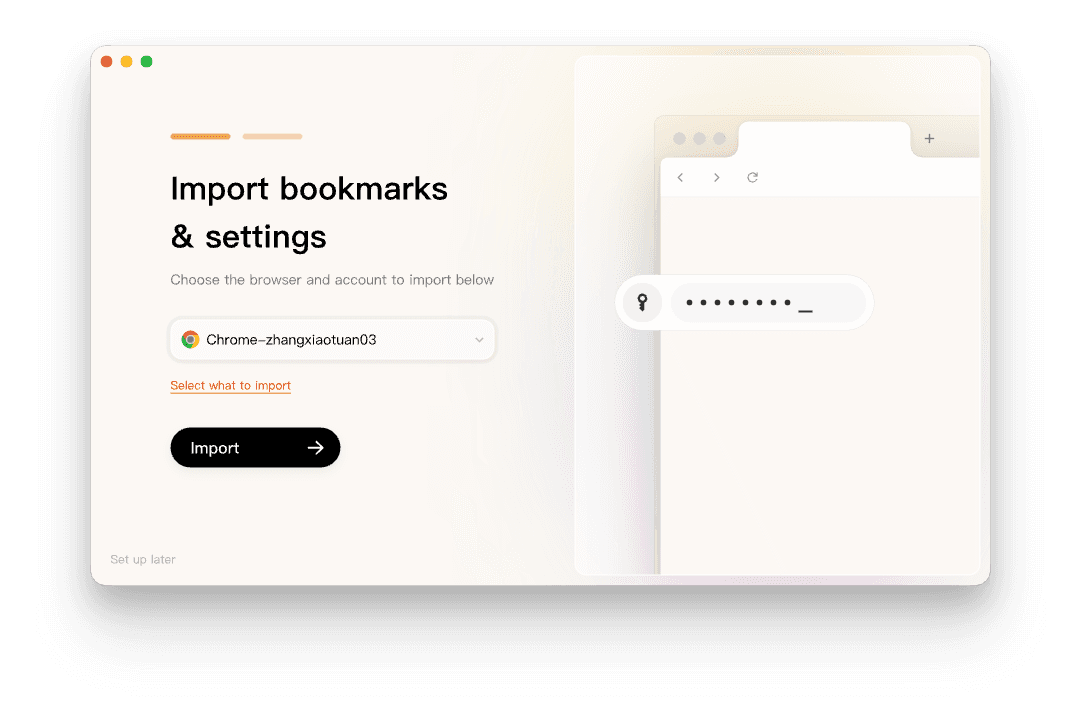
Migrate from Chrome or Edge — and keep your Harpa AI workflows
Tabbit imports bookmarks, history, passwords, cookies, and extensions from Chrome and Edge in one click. Your Harpa AI habits — summarizing, writing, researching — carry over, but with a simpler interface.
Harpa AI questions, answered
What is Harpa AI?+
Harpa AI is a browser extension that adds a page-aware AI assistant to Chrome or Edge. It can summarize content, draft emails, extract data from websites, monitor page changes, and automate repetitive browser tasks using models like GPT, Claude, Gemini, and DeepSeek.
Is “harpa ia” the same as “harpa ai”?+
Yes. “IA” is the Spanish and Portuguese abbreviation for “inteligencia artificial” (artificial intelligence), so “harpa ia” is simply how “Harpa AI” is written in Spanish- and Portuguese-speaking markets.
Is Harpa AI free?+
Harpa AI has a free demo plan, but it is limited — advanced automation and scheduled commands are gated behind paid tiers starting around €14.6 per month. Tabbit, by contrast, is free with no invite code.
Is Harpa AI an extension or a browser?+
It is an extension that runs inside Chrome or Edge. A native AI browser like Tabbit instead builds AI into the browser itself, so there is no extra layer of permissions, performance cost, or setup.
What can you do with Harpa AI?+
Typical uses include summarizing YouTube videos, PDFs and articles; drafting emails and social posts; extracting structured data; tracking price drops and page updates; running SEO audits; and automating repetitive web workflows.
What are the best alternatives to Harpa AI?+
Alternatives fall into two groups: other extensions (like AIPRM or Merlin) and native AI browsers like Tabbit. If you want the simplest setup and built-in agent automation, a native browser avoids the learning curve and permission overhead of extensions.
Does Tabbit collect my browsing data?+
Tabbit treats context as a conscious choice: you reference what the AI should see with @, and agent tasks run in isolated tab groups. It is a different model from an extension that monitors every page for page-aware prompts.
Can I use my Harpa AI workflows in Tabbit?+
Mostly, yes — summarizing, writing, research, and automation are built into Tabbit. Because Tabbit imports from Chrome and Edge, you can switch without losing bookmarks or history and start using the same workflows with a simpler interface.
Try the native AI browser instead
Get Tabbit free for macOS and Windows. No invite code, no command syntax, no juggling model accounts.