FIT CHECK · VIVALDI BROWSER · AUGUST 2026

Is Vivaldi a good browser for you?

Usually, yes—if you want to shape your browser, keep many tools close and spend time tuning the surface. It is a more conditional yes for anyone who wants one calm path, identical mobile controls or an AI research workflow out of the box.

See the fit signals

THE SHORT VERDICT

VIVALDI / PERSONAL FIT CARD

A good browser is a match, not a trophy

Use the signals below to decide whether Vivaldi’s flexibility solves your problem—or simply gives you more settings to maintain.

THE SHORT VERDICT

Vivaldi is a strong fit for curious power users. Its reward is control; its price is a denser interface and a longer setup curve.

Good for

  • People who tune layouts and shortcuts
  • Multi-tab work with built-in tools
  • Users who value Chromium compatibility

Less ideal for

  • Anyone wanting zero-setup simplicity
  • Teams needing identical mobile/desktop parity
  • Readers who want AI research and actions inside the browser
01 / 07 signalschoose by job →

SEVEN SIGNALS

Read the trade before you install

This is a decision card, not a lab score. “Strong” means the review evidence points to a clear use case; “watch” means the value depends on your habits, device or tolerance for setup.

SignalWhat Vivaldi gives youWhat to check first
01CustomizationDeep control over themes, tab placement, shortcuts, gestures and interface density.checkWill you tune it once, or keep tweaking instead of working?
02Tabs & WorkspacesStacks, workspaces and side panels help keep large sessions visible and sortable.checkWorkspaces organize tabs; they are not automatically separate privacy containers.
03Built-in toolsMail, calendar, feeds, notes, blockers and other utilities can replace some extensions.checkEvery built-in surface adds choice and a little more interface to learn.
04Everyday feelChromium compatibility and familiar extensions make the baseline approachable.reportedIndependent reviews report a slower feel with many tabs and occasional rough edges; no benchmark is implied.
05Mobile & syncDesktop and mobile versions can carry tabs, settings and other selected data between devices.checkFeature parity and sync behavior differ by platform; test the hand-off you actually need.
06Privacy postureThe product emphasizes control, blocking and a privacy-oriented position.checkBlocking is not anonymity. Read current policy and sync terms for your threat model.
07Learning costThe same depth that rewards experts gives you more menus, defaults and decisions.checkGive yourself a short setup session before judging the day-to-day experience.

No universal score · your context decides

SOURCE WALL

What hands-on reviewers actually noticed

The screenshots below were captured from independent reviews with ChromeX for this page. They are evidence of reported experiences—not a universal benchmark or an endorsement of every claim on either site.

Independent David Bushell Vivaldi review page showing the title, author framing and hands-on setup context
INDEPENDENT · DAVID BUSHELLChromeX capture

A configurable desktop, with a less certain mobile story

David Bushell walks through installing, configuring, exploring and syncing Vivaldi. He likes the desktop enough to call it “Yea”, but later records iOS latency, crashes and sync friction; Workspaces organize tabs rather than isolate identity.

David Bushell: Vivaldi, Yea or Nay?
Independent Kelson Vibber Vivaldi review page showing the customization, Chromium and upsides-and-downsides sections
INDEPENDENT · KELSON VIBBERChromeX capture

A configurable Chromium internet suite

Kelson Vibber frames Vivaldi as an ultra-customizable browser with mail, calendar, feeds, Chrome-extension support and encrypted sync. The same review notes Chromium dependence, no mobile extensions and password-manager autofill friction.

Kelson Vibber: Vivaldi review

A third hands-on source, PCWorld’s “I got sick of Chrome’s BS and switched to Vivaldi”, reports useful desktop and mobile features but also a denser interface, a pokier feel with many tabs and limits on mobile. That range is why the page uses a fit verdict rather than a universal score.

THE BROWSER YOU SHAPE

Control is the feature—and the homework

Vivaldi’s appeal is not one killer toggle. It is the accumulation of choices that lets the browser feel like your own desk. The same accumulation can become a maintenance tax.

01 · CUSTOMIZE

Tune the surface to your habits

Themes, tab location, shortcuts, gestures, side panels and start-page choices let you build a browser around your routine rather than accept one fixed layout.

02 · ORGANIZE

Make many tabs legible

Stacks, workspaces and panels give research-heavy sessions a visible structure. They reduce tab-strip noise, but they do not read pages or create privacy isolation for you.

03 · CONSOLIDATE

Keep useful tools nearby

Mail, calendar, feeds, notes, blocking and other utilities can reduce extension sprawl. If you do not use them, hiding or disabling them becomes part of setup.

04 · LEARN

Budget an onboarding hour

The path to a comfortable setup is discoverable, not always immediate. Users who enjoy configuring software may see that as ownership; everyone else may see friction.

CONTINUITY CHECK

The answer changes after you leave the desktop

A browser can feel excellent on a large monitor and less convincing on a phone. Judge the hand-offs you actually perform, not a generic promise of “cross-platform”.

FEEL

No invented speed score

The sources support a qualitative read: Chromium compatibility is familiar, while heavy tab sessions can feel pokier. Device, extensions and settings will shape your result.

MOBILE

Check parity, not just availability

Vivaldi has desktop and mobile versions, but reviewers note that mobile omits or changes some desktop tools. Try the exact tab, shortcut or extension workflow you rely on.

SYNC

Convenience has a boundary

Sync can carry selected browser data and encrypted entries, but not every preference behaves identically across platforms. Keep a recovery path for anything important.

PRIVACY

A posture, not invisibility

Blocking trackers and choosing privacy settings can reduce unwanted collection. They do not make you anonymous to websites, networks or your own accounts.

Method note: this page does not publish startup times, memory numbers, benchmark scores or a safety rating. It reports source observations and practical decision points.

CHOOSE BY JOB

Vivaldi and Tabbit solve different browser problems

If your goal is to configure the browser itself, Vivaldi is the more direct fit. If your goal is to understand pages, compare sources and act on web context, Tabbit’s AI-native workspace is the more relevant test.

CHOOSE VIVALDI

01

You want the browser to bend

Pick Vivaldi when layout control, built-in utilities, Chromium compatibility and a power-user surface are the reason you are switching.

Keep the fit signals in mind

CHOOSE TABBIT

02

You want the browser to help think

Try Tabbit when your work is reading, synthesizing, researching across tabs or carrying out visible web tasks—not collecting another set of menus.

See Tabbit in context

USE BOTH

03

Your personal and research jobs differ

There is no need to force one browser to win every task. Vivaldi can be your configured daily browser while Tabbit handles AI-assisted research and production workflows.

Try the research path

CHOOSE BY JOB

A page, a question, a visible next step

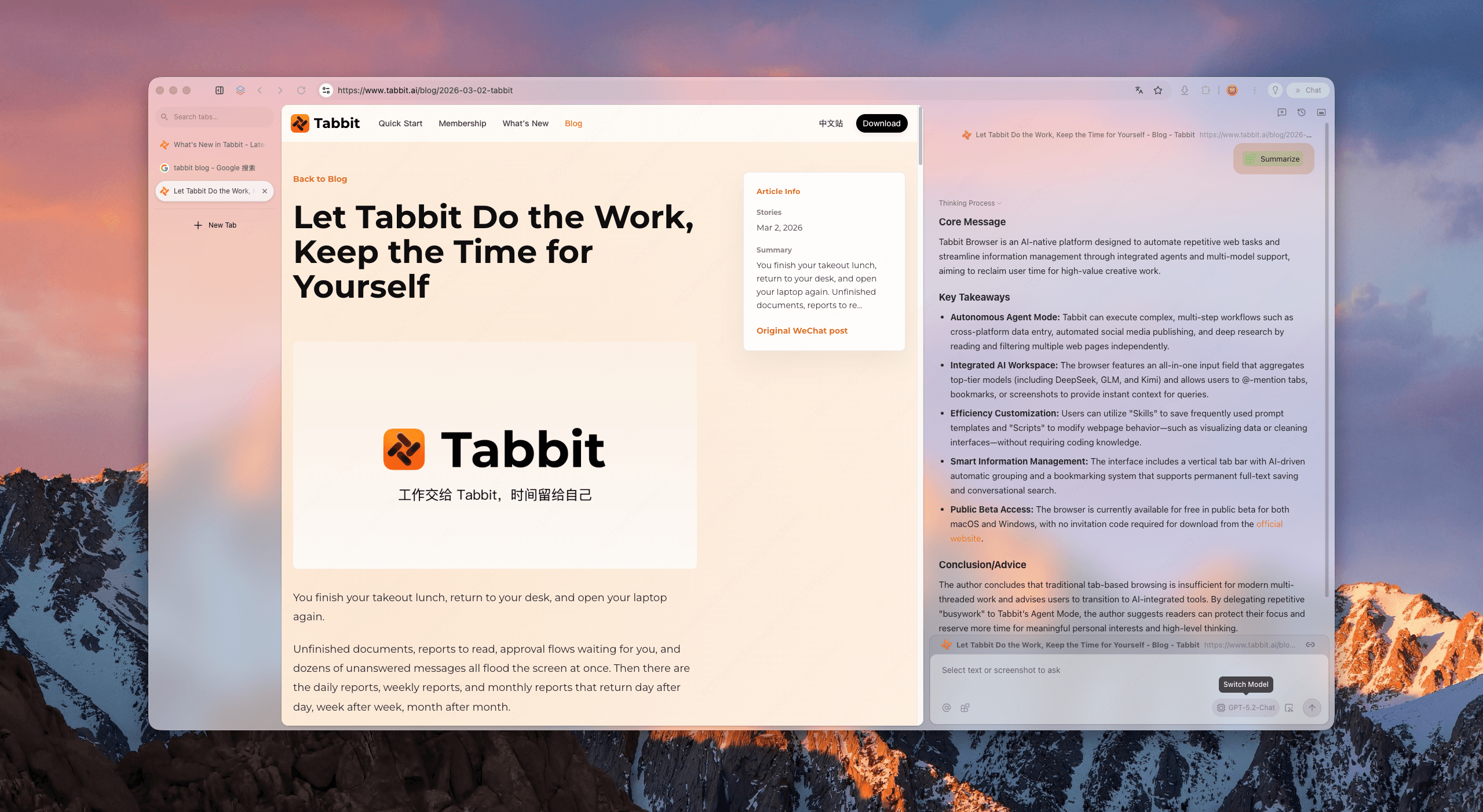
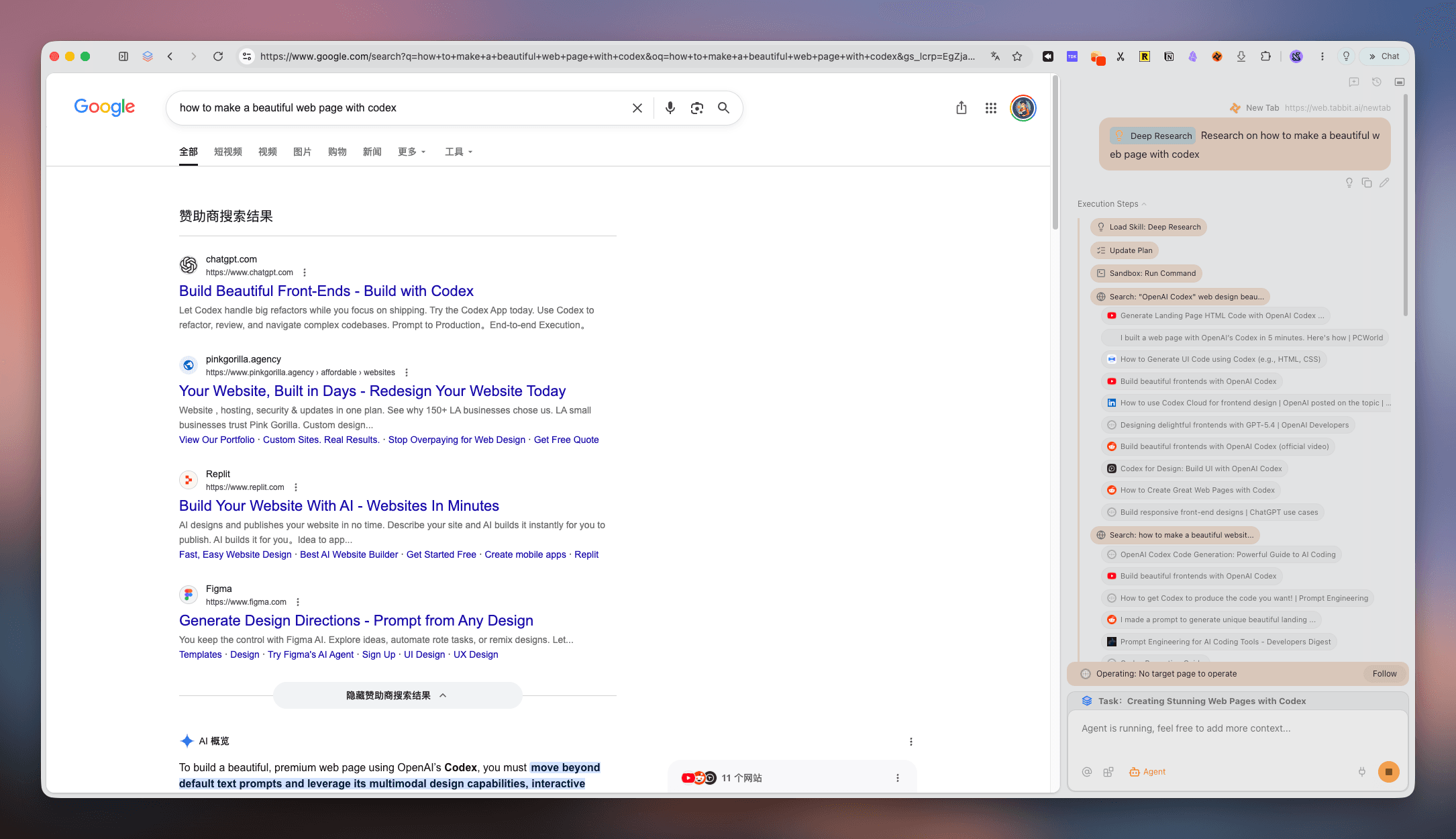
Tabbit keeps the source page and AI context together: summarize a long page, run a multi-source research task, compare what you found and continue into a web action. That is a different value proposition from Vivaldi’s configurable surface.

Product fit statement, not a security comparison: use the browser that matches the work in front of you.

Tabbit Browser Deep Research view with Google results in the main pane and execution steps in the side panel
Deep Research / context
Tabbit Browser showing a source article beside an AI summary sidebar with key takeaways and a follow-up prompt
Summaries / next action

THE BALANCE

So, is Vivaldi good?

Why it can be a yes

  • You want deep interface and shortcut control.
  • You work across many tabs and like visible organization.
  • You prefer built-in tools and Chromium extension reach.
  • You are willing to spend time shaping defaults.

Why it can be a no

  • You want a quiet, obvious path with little setup.
  • You need every mobile and desktop control to match.
  • You dislike feature surfaces you must hide or maintain.
  • Your main need is AI-assisted reading, research or web execution.

Verdict: Vivaldi is good when “my browser should adapt to me” is the brief. If the brief is “help me make sense of the web and move work forward”, test Tabbit alongside it.

DECISION FAQ

Questions worth answering before the switch

Is Vivaldi good for power users?

Often. Its customization, shortcuts, tab organization, built-in utilities and Chromium compatibility are designed for people who want control. The trade is a denser interface and more setup decisions.

Is Vivaldi better than Chrome?

There is no universal winner. Vivaldi is a better fit if customization, built-in tools and a different privacy posture matter more to you; Chrome may remain the simpler choice for Google ecosystem integration and a familiar default path.

Are Vivaldi Workspaces private containers?

Do not assume so. Review evidence describes Workspaces as a way to organize tabs, not as automatic cookie or identity isolation. Use separate profiles or a purpose-built privacy tool when isolation is the requirement.

Does Vivaldi work well on mobile?

It has desktop and mobile versions, but the experience is not identical. Independent reviews note differences in tools, extensions and sync behavior, so test the mobile hand-off that matters to you.

Is Vivaldi a private or anonymous browser?

It presents privacy controls and blocking features, but privacy is not anonymity. Read the current policy, review extensions and remember that websites, networks and accounts can still identify activity.

Should I choose Vivaldi or Tabbit?

Choose by job. Vivaldi is for shaping a configurable browser with built-in tools. Tabbit is for AI-assisted reading, research, summaries and visible web actions. You can use both without treating the choice as a safety ranking.

NEXT TASK, NOT NEXT TAB

Try a browser that helps you move from source to result

If your browser decision is really a productivity decision, open Tabbit and test one real workflow: summarize a page, compare sources or let an agent handle the repetitive web steps while you keep the context.

Free to try · AI-native research and web workflows · Use your own task as the test

© 2026 Tabbit Browser. The AI-native browser that understands your context.