Small memory footprint
It keeps idle and multi-tab RAM use low, leaving headroom for your other apps.
A lightweight web browser should feel invisible: quick to launch, gentle on memory, and powerful enough for modern work. Tabbit proves that light does not mean basic.
Why Tabbit is the lightweight choice
Low RAM footprint
Runs smoothly on devices with limited memory
AI agent built-in
Automates work without extra extensions or bloat
Vertical tabs
Stays organized and readable at any tab count
Truly free
No ads, no telemetry, no hidden background services
A lightweight web browser is a browser engineered to use minimal system resources — RAM, CPU, and battery — while still delivering the pages and features you need. The best ones remove bloat, not capability.
It keeps idle and multi-tab RAM use low, leaving headroom for your other apps.
It opens in seconds and does not drag down boot or login time with heavy background tasks.
It reduces visual noise, overlapping tabs, and notification spam that slow you down mentally.
It sleeps inactive tabs, limits telemetry, and avoids unnecessary processes.
Myth
Truth: Modern lightweight browsers use efficient architecture, not stripped engines. Tabbit runs GPT-5, Claude 4.6, Gemini 3.1, and more while staying lean.
Myth
Truth: The right lightweight browser replaces extensions with native tools. Tabbit includes tab grouping, AI chat, and agent automation out of the box.
Myth
Truth: Windows and macOS users also suffer from Chrome bloat. A lightweight browser keeps laptops cooler and batteries lasting longer on every OS.
The only AI-native browser that delivers a full agent, multi-model chat, and vertical workspaces without the usual resource cost.
Sleeping Tabs and Startup Boost keep it efficient on Windows. A solid lightweight choice if you live inside the Microsoft ecosystem.
Blocks ads and trackers before they load, which naturally keeps pages light and fast on older hardware.
Compare the leading lightweight web browsers on the specs that determine real-world speed and efficiency.
| Browser | RAM Use | Startup | AI Agent | Tab Management | Ad/Tracker Block | Price | Platforms |
|---|---|---|---|---|---|---|---|
| Tabbit | Low | Fast | Full — free | Vertical + workspaces | Strong | Free | macOS, Windows |
| Microsoft Edge | Moderate | Fast | Copilot | Vertical + Collections | Moderate | Free | All desktop |
| Brave | Low | Very fast | No | Horizontal | Built-in | Free + premium | All desktop |
| Google Chrome | High | Moderate | Gemini sidebar | Horizontal | Basic | Free | All desktop |
| Mozilla Firefox | Moderate | Fast | No built-in AI | Horizontal | Extensions | Free | All desktop |
| Opera GX | Moderate | Fast | No | Horizontal + sidebar | Built-in | Free | All desktop |
| Vivaldi | Moderate-High | Moderate | No | Vertical + stacks | Built-in | Free | All desktop |
Match your priority to the browser that handles it best.
I want the lightest browser that also uses AI
Full AI agent and multi-model chat in a lean package that stays fast on older hardware.
I use Windows and want a lighter default
Sleeping Tabs and Startup Boost make it the best lightweight default on Windows.
I want privacy without the weight
Built-in blocking keeps pages light and loads fast, especially on low-RAM machines.
I have an old computer with limited RAM
Optimized resource use plus vertical tabs and AI grouping reduce the clutter that slows old PCs.
I want vertical tabs in a lightweight package
Vertical tabs and workspaces are native and lightweight, not bolted on like in some Chromium clones.
I need a gaming browser with resource limits
GX Control lets you cap RAM and CPU, though the sidebar adds some overhead.
Keeping the browser light is only half the story. The real win is what the freed-up memory and focus let you do — read faster, automate the busywork, and offload heavy research to AI.
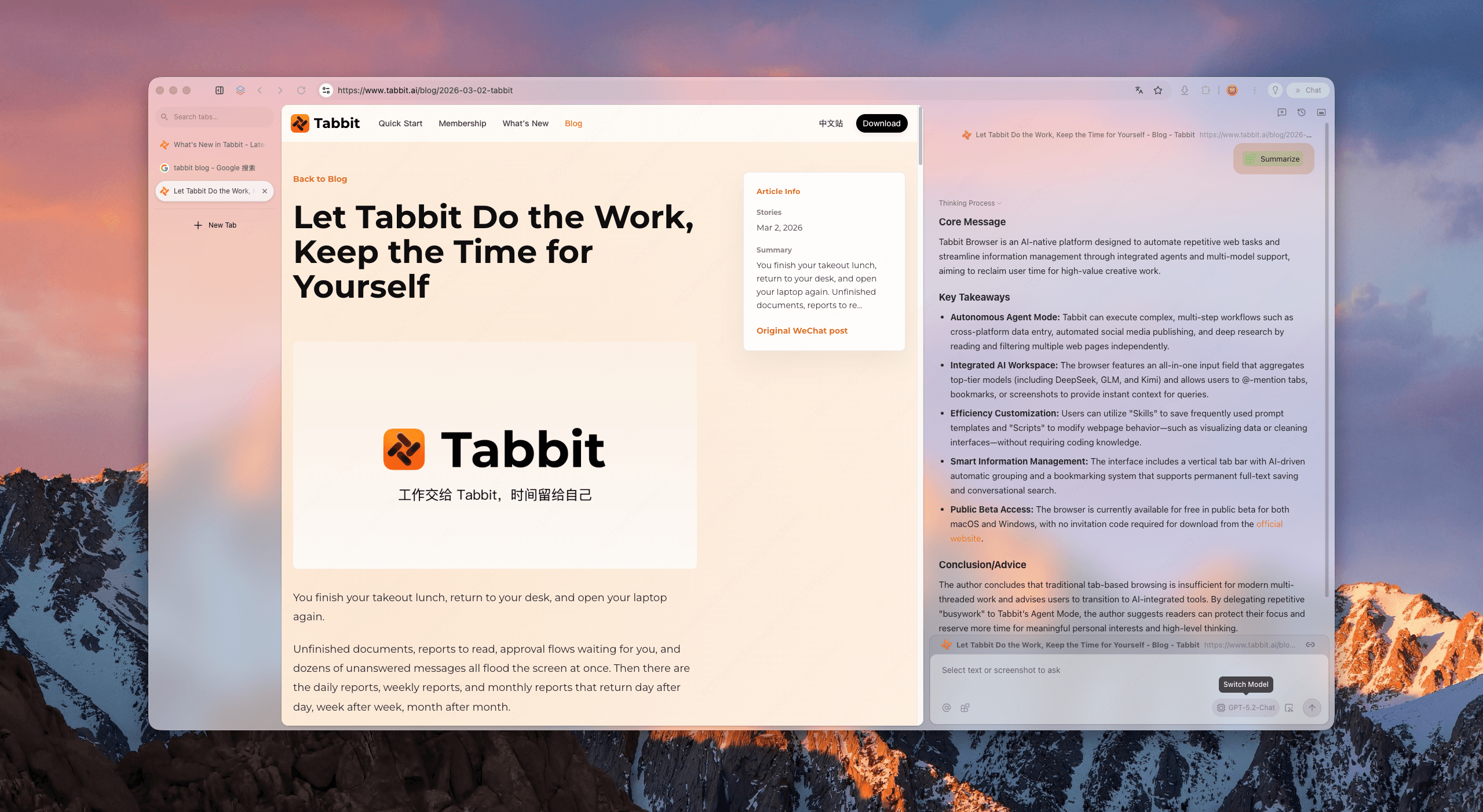
The AI sidebar condenses articles, reports, and documentation into key points and conclusions — no extra extensions, no extra memory.
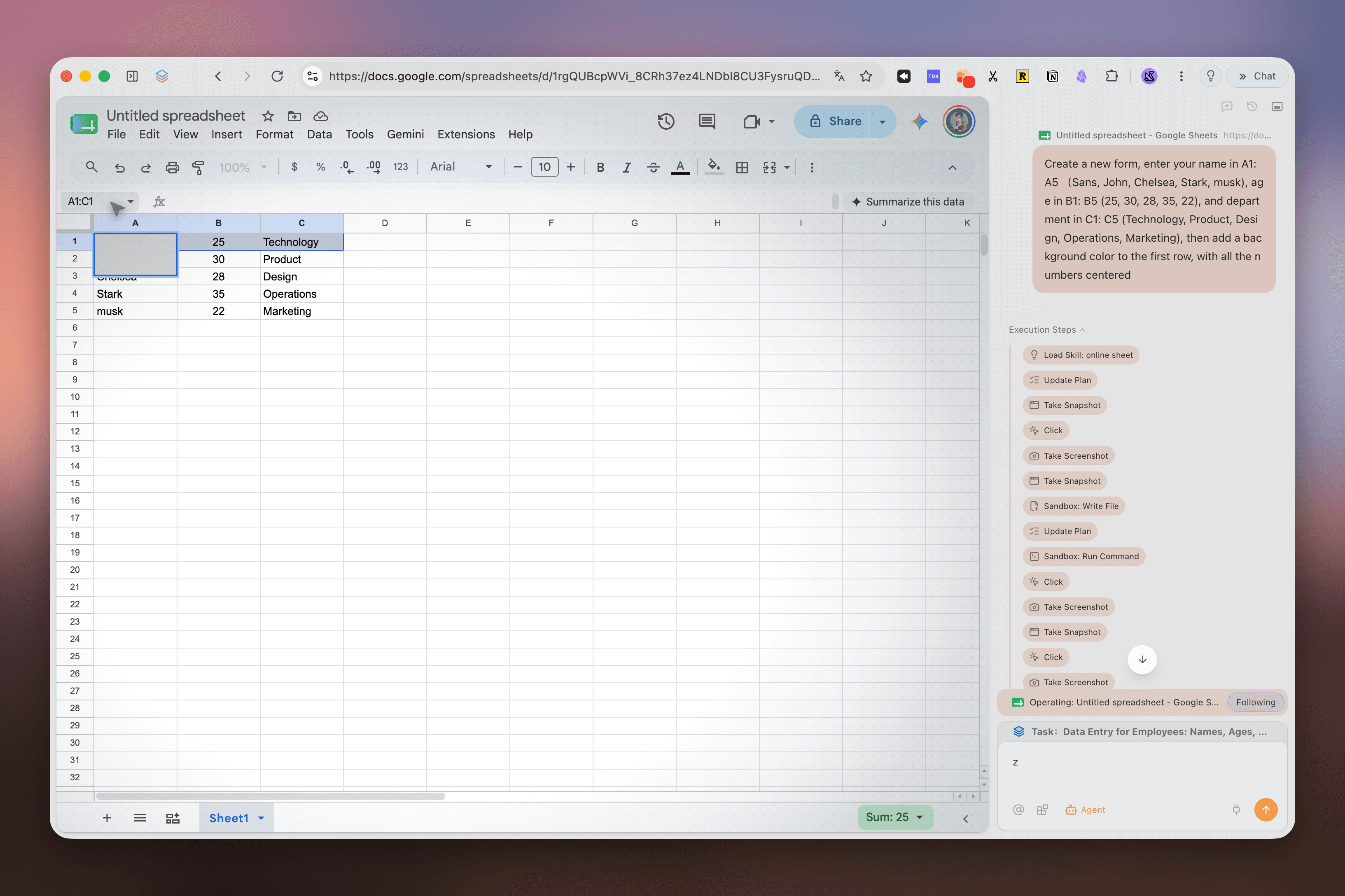
Agent mode turns a plain instruction into finished work, from filling spreadsheets to updating records. Heavy tasks run in their own agent tab group, so your browsing stays responsive.
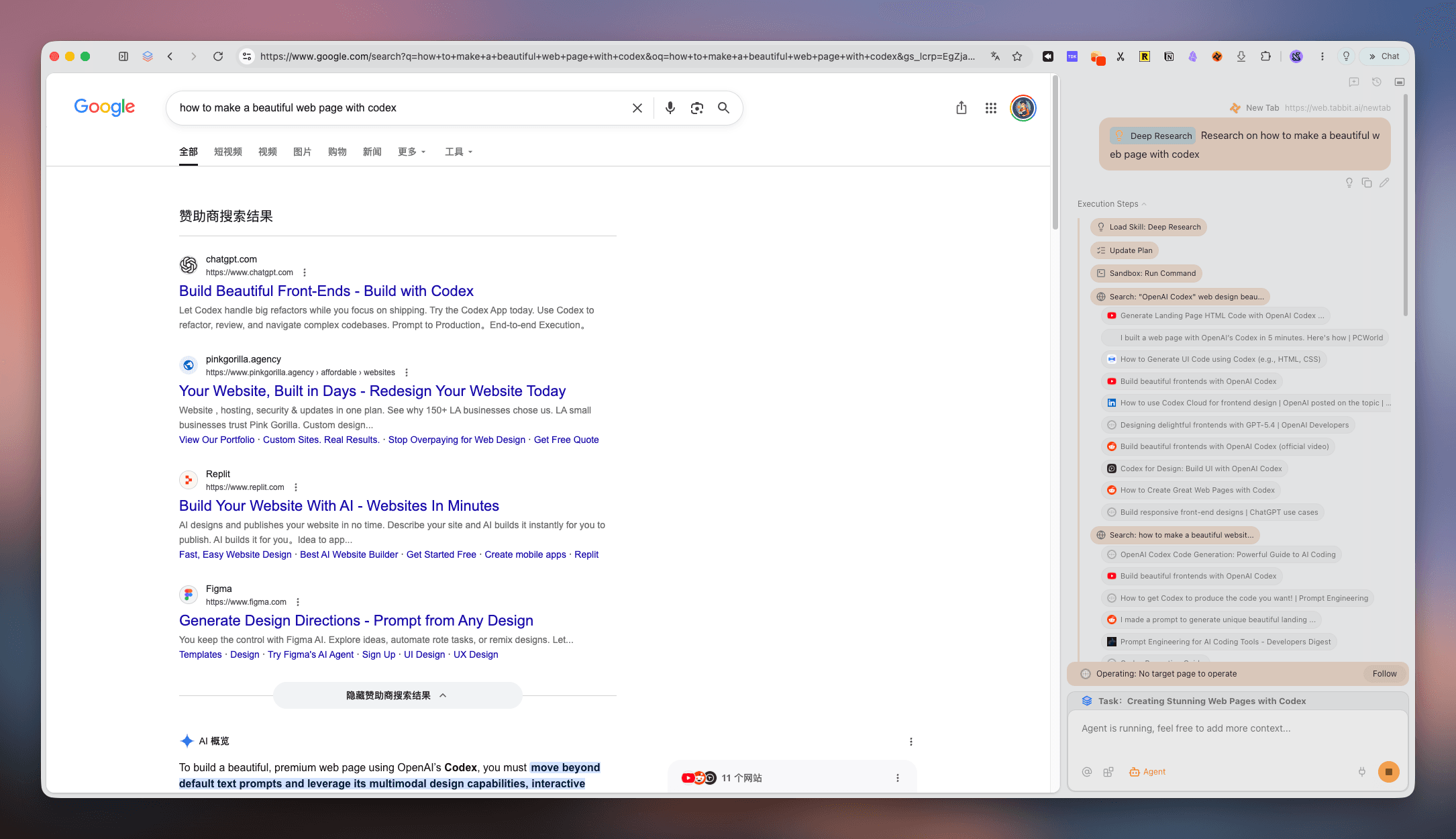
Deep Research collects, reads, and organizes sources for you. Your browser stays light while the heavy lifting happens in the background.
Tabbit was built around one idea: the browser should get out of the way. It removes the trackers, extensions, and tab chaos that weigh down other browsers, then adds AI where it actually helps.

Users who want a fast, light browser that also automates work and organizes research.
Tabbit Browser is the best lightweight web browser in 2026. It combines a lean resource footprint with full AI agent automation, vertical tabs, and workspaces, all for free on macOS and Windows.
Try Tabbit and feel the difference: a browser that stays light, moves fast, and finishes tasks for you.