OPEN SOURCE BROWSER GUIDE 2026
Open Source Browsers
Open source browsers put privacy and control in your hands. Here is how the best ones compare in 2026 — and when a free AI-native browser like Tabbit is the smarter choice.
Free for macOS & Windows — no setup required
Quick answers for open-source browser searchers
THE BASICS
What is an open source browser?
An open source browser releases its source code under a license that lets anyone inspect, modify and redistribute it. That transparency is the core promise — but not every “open” browser is equally open, private or easy to use.
Fully open vs Chromium-based
Firefox and LibreWolf are fully open source. Brave and many others build on Chromium (also open source) but add proprietary services. Chromium itself is the open core of Google Chrome.
Licenses matter
Most browsers use MPL (Firefox), BSD (Chromium), or GPL/Apache combinations. The license decides what you and third parties can actually do with the code.
Open source ≠ zero telemetry
Some open source browsers still ship telemetry and default services. Privacy requires checking the specific build — which is why forks like LibreWolf exist.
Bottom line: open source gives you the right to audit and modify. What you do with that right — and how much setup you want — decides which route fits.
THE LANDSCAPE
Best open source browsers in 2026
These are the projects people actually compare when they search for an open source browser. We focus on the ones with real communities, active releases and clear tradeoffs.
Mozilla Firefox
MPL-2.0The default open-source browser
The most balanced open-source default. Privacy features improved a lot, but it still ships some default services you may want to turn off.
LibreWolf
MPL-2.0Privacy-hardened Firefox fork
Firefox stripped of tracking, with hardened settings and no telemetry. The pick for privacy-first users who like Firefox.
Brave
MPL-2.0 (partial)Open-source base, privacy-first features
Chromium-based with strong ad and tracker blocking out of the box. Some features such as Rewards and its AI are proprietary.
Chromium
BSD-3-ClauseThe open core of Chrome
The open-source project under Chrome. Fast and familiar, but you configure services yourself and miss Google-only polish.
Waterfox
MPL-2.0A Firefox fork that keeps classic tabs
Built for people who love tab trees and a classic Firefox feel, with telemetry removed.
Tor Browser
MPL-2.0 (Firefox-based)The gold standard for anonymity
Routes traffic through the Tor network for anonymity. The tradeoff is speed, and some sites block it.
THE COMPARISON
Open source browser comparison
How do the leading open-source browsers stack up against each other — and against a ready AI-native browser like Tabbit?
| Capability | Firefox | LibreWolf | Brave | Chromium | Tabbit |
|---|---|---|---|---|---|
| Open source | Yes (MPL) | Yes (MPL) | Partial | Yes (BSD) | No (freeware) |
| Telemetry by default | Some | None | Blocked | Some Google services | None |
| Built-in AI | No | No | Leo (limited) | No | Native AI + Agent |
| AI task automation | No | No | No | No | Yes — cross-site |
| Setup effort | Low | Medium | Low | High | None |
| Free top AI models | No | No | Limited | No | Yes — GPT, Claude, Gemini & more |
| Everyday productivity | Good | Good | Good | Good | Excellent |
| Price | Free | Free | Free | Free | Free |
WHY IT MATTERS
Why open source browsers matter
Open source is not a feature list — it is a set of rights. Here is what those rights buy you, and the honest cost.
Privacy & no telemetry
You can audit exactly what the browser sends home. Forks like LibreWolf remove even optional data collection.
Transparency & trust
Security researchers can review the code. Bugs get found and fixed in public, not behind closed doors.
Control & customization
Fork it, patch it, or just install a privacy build. Your browser, your rules.
Community governance
Mozilla, the Tor Project and community maintainers answer to users, not ad revenue.
THE DECISION
Open source vs an AI-native browser: which should you choose?
If you are comfortable configuring your own stack, open source is a great fit. If you want AI reading, automation and free top models without the setup, Tabbit is the ready-now route. You can even run both.
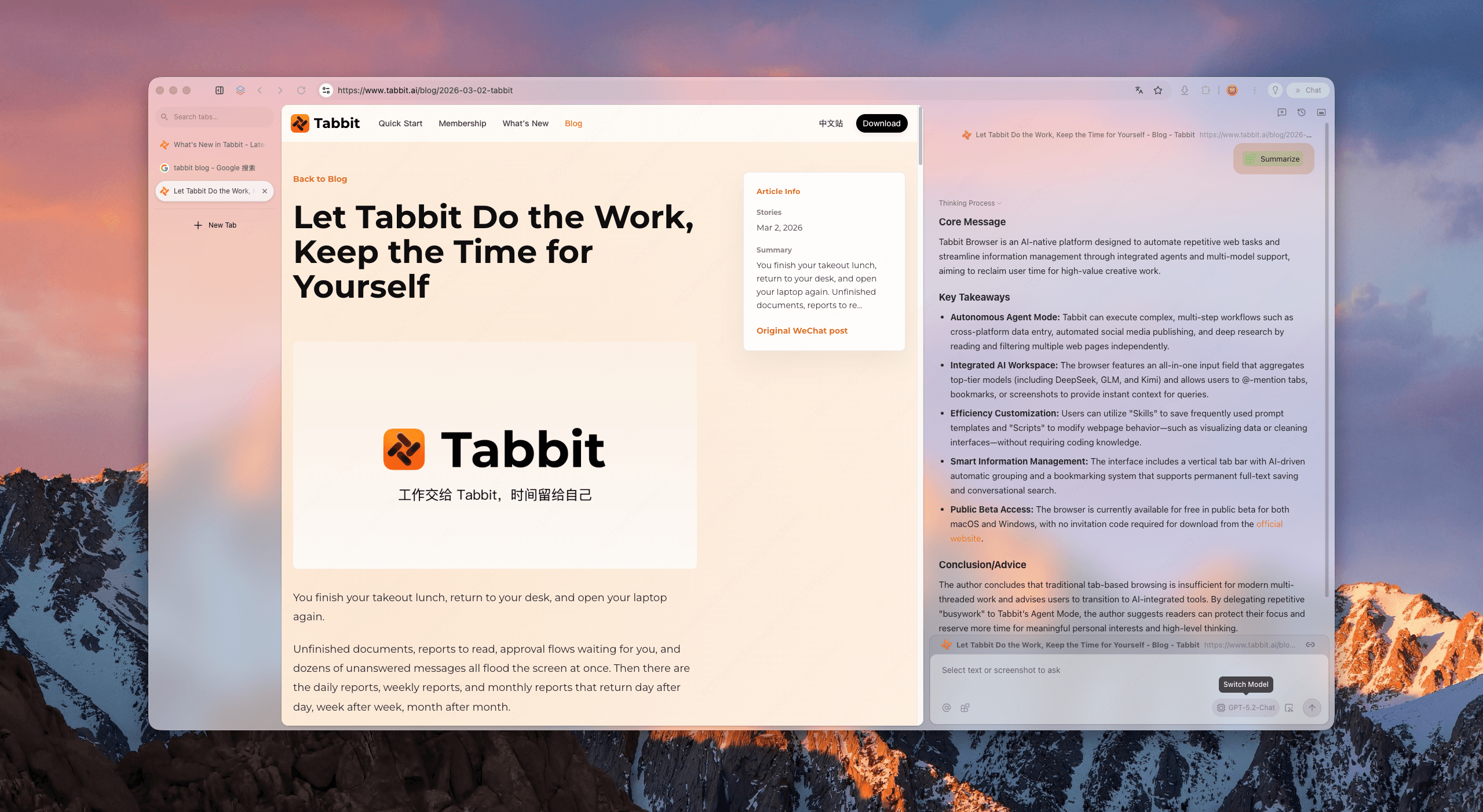
Read anything with an AI you can see
Tabbit’s sidebar summarizes any page with citations — the AI reads alongside you instead of replacing your judgment. On an open-source browser, wiring this up means juggling extensions, APIs and keys.
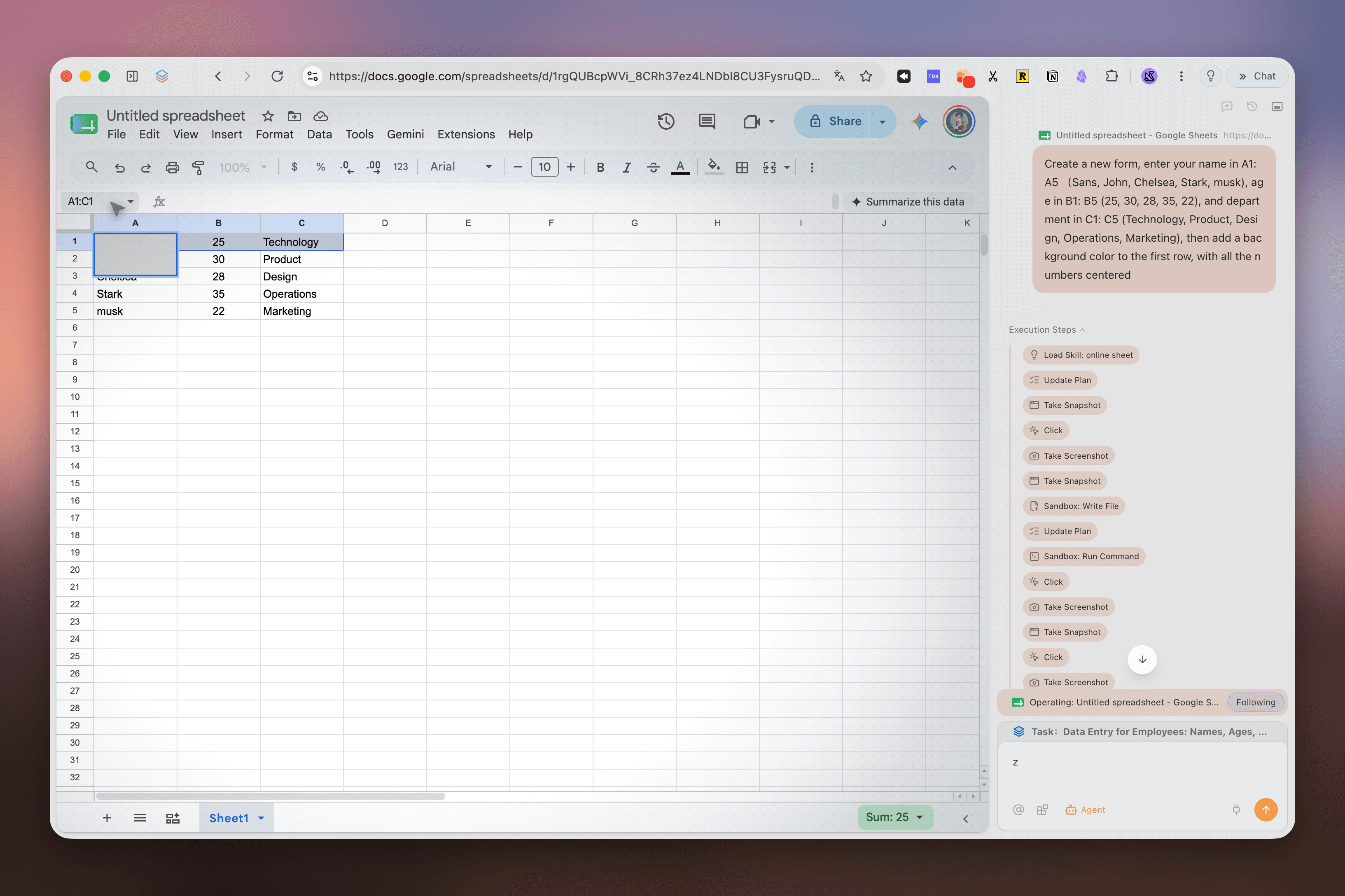
Automate tasks without writing code
Agent Mode lets you describe a task and Tabbit executes it across sites — filling forms, gathering data, producing reports. Recreating that on an open-source browser is a scripting project, not a weekend tweak.
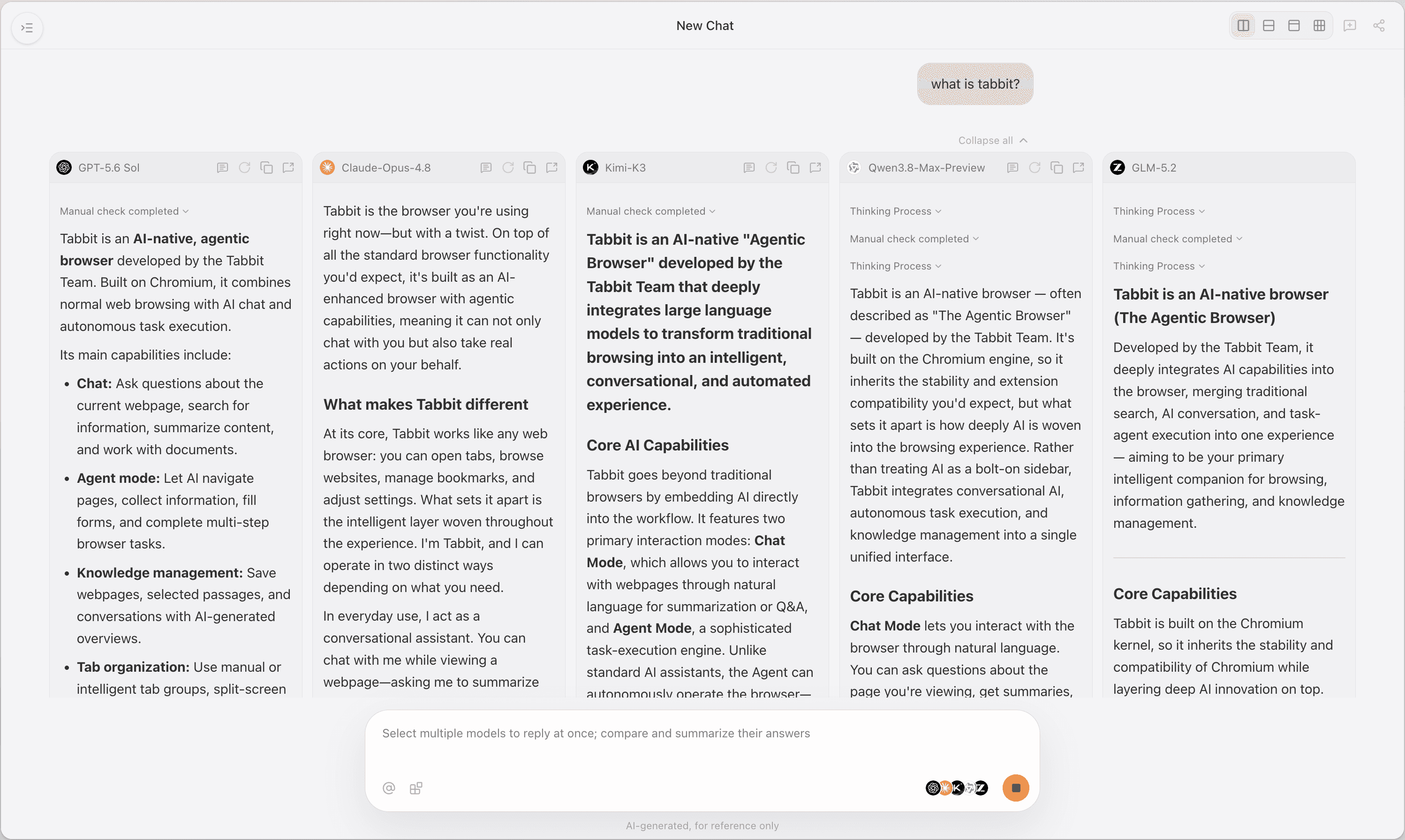
Free choice of top AI models
Open-source culture prizes choice. Tabbit gives you the same freedom in AI: switch between GPT, Gemini, Claude and more — free, right in the browser.
SWITCH IN MINUTES
Try Tabbit without losing your setup
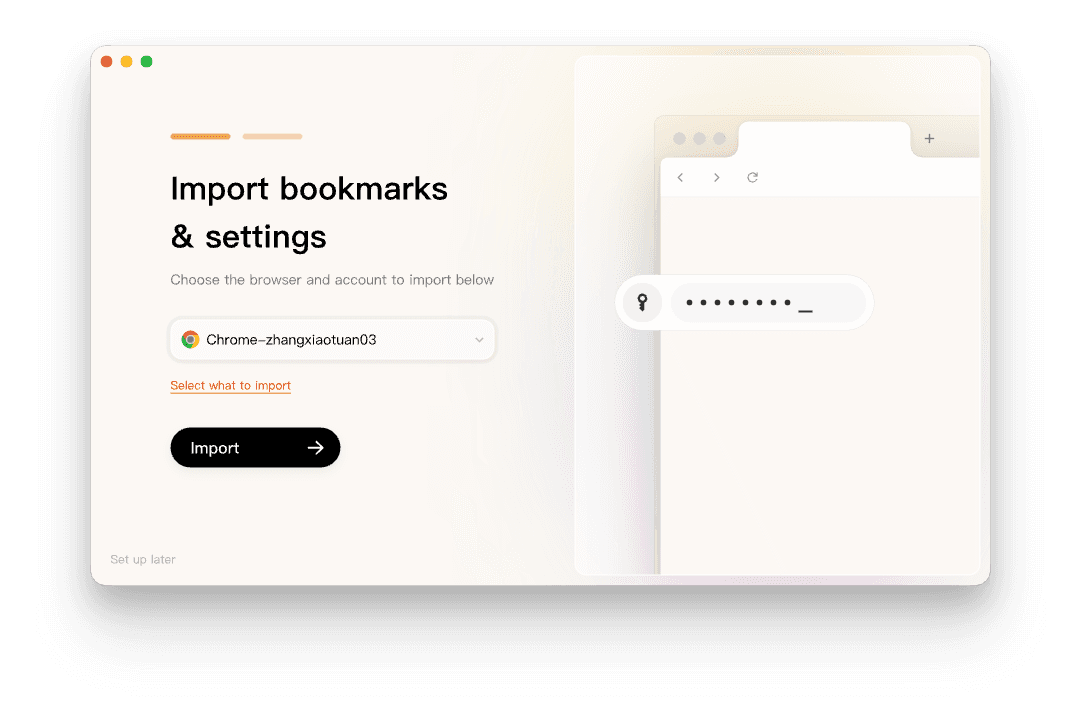
Keep your bookmarks, passwords, history and extensions. Import from Chrome, Edge or Firefox in one click.
Download Tabbit
Grab the free installer for macOS or Windows from the official site.
Import your data
Choose import from Chrome, Edge, or Firefox — bookmarks, passwords, history and cookies transfer in seconds.
Start with AI
Open the omnibox, ask a question, or try Agent Mode. No API keys, no setup.
Tune your workspace
Group tabs into vertical workspaces and pin the tools you use daily.
FAQ
Open source browser FAQ
Is Firefox open source?+
Yes. Firefox is fully open source under the MPL-2.0 license, maintained by the Mozilla Foundation. LibreWolf is a privacy-hardened fork of it.
Is Chrome open source?+
No. Chrome is proprietary. Chromium is the open-source project underneath Chrome, and Chrome adds closed components such as Widevine DRM and Google services.
What is the most private open source browser?+
For maximum privacy, Tor Browser routes traffic through the onion network for anonymity. LibreWolf is the strongest everyday private browser — no telemetry, hardened settings, uBlock included.
Is Brave fully open source?+
Mostly. Brave’s browser core is open source (MPL-2.0, Chromium-based), but some features such as Brave Rewards and its AI are proprietary.
Can I use AI in an open source browser?+
You can add extensions or connect to AI services manually, but there is no integrated experience. Tabbit is a free AI-native browser with the AI built in — the browser understands the page you are on.
Which open source browser is best for Windows?+
Firefox and Brave are the easiest Windows choices. LibreWolf is best if you want hardened privacy. If you also want AI features, Tabbit imports everything and runs natively on Windows.
Does Tabbit respect privacy?+
Yes. Tabbit lets you decide what the AI can see, and context is not used to train models without your permission. You can use open-source browsers and Tabbit side by side.
Is an open source browser safer than a closed one?+
Open source is auditable, which helps trust, but safety also depends on the team and update cadence. Use a maintained browser and keep it updated.
Get the AI-native browser that respects your time
Open source gives you control. Tabbit gives you a free, ready-now AI browser — download it and keep your current data.