Voice drift
The model follows facts but slips into generic narration, changes point of view, or makes every character sound alike. Give style and speech rules their own short block.
QWEN3.8-27B ROLEPLAY FIELD GUIDE
Qwen3.8-27B can hold small details and follow a character card closely, yet stock prose may feel flat and default thinking can consume the scene. This guide gives you a test loop for voice, continuity, repetition, context, vision input and latency.
The official model card and community reports are labeled separately. Tabbit model access varies by edition, region, account and rollout.
WHAT RP USERS ACTUALLY NOTICE
A useful roleplay test measures what happens in a scene, not only a benchmark score. These are the failure modes worth isolating before you change a preset.
The model follows facts but slips into generic narration, changes point of view, or makes every character sound alike. Give style and speech rules their own short block.
Thinking is on by default. A high reasoning setting can spend a long time planning a simple reply, then leave little room for the scene to move.
Repeated beats, recap paragraphs, and familiar phrasing often appear after several turns. Track repeated actions and phrases instead of judging one attractive answer.
Long context and a large quantization can push a local run into RAM offload. More history can preserve lore while making each turn too slow to enjoy.
REPRODUCIBLE RP CHECK
Use the same card, opening message, context window and output limit. Run low, medium and xhigh reasoning before changing the sampler. Save the model ID and route with each result.
Write the character voice, point of view, boundaries, current conflict and one unresolved clue. Do not add a new lorebook entry between runs.
If the runtime exposes it, compare low, medium and xhigh. Record time to first token, total time, reasoning tokens and whether the scene advances.
Mark voice drift, character swaps, repeated phrases, recap text, missed facts and user agency violations. Keep a short note, not a vague star rating.
Try one sampler adjustment or one quantization at a time. A different provider, template or context size is a new experiment, not the same test.
Role: You are [character].
Scene: [place, relationship, current conflict].
Voice: [POV, diction, sentence rhythm].
Direction: Advance one observable action. Do not speak for the user.
Continuity: Use confirmed facts and the unresolved clue.
Format: Action first, dialogue second. 180 to 320 words. No recap.
Check: Keep the voice and let the user choose the next move.
Run this card three times. Compare latency, scene movement, voice, repeated phrasing and format adherence. Only then decide whether the problem is the model, route or preset.
SETTINGS THAT CHANGE THE FEEL
The official card gives useful starting points. Your backend may expose different names or limits, so treat these as controlled baselines rather than universal promises.
Thinking is enabled by default. Use low or medium for quick conversational turns, and reserve xhigh for a hard continuity problem. Preserved thinking can help multi-turn consistency but adds history and tokens.
The official instruct baseline is temperature 0.7, top_p 0.80, top_k 20 and presence_penalty 1.5. The penalty may reduce loops, while a high value can cause language mixing or quality loss.
The card suggests temperature 1.0, top_p 0.95, top_k 20 and presence_penalty 0.0 for thinking mode. Keep the output cap large enough to finish, then measure the cost of that depth.
A hosted route normally serializes messages. A local tokenizer supplies its own template. Applying both can expose tags, swap roles or make the reply strangely short.
Qwen3.8-27B supports image and video input, but an image is useful only when it changes the scene or supplies a visual fact. Run a text-only baseline before adding frames and compare context cost.
Q3, Q4, Q5, FP8 and other files are separate artifacts. Record VRAM, RAM, context length and tokens per second. If performance collapses after offload, lower context before rewriting the card.
TABBIT BROWSER WORKSPACE
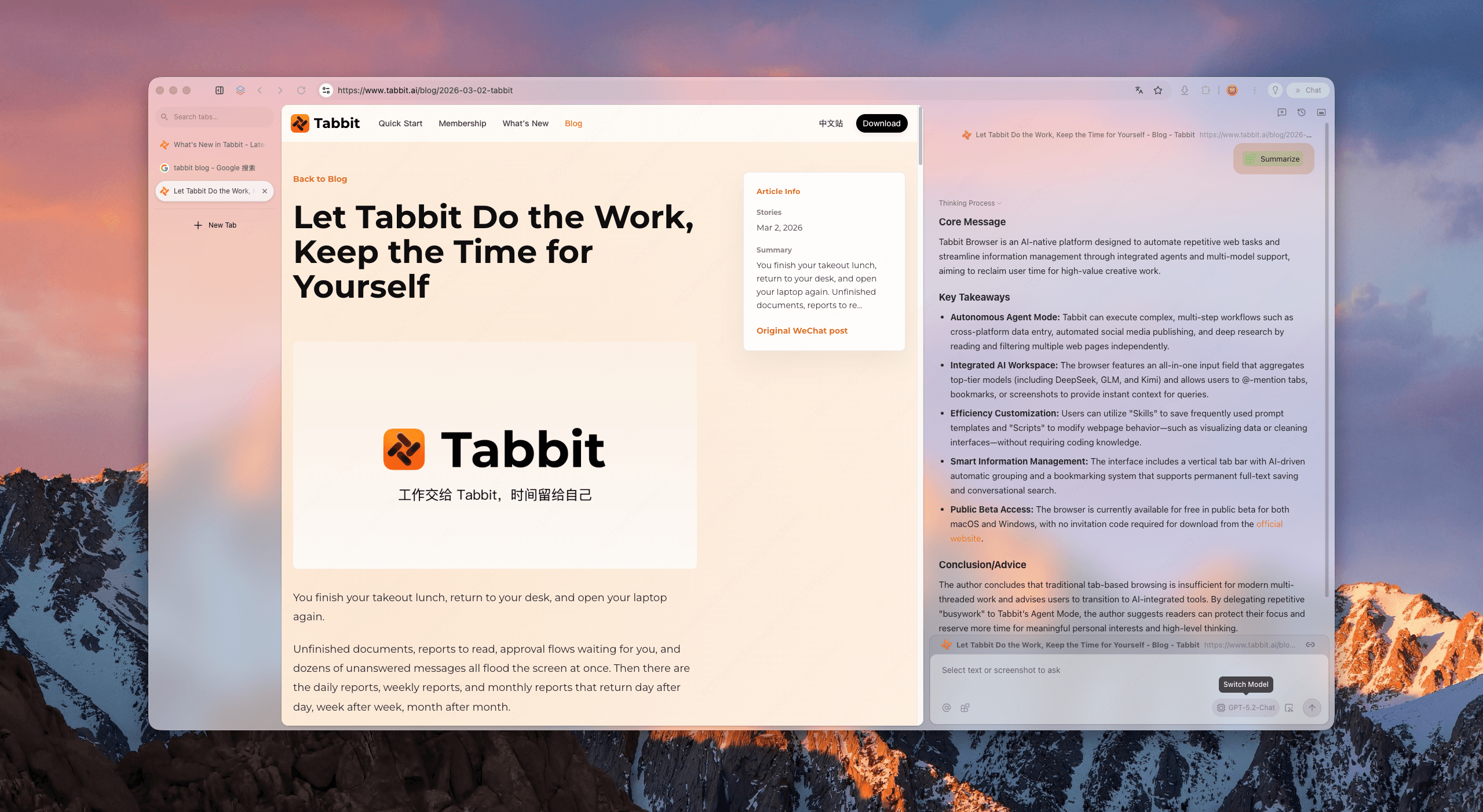
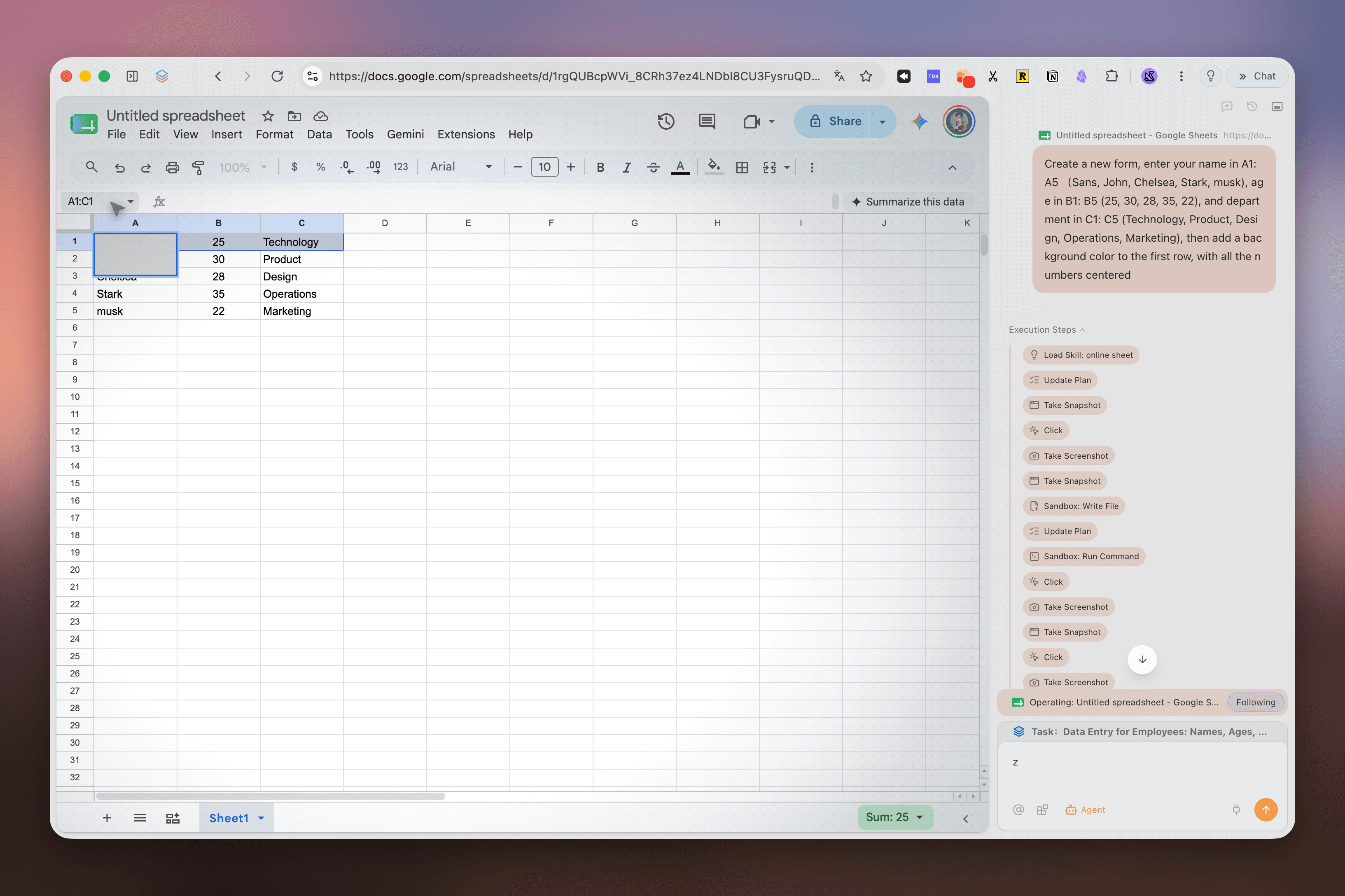
SillyTavern is useful for cards and lorebooks. Tabbit helps with the surrounding research: open the official card, provider notes, character wiki and comparison answers in one workspace, then reference them without a copy-paste relay.
Keep Hugging Face and the backend documentation in tabs. Ask for a short extraction of template, thinking and sampling requirements.
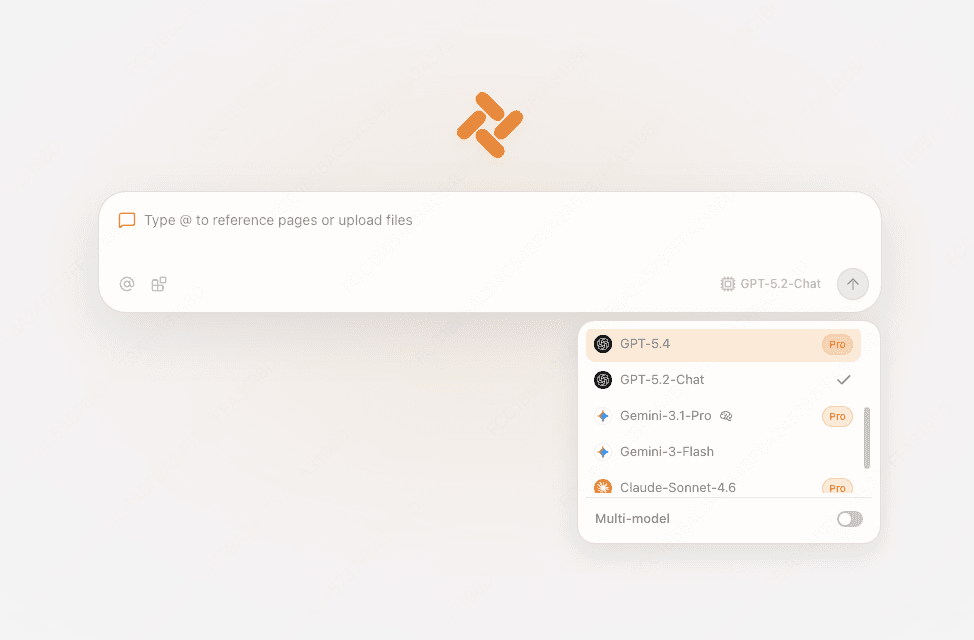
Choose Qwen3.8-27B only if that exact model appears in your Tabbit picker. The current catalog includes Qwen3.8 Max, which is a different family member.
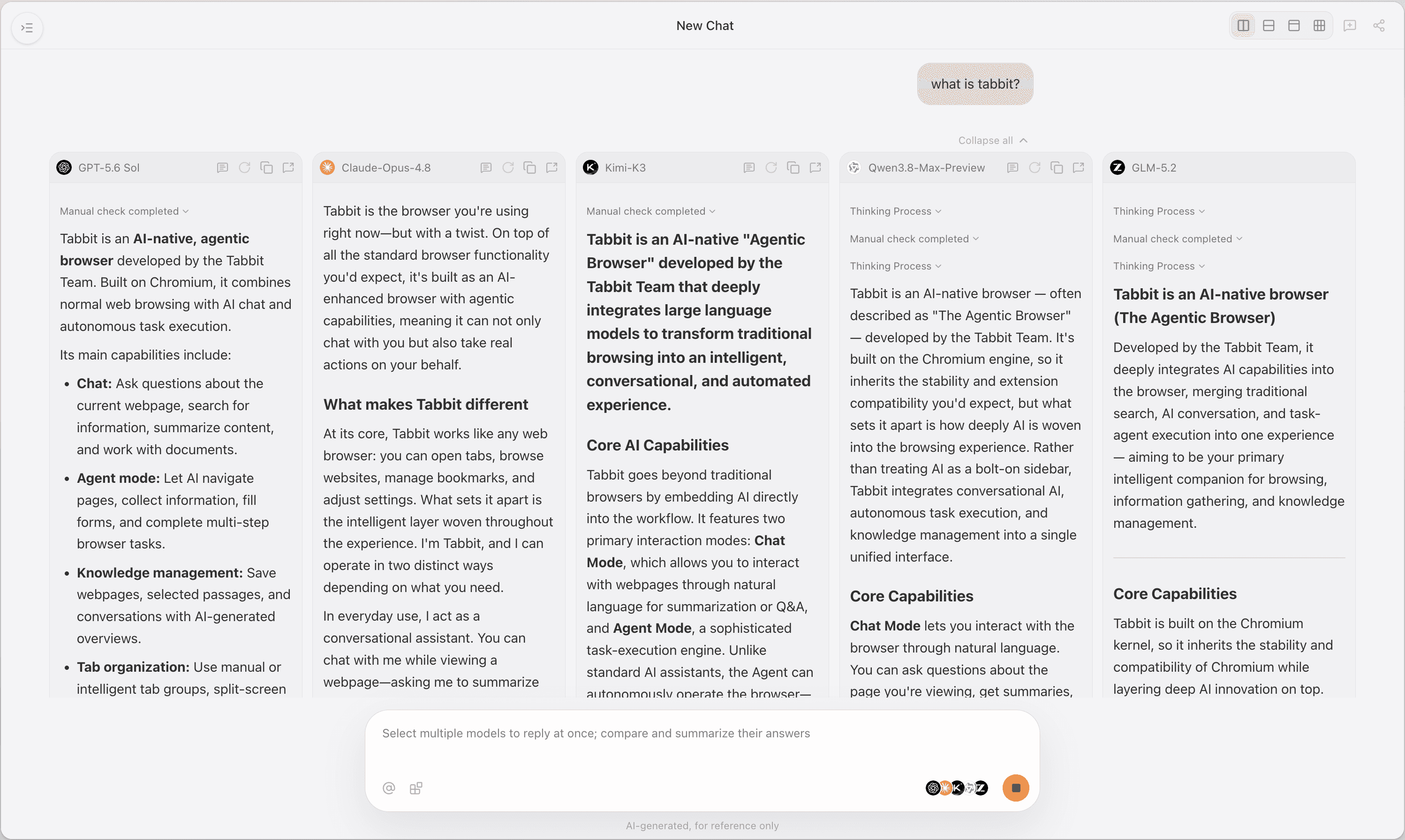
Reference the model card, screenshot, local file or character wiki in a question. Ask a second model to identify one setting difference, then verify it against the source.
Multi-model chat can place answers side by side. Compare voice, continuity and scene movement with the same brief. The screenshot shows the workflow, not a guarantee of model access.
CHOOSE THE RIGHT SURFACE
The tools overlap less than the search results suggest. Keep fine-grained cards and lore where they belong, and use the browser when references or model comparisons slow you down.
| Need | SillyTavern | Tabbit |
|---|---|---|
| Character cards and lorebooks | Dedicated RP controls | Reference pages and files |
| Preset and prompt order | Detailed prompt stack | Short source-grounded prompts |
| Model card and provider notes | Copy or extension | Open tabs plus @ context |
| Compare several answers | Provider setup or extension | Multi-model browser chat |
| First debugging move | Verify route and template | Open the source, then check live availability |
FAQ
Community reports are mixed. Users often describe strong instruction following and continuity, while stock prose can feel clinical or repetitive. Test the same card with fixed settings before drawing a conclusion.
Thinking is enabled by default and xhigh is the default reasoning effort in the official card. Compare low or medium, output limits and context size. Lower per-turn reasoning can still increase total time if it causes retries.
First check recap instructions, output length, context and sampler defaults. The official non-thinking baseline uses presence_penalty 1.5. Change one value and compare the same transcript.
No. It supports images and videos, but visual input should add a fact that text cannot provide. A text-only baseline tells you whether the image helps or only consumes context.
Use the template owned by your route. A hosted provider generally serializes messages; a local server should follow the tokenizer documentation. Do not apply both.
Only select it when the exact model appears in your live Tabbit model picker. Availability varies by edition, region, account and rollout. Qwen3.8 Max in the catalog is not proof that the 27B checkpoint is available.
Install Tabbit for macOS or Windows, keep the model card and character references open, and compare the same roleplay brief across the models your picker actually provides.
Model availability and provider settings can change.