Tracker & ad blocking
Stops advertisers and data brokers from following you across the web.
A secure internet browser blocks trackers, stops malware, and keeps your data private. The best ones also help you work safely. Tabbit is built on Chromium's hardened security core and adds AI-powered protection that reads pages before you click.
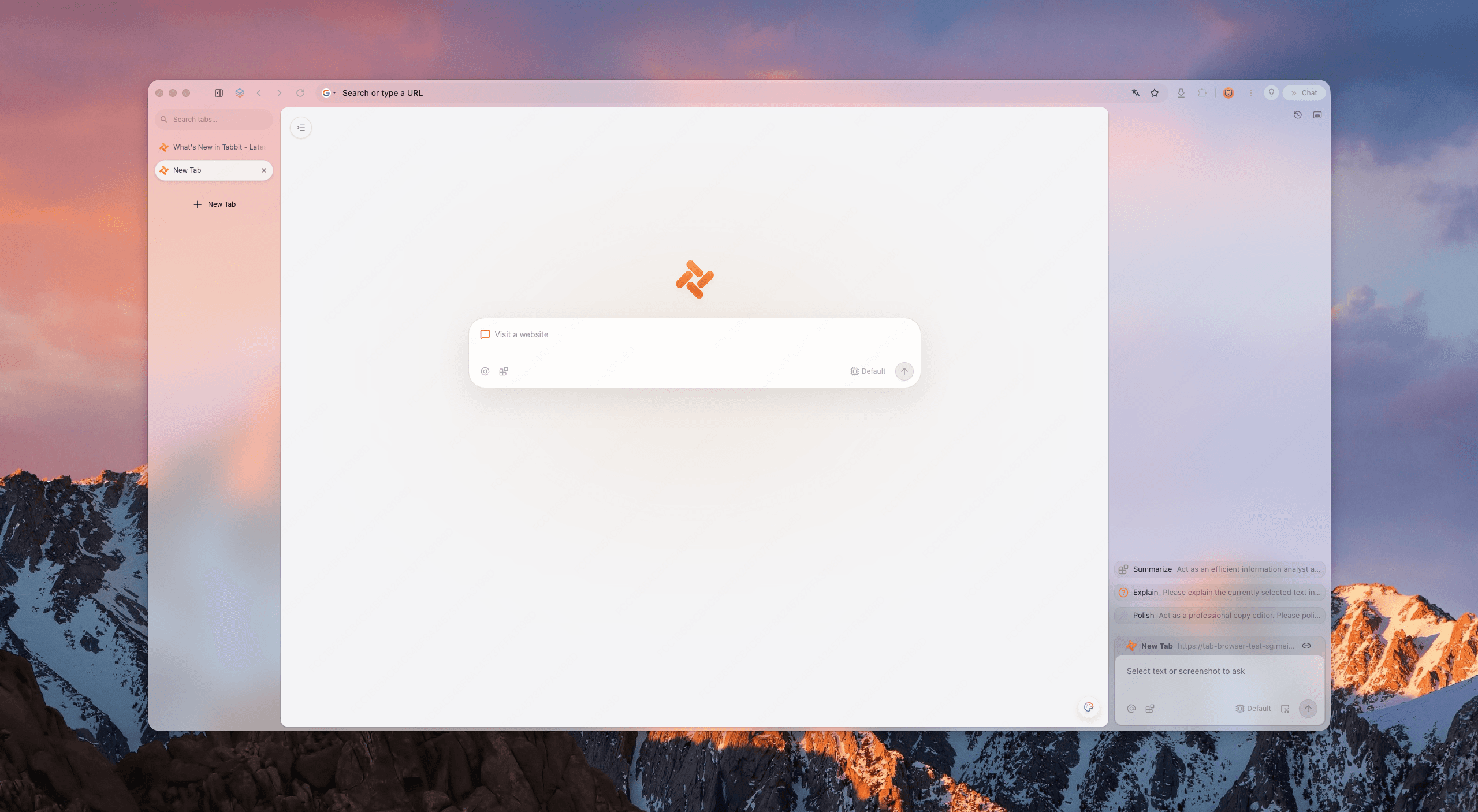
What makes Tabbit a secure browser
AI phishing guard
Reads pages to flag suspicious content before you click
Tracker & ad blocking
Built-in protection with no extensions needed
Isolated agent tasks
AI tasks run in their own tab group, away from your work
Workspace isolation
Keep banking, work, and personal browsing separate
Most people think 'secure browser' means one thing, but it's actually five layers working together.
Stops advertisers and data brokers from following you across the web.
Blocks fake login pages and malicious downloads before they reach you.
Makes your device harder to identify even when cookies are cleared.
Encrypts connections and isolates tabs so one bad site can't take over.
Collects the minimum data needed and makes privacy settings easy to find.
These are the browsers that consistently rank highest for security and privacy. Each one has a different strength — and a different trade-off.
Everyday privacy with zero setup
Blocks ads and trackers by default
Automatic HTTPS upgrades
Fast Chromium performance
Crypto features feel distracting to some
Aggressive blocking can break sites
Users who like to tune every setting
Strong tracking protection
Multi-Account Containers
Open-source and transparent
Needs extensions for best privacy
Some Chromium-only sites work imperfectly
High-risk research and sensitive browsing
Traffic routed through multiple relays
Strong anti-fingerprinting
Built for anonymity
Much slower than normal browsing
Many sites block Tor exit traffic
Privacy on Android and iOS
Tracker blocking by default
One-tap data clearing
Simple privacy controls
Desktop version is newer and limited
Fewer extensions than desktop browsers
Privacy purists on desktop
Hardened defaults
No telemetry
Open source
Unique fingerprint can stand out
No official mobile version
Tor-grade hardening without Tor routing
Tor-grade anti-fingerprinting
No telemetry
Works over normal internet
No mobile version
Less convenient for daily use
Every mainstream secure browser relies on blocklists — known trackers, known malware domains, known phishing pages. That works for yesterday's threats, but not today's.
Attackers now use AI to create realistic fake login pages that aren't on any blocklist yet.
A brand-new malicious site can slip through until a list is updated and pushed to your browser.
Customized spear-phishing messages target your exact context — blocklists can't know that context.
As AI agents start acting for you, you need a browser that keeps those tasks isolated and auditable.
Tabbit keeps Chromium's hardened security core, then adds four AI-powered layers that make the browser safer for real work.
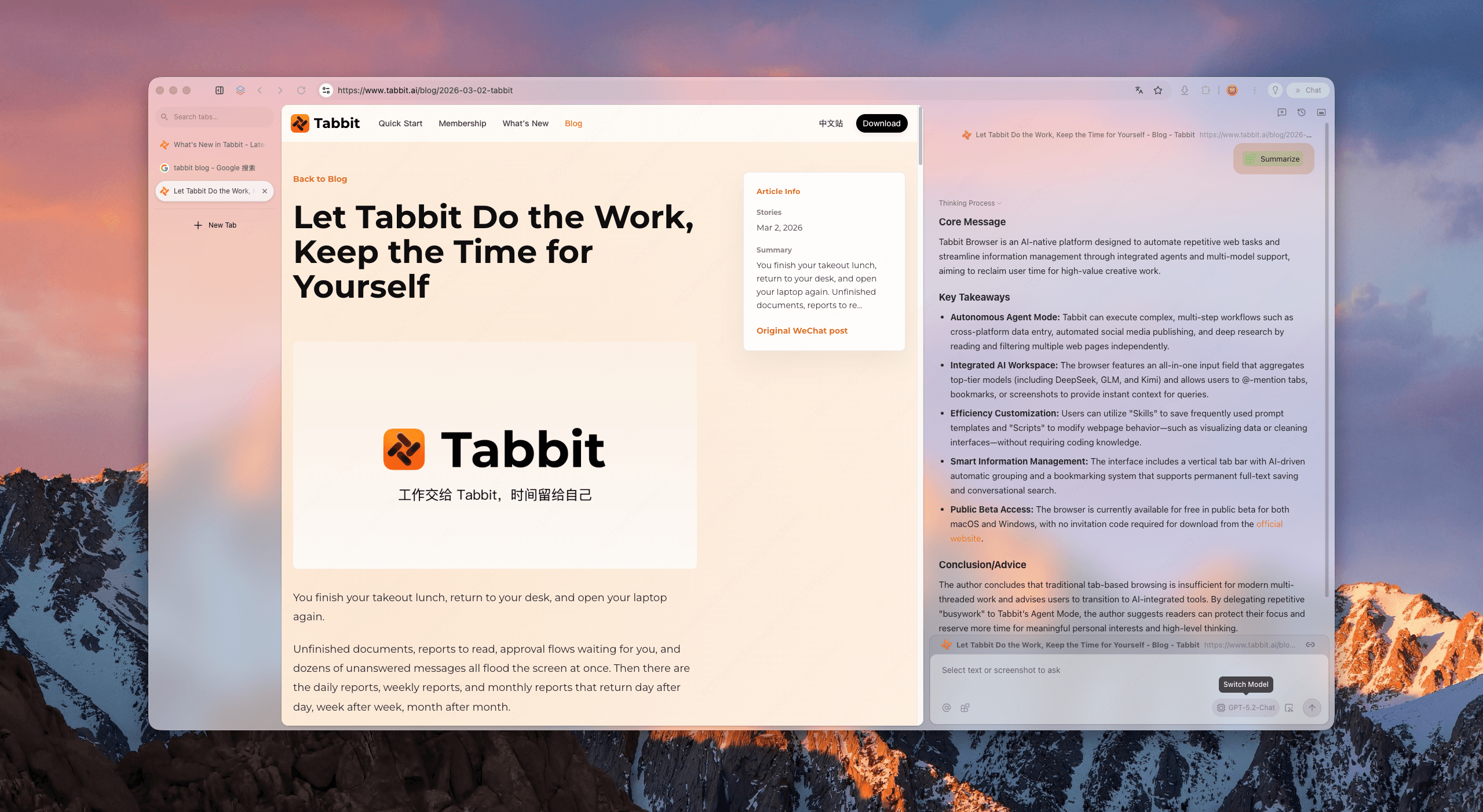
Tabbit's AI parses page content in your context. It can summarize a page, extract key facts, and flag suspicious patterns so you can decide before you commit — no blind clicking into phishing traps.
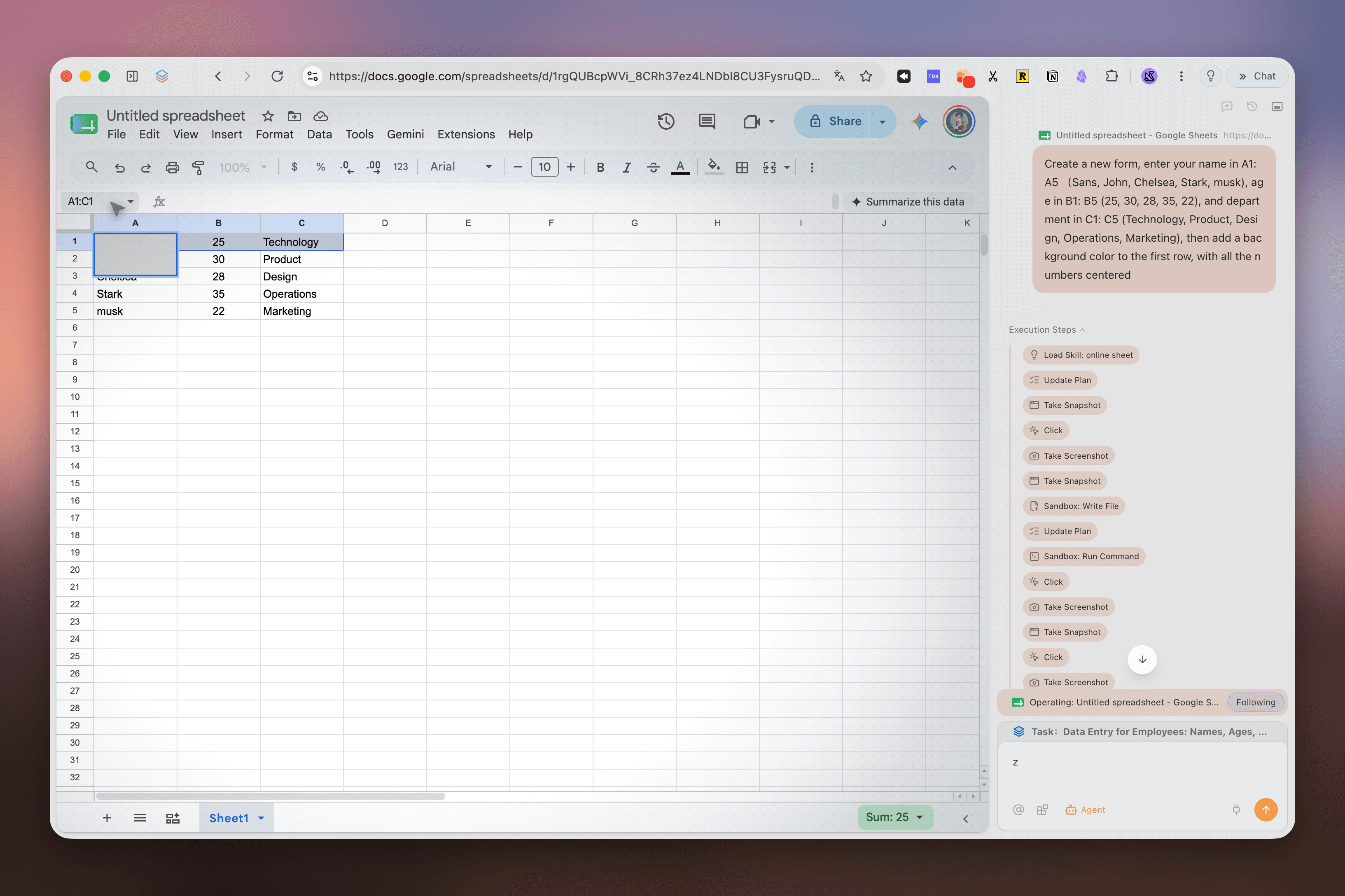
When you ask the AI agent to do work, it runs in its own tab group. Every step is visible and reversible, and your personal tabs stay untouched — a safety model traditional browsers simply don't have.
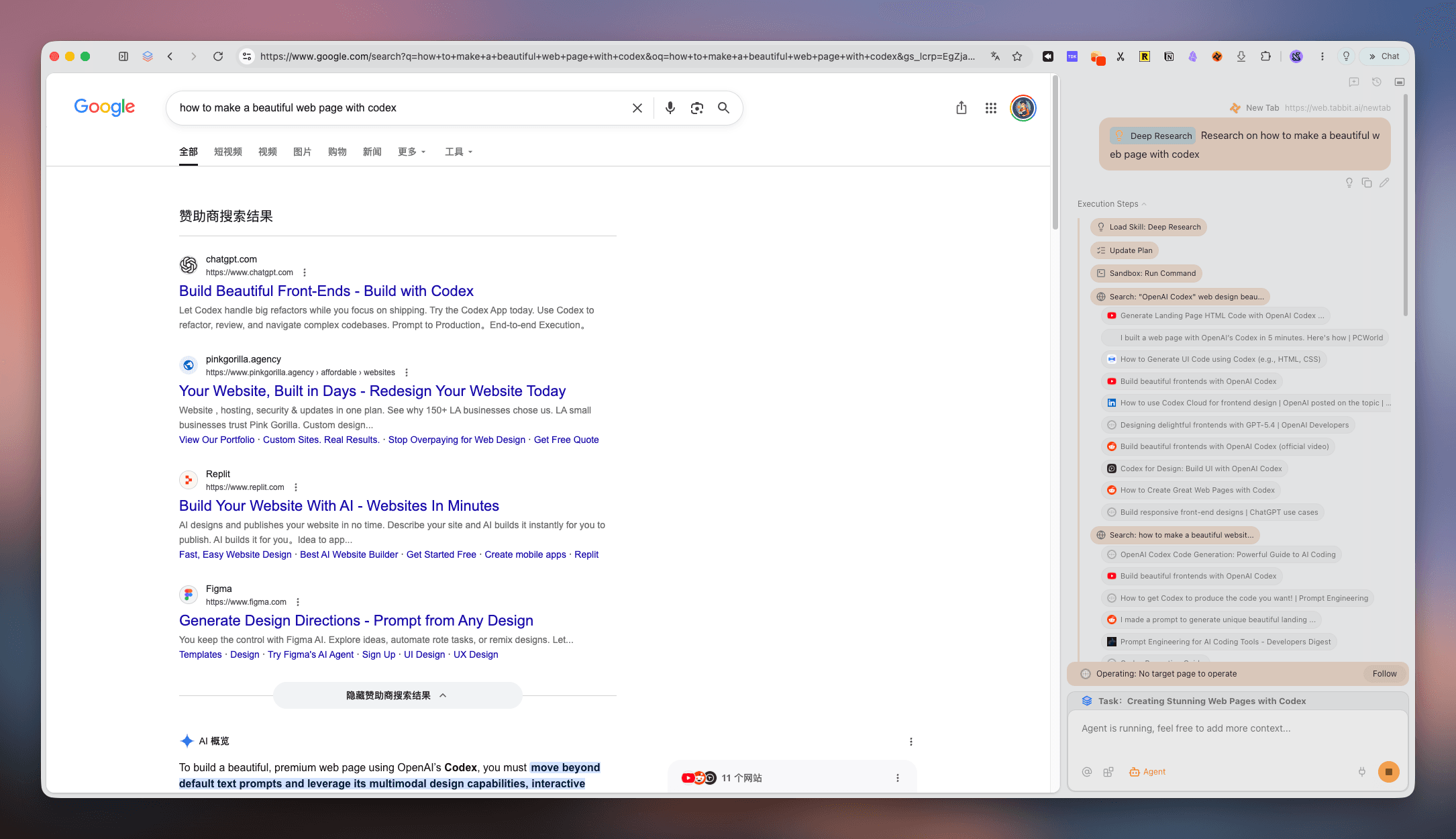
Deep Research shows its sources and reasoning, so AI-generated answers can be traced back to real pages. No black-box decisions when the stakes are your data.
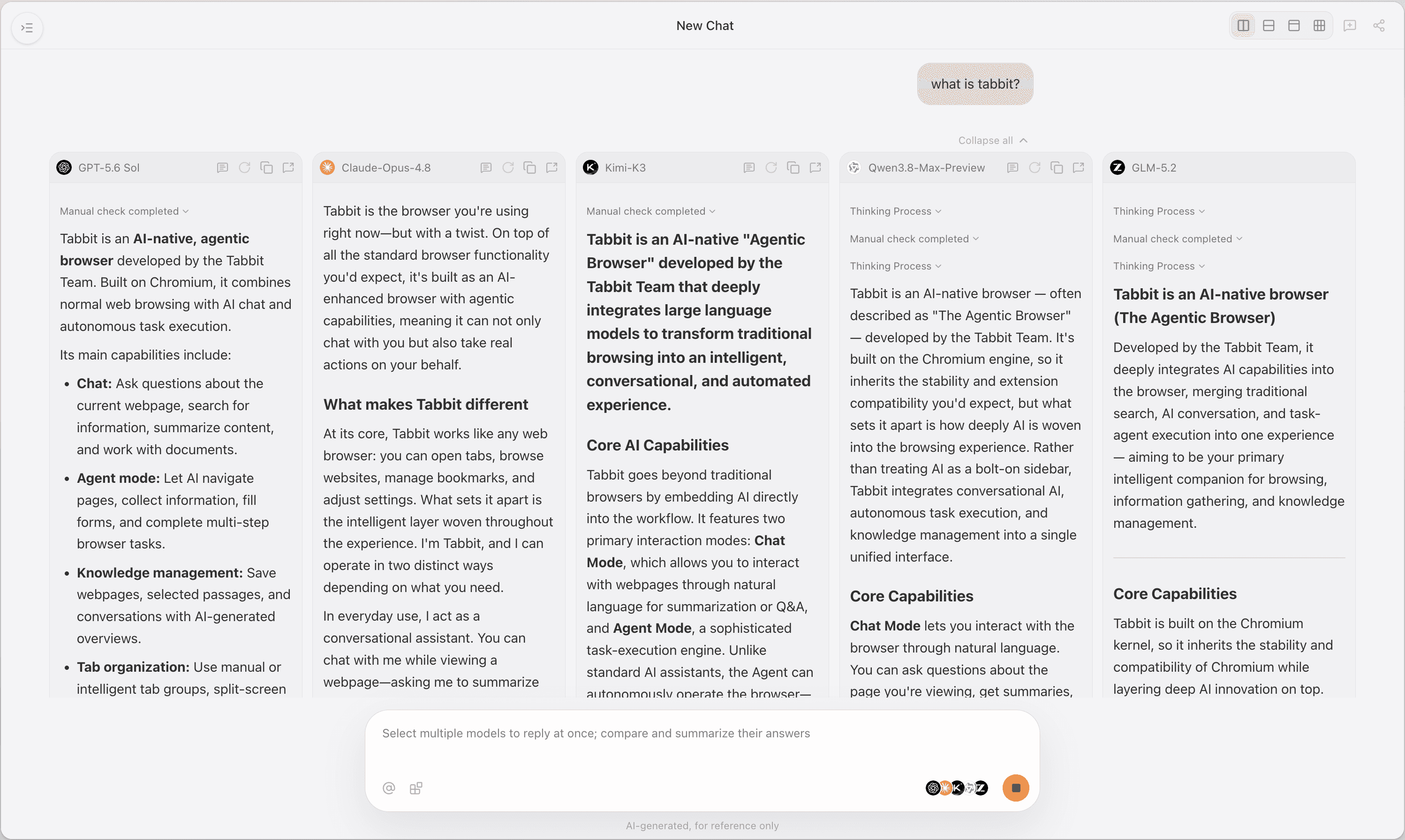
Tabbit lets you pick from multiple top models. You decide which provider processes your context, and @-mention references show exactly what the AI is looking at — nothing hidden.
Here's how the leading secure browsers stack up against Tabbit on the dimensions that matter most.
| Browser | AI threat reading | Phishing guard | Tracker blocking | AI task safety | Privacy by default | Price | Platforms |
|---|---|---|---|---|---|---|---|
| Tabbit | Active AI reading | AI-based | Built-in | Isolated tab groups | Model choice + transparent context | Free | macOS, Windows |
| Brave | Blocklists only | Lists + optional | Built-in | None | Good defaults | Free | All major |
| Firefox | Blocklists only | Lists + extensions | Built-in / via extensions | None | Customizable | Free | All major |
| Tor | Blocklists only | Lists | Via relays | None | Maximum anonymity | Free | Desktop + Android |
| Chrome | Blocklists only | Safe Browsing lists | No (needs extensions) | None | Google defaults | Free | All major |
Your best choice depends on what you're protecting. Here's a quick guide.
Online banking & payments
Workspace isolation keeps banking separate from work and personal tabs, and the AI phishing guard reads payment pages before you enter credentials.
Public Wi-Fi (coffee shop, airport)
Tor adds network-layer anonymity; Tabbit adds AI threat reading plus HTTPS upgrades while staying fast enough for real work.
Deep research with AI
Deep Research returns traceable sources, so AI findings can be verified — something no blocklist-based browser offers.
Maximum anonymity
If your priority is hiding your identity at all costs, Tor's relay network is the gold standard.
Family shared computer
Separate workspaces and visible AI tasks keep each family member's browsing isolated and auditable.
There's no single winner. Brave has the best all-round blocking, Tor offers maximum anonymity, and Firefox is the most customizable. If you also want AI tasks done safely, Tabbit adds proactive phishing reading and isolated agent runs on top of a hardened Chromium core.
Download Tabbit free for macOS and Windows and get AI-powered security on top of a fast, clean browser.