01
Google Chrome
Best for compatibility & speed
- Most sites are built and tested against Chromium first.
- Massive extension library and cross-device sync.
High memory use, and privacy is tied to Google’s ecosystem.
Ranked list · 2026
The internet’s most important browsers, ranked by what they do best — from Chrome’s compatibility to Tabbit’s AI-native workspace. Pick a priority and see which one wins for you.
~70%
Chrome leads global browser market share
3
Independent browser engines still remain
2026
The year AI-native browsers enter the top lists
The 2026 shortlist
The shortlist keeps changing: Chrome, Safari, Edge, Firefox, and Brave still define the mainstream, while AI-native browsers such as Tabbit are winning the workflows that happen between tabs.
Jump to the browser that fits your job:
Google Chrome
High memory use, and privacy is tied to Google’s ecosystem.
Apple Safari
Windows users cannot use it, and some web features lag Chromium.
Microsoft Edge
Chromium-based and bundled with Windows, so less independent.
Mozilla Firefox
Some niche sites may prefer Chromium.
Brave
Fewer mainstream integrations than Chrome or Safari.
Tabbit
Newer than the five above — ideal if you work across many tabs.
Why Tabbit belongs in the list
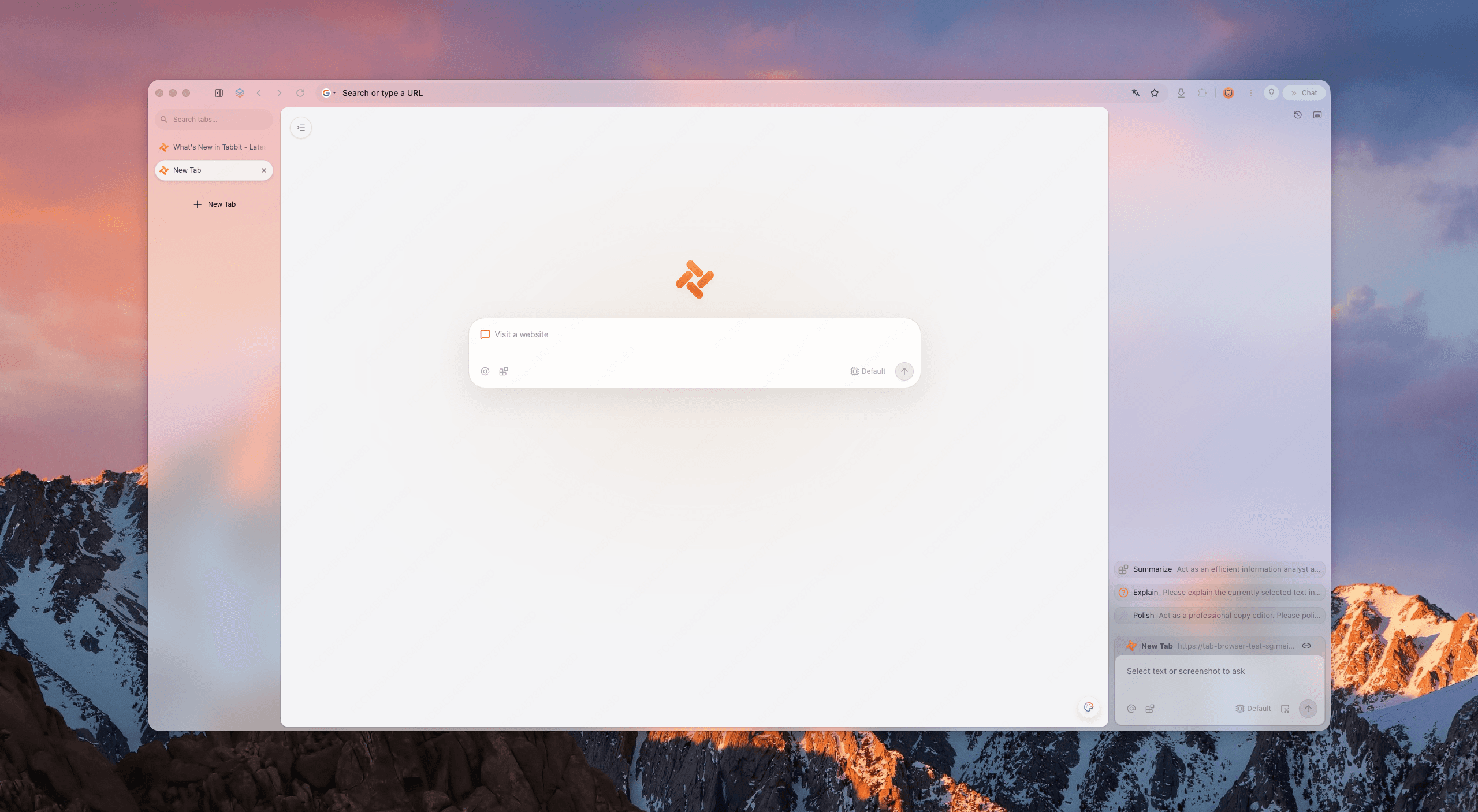
Most browsers were designed to display pages. Tabbit was designed for the work that happens between pages — research, comparison, extraction, and action.
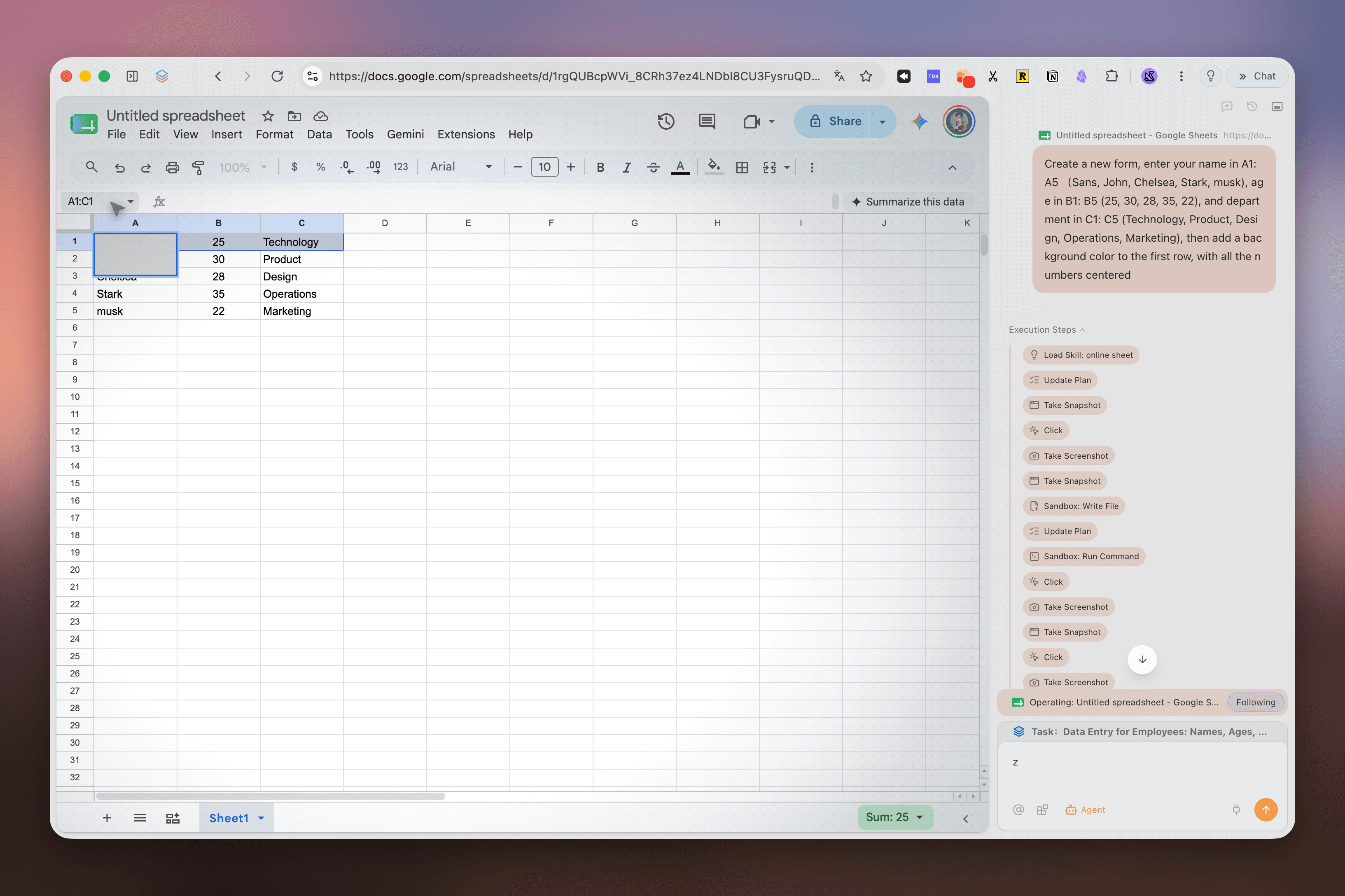
Tabbit’s agent works inside real websites — filling forms, comparing options, and finishing multi-step tasks while you review the results.
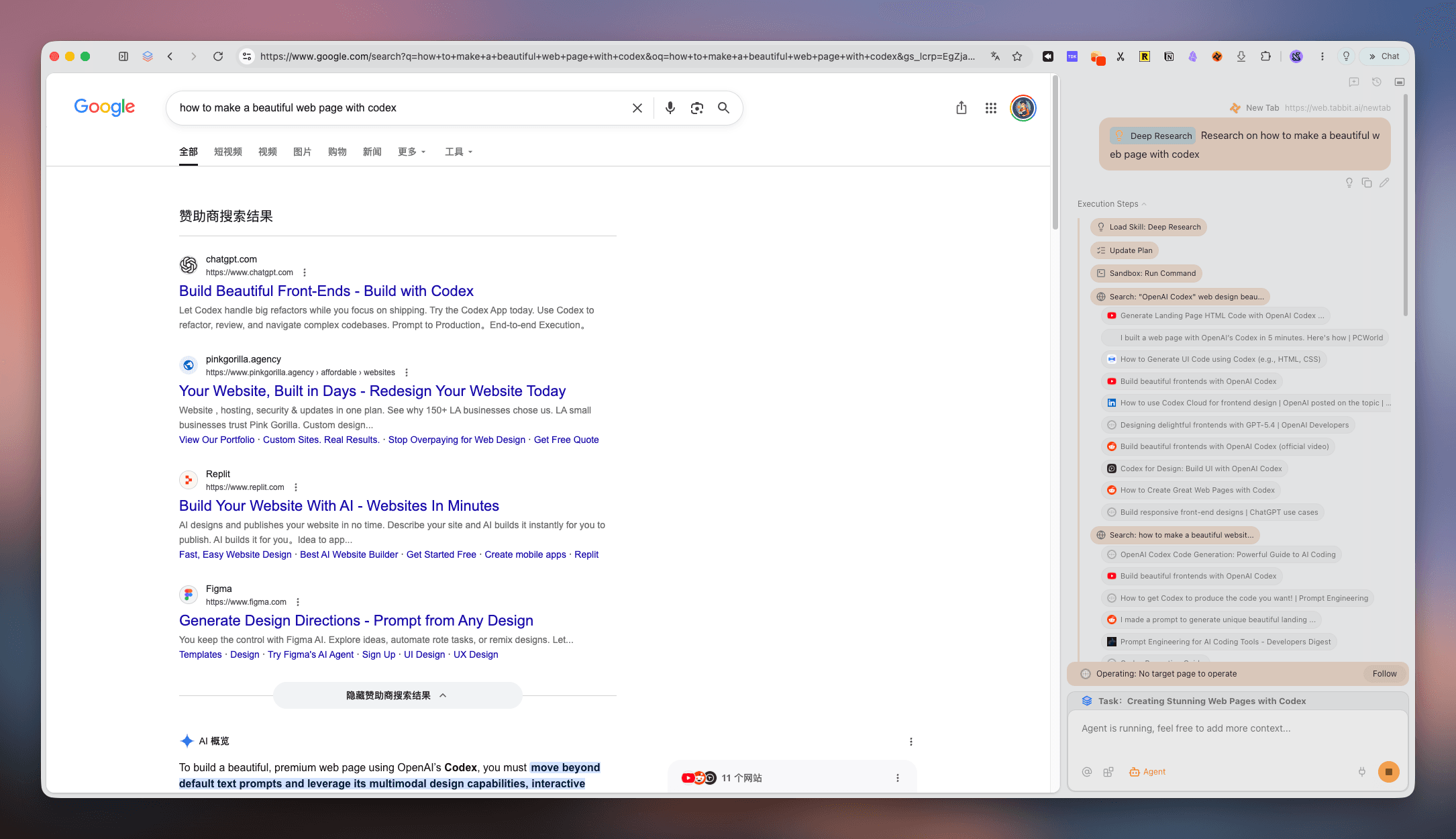
Instead of juggling 40 open tabs, Tabbit runs a deep research task and returns a structured briefing with sources.
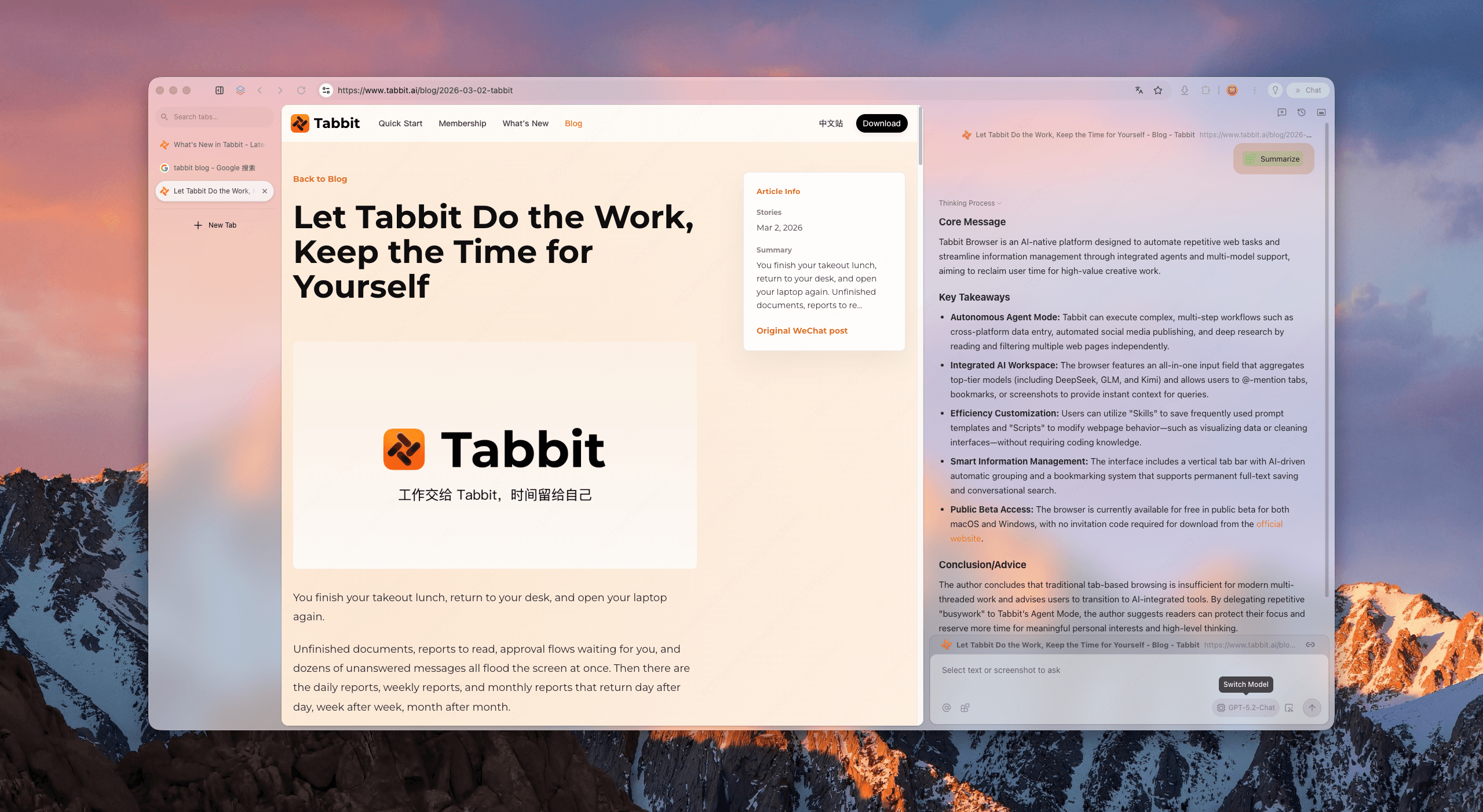
Open any article and the sidebar pulls out the key points, so you can decide what deserves a full read.
Comparison
The traditional top browsers handle pages beautifully. The difference is whether AI is an added layer or woven into how the browser works.
Which one should you pick?
There is no single “best” browser — only the best browser for what you do today. Choose your priority and see who wins.
Pick
A browser that acts, not just displays.

AI-native work
A browser that acts, not just displays.
FAQ
The most-used browsers remain Google Chrome, Apple Safari, Microsoft Edge, Mozilla Firefox, and Brave. AI-native browsers such as Tabbit are now entering top lists by handling research and multi-step tasks that traditional browsers leave to you.
Google Chrome holds roughly 70% of global browser market share, according to Statcounter. It is the default on many devices and the baseline for most web development.
Chrome and Edge are consistently fast on modern hardware. On Apple silicon, Safari often wins on battery life and responsiveness. Real-world speed differences are small, so workflow fit matters more.
Yes. Tabbit is free for macOS and Windows, imports bookmarks and settings from Chrome, Edge, and Safari in one click, and runs agent tasks in separate tab groups so your own browsing is never interrupted.
Brave and Firefox are strong privacy choices with built-in tracker blocking. For work browsing, an AI-native browser like Tabbit can keep your research context private to your own session.
Chrome is the best default for compatibility, but it is not the best for every job. For AI-heavy research, cross-tab synthesis, and automation, a browser like Tabbit offers capabilities Chrome does not have.
Edge is deeply integrated with Windows 11 and fast on the platform. If you want an AI workspace that also runs great on Windows, Tabbit supports both Windows and macOS.
Safari is the default with great battery life and iCloud sync. Tabbit gives Mac users an AI-native alternative with agent automation and deep research, and you can import your Safari data.
If a top browser for you means fewer tabs, less copy-paste, and more synthesis, start with Tabbit — free for macOS and Windows.