AI that finishes web work
Tabbit
Agent mode can research across pages, extract information and continue multi-step tasks in separate tab groups.
Desktop only today; not the choice for broad mobile coverage.
THE SHORT ANSWER · UPDATED 2026
There is no honest one-size-fits-all winner. The right replacement depends on what you want Chrome to stop doing—and what you need your next browser to do better.
PICK BY PRIORITY
A good replacement should solve your main frustration without creating a worse one. These are the clearest fits, with the tradeoff stated plainly.
AI that finishes web work
Agent mode can research across pages, extract information and continue multi-step tasks in separate tab groups.
Desktop only today; not the choice for broad mobile coverage.
Privacy with Chrome familiarity
Chromium compatibility plus blocking for ads and trackers makes switching relatively easy.
Its crypto and rewards features are not for everyone.
Open-source independence
A non-Chromium engine, strong privacy controls and broad desktop/mobile support.
Some sites and extensions still work best in Chromium.
Best fit for Apple devices
Efficient on Apple hardware with excellent iCloud, Handoff and battery integration.
Apple-only and a smaller extension catalog.
Windows and Microsoft services
Built into Windows with strong Microsoft 365 integration and familiar Chromium compatibility.
Not a clean break from a large platform vendor.
FAST COMPARISON
Ratings are editorial guidance, not lab benchmarks. “AI” distinguishes chat helpers from agents that can carry out multi-step browser work.
| Browser | Best for | Chrome compatibility | Privacy defaults | AI depth |
|---|---|---|---|---|
| Tabbit | Research and task execution | High | Good | Agent-first |
| Brave | Private everyday browsing | High | Strong | Assistant |
| Firefox | Open web and control | Medium | Strong | Light |
| Safari | Apple ecosystem | Medium | Strong | Apple features |
| Edge | Windows and Microsoft 365 | High | Average | Copilot |
| Vivaldi | Deep customization | High | Good | Light |
High/Medium describe practical site and extension fit; privacy and AI labels summarize product direction.
WHY TABBIT IS DIFFERENT
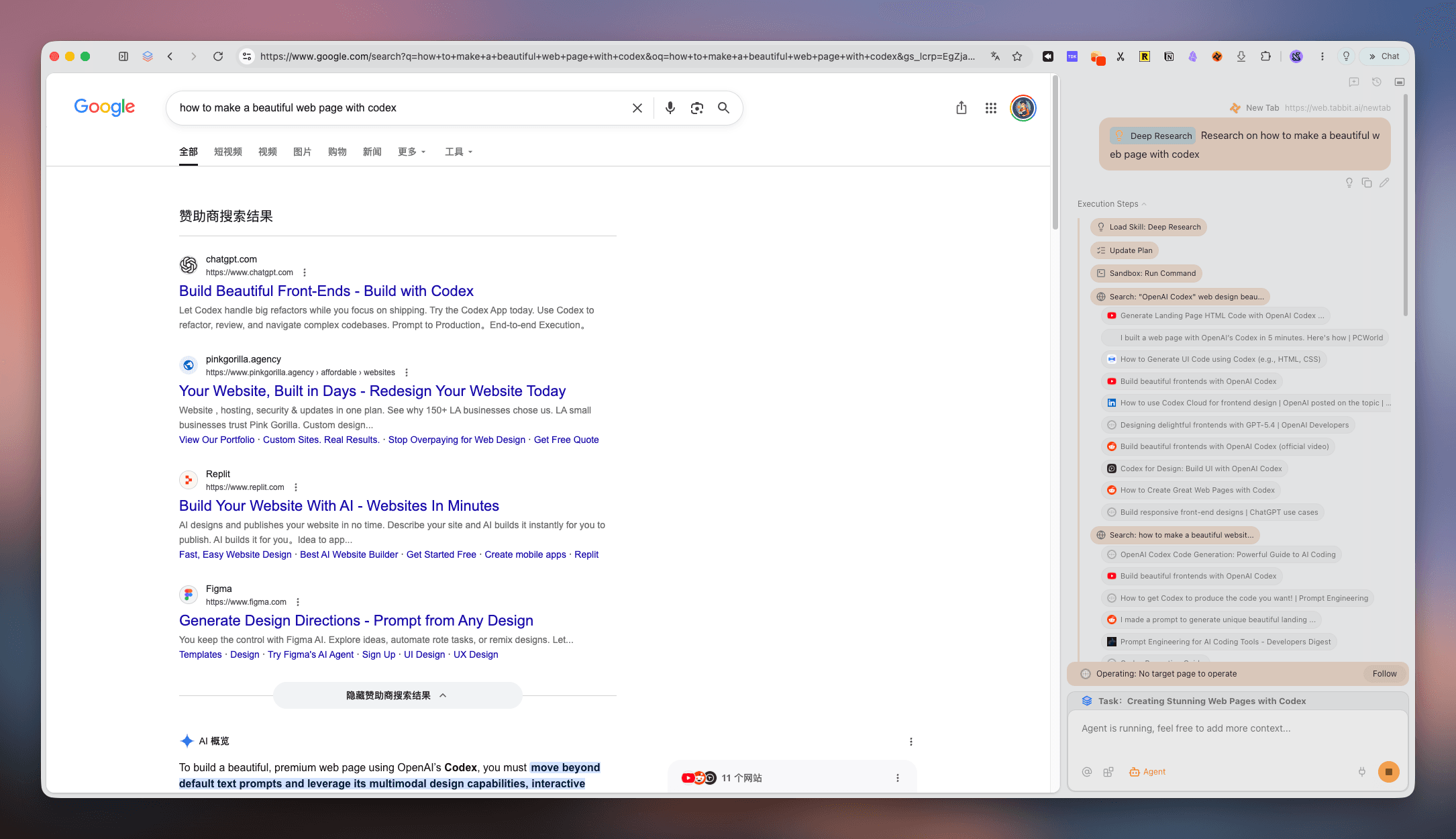
In Tabbit, an Agent can open sources, track execution steps and assemble findings while the task stays in its own tab group. That is a different promise from adding a chat box beside one page.
Choose Tabbit for desktop knowledge work. Keep Chrome or another browser if mobile sync, a niche extension or strict company support matters more.
SWITCH WITHOUT REGRET
A browser switch should be reversible. Use one real workweek to validate the things a feature list cannot tell you.
Bring over bookmarks and passwords, then leave Chrome installed while you test logins and critical extensions.
Test the sites, video calls, research tabs and work tools that actually define your day.
Only switch the default after the new browser survives your real workload, battery and privacy expectations.
FAQ
For a familiar privacy-first browser, Brave is the easiest broad recommendation. Firefox is better if you want a non-Chromium engine. Tabbit is the stronger choice for AI research and multi-step web tasks.
Memory use changes with tabs, extensions and operating system. Safari is often efficient on Apple hardware, while Edge can benefit from sleeping tabs on Windows. Test your normal session instead of trusting one benchmark.
Brave and Firefox are strong mainstream choices. Tor Browser is designed for anonymity but is slower and less convenient for everyday work. Privacy also depends on sync, search and account settings.
Chromium-based alternatives such as Brave, Edge and Vivaldi generally have the closest extension compatibility. Verify every business-critical extension before switching.
Tabbit is better when you want an Agent to research and execute work across tabs. Chrome remains better for the broadest platform coverage, enterprise familiarity and the deepest extension ecosystem.
Try Tabbit for AI research, multi-tab context and Agent workflows on macOS or Windows.