Tabbit

Decision-first browser guide

Best browser to use

There is no single “best” browser—only the best browser for what you do today. Pick your top priority and see which option fits, plus where Tabbit changes the equation.

What matters most to you right now?

Pick

Tabbit

An AI-native workspace browser that does work across tabs.

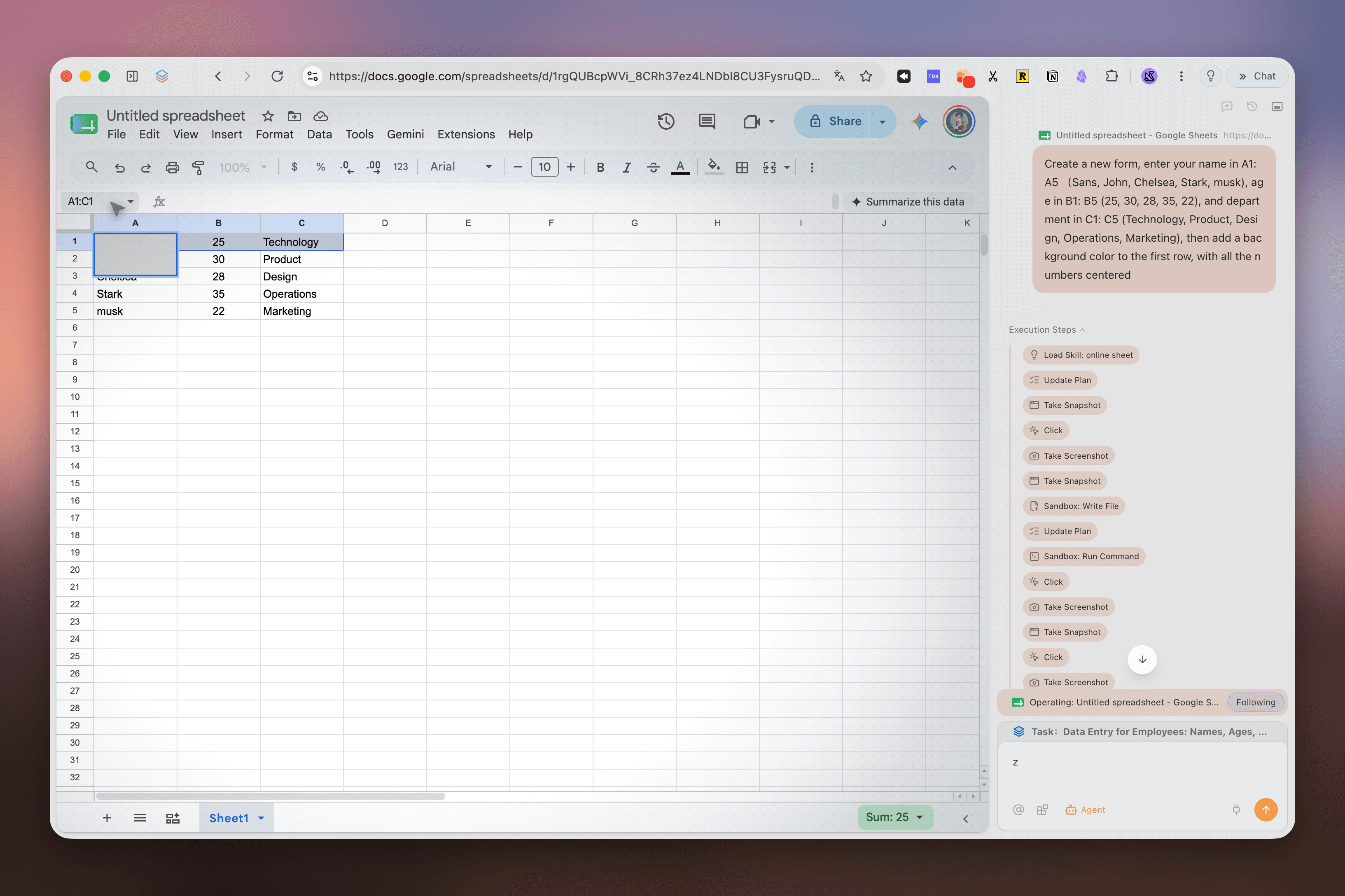
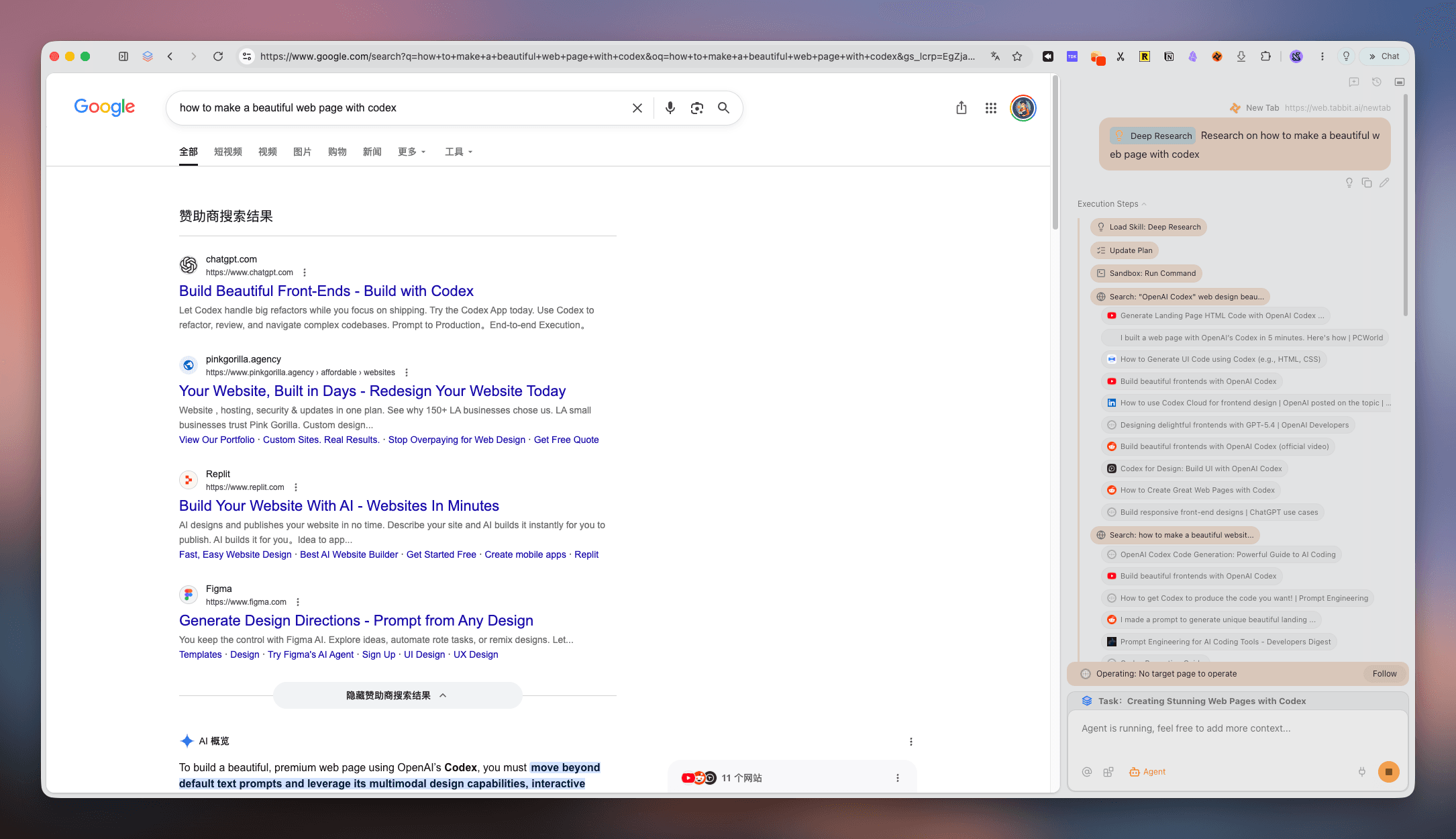
  • Agent Mode reads pages, fills forms, and runs multi-step tasks.
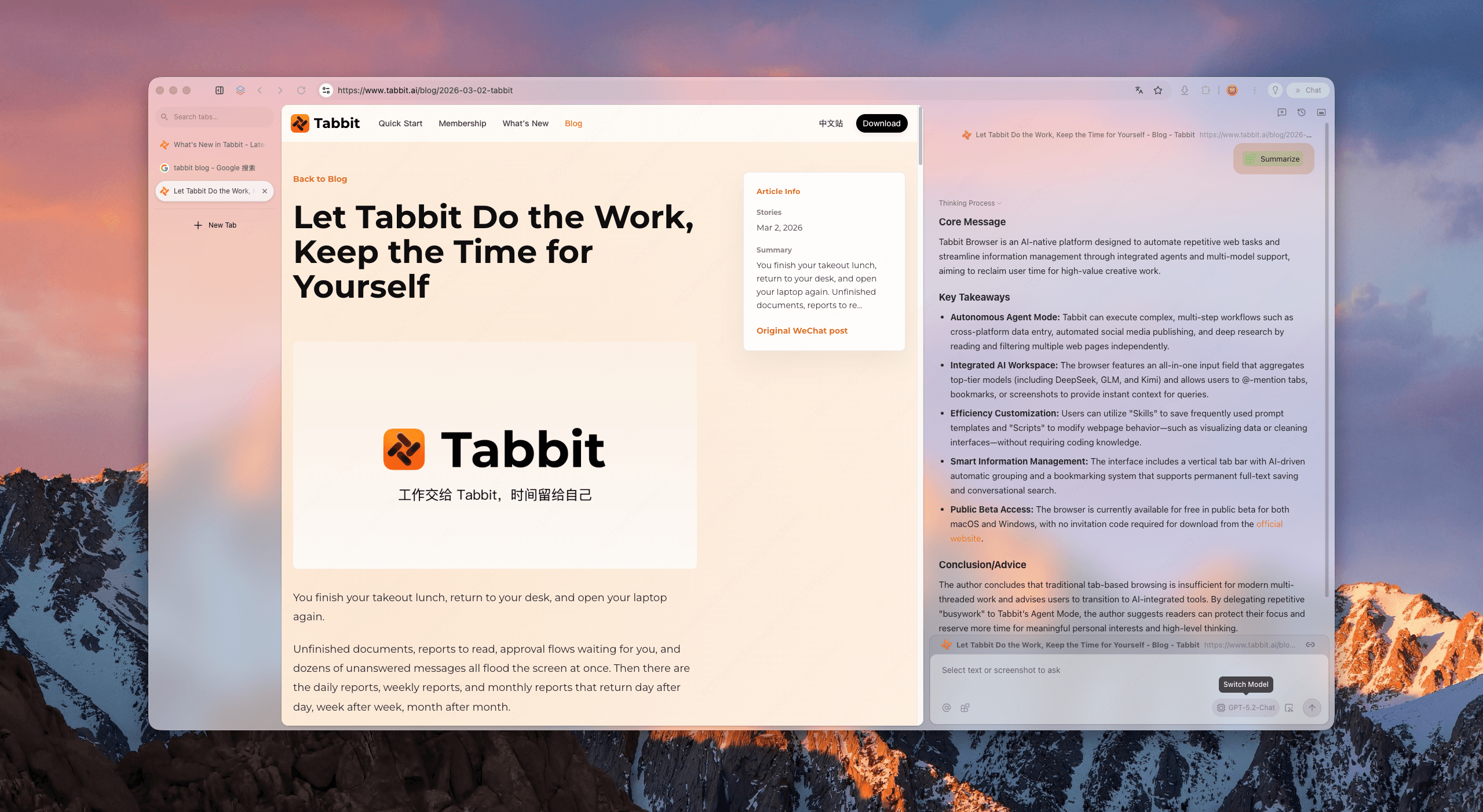
  • Cross-tab context keeps research projects in one coherent session.
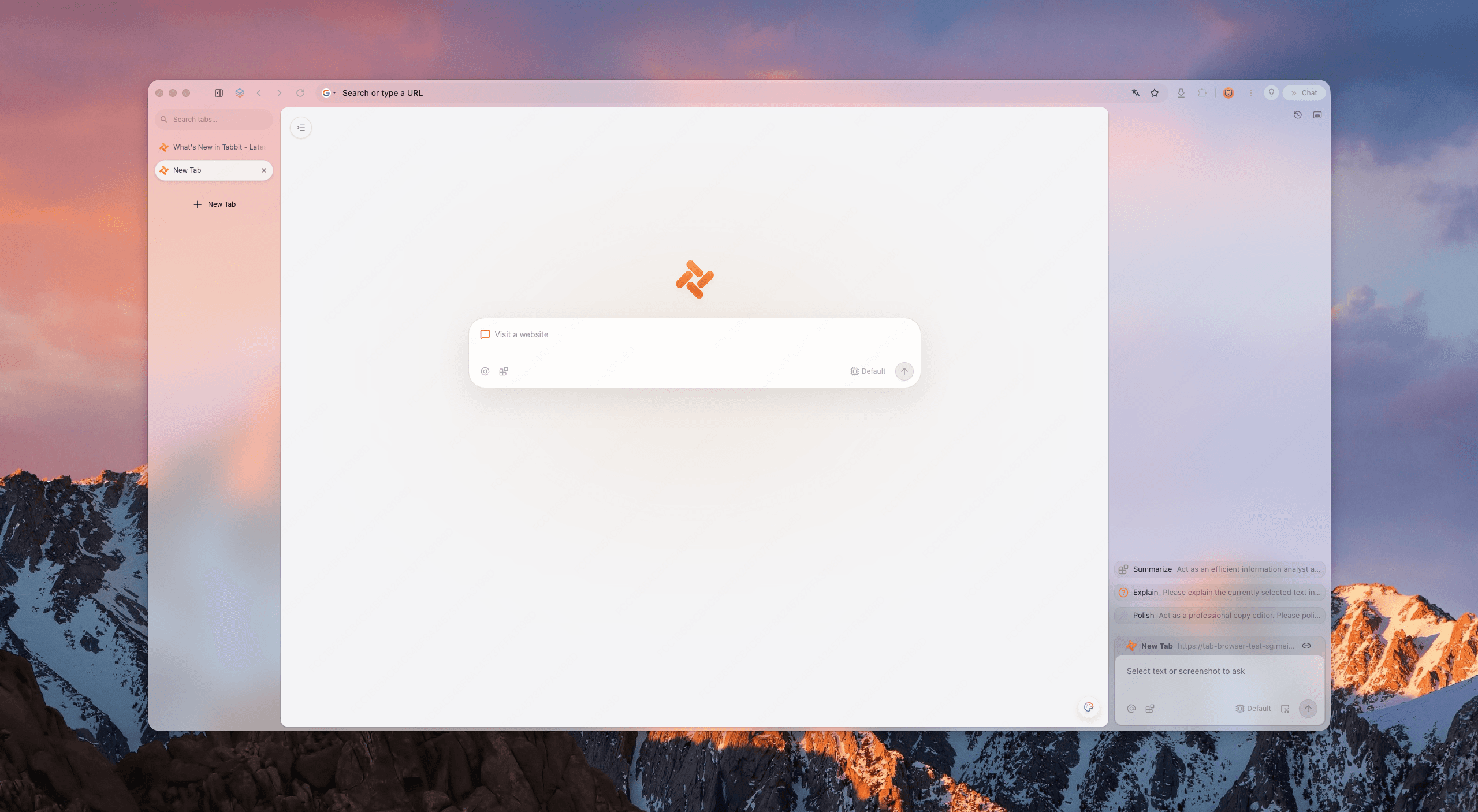
  • Vertical tabs + auto-grouped workspaces keep complex work tidy.
The field

How the four mainstream browsers split the vote

Chrome

Compatibility king

The default choice when site support and extension breadth come first.

Edge

Windows + AI helper

Copilot, efficiency tools, and Microsoft integrations make it a strong Windows pick.

Safari

Apple native

Best battery and ecosystem handoff for iPhone, iPad, and Mac users.

Firefox

Independent & private

The mainstream alternative for users who want fewer Chromium tradeoffs.

Beyond the usual four

Why Tabbit belongs in the “best browser to use” conversation

Most browsers were designed to display pages. Tabbit was designed around the work that happens across pages—research, comparison, extraction, and action.

01

Cross-tab intelligence

Keep sources open and let the agent reason across them instead of flattening everything into one prompt.

02

Agentic execution

Move from reading to doing: fill forms, compare options, and continue tasks without constant copy/paste.

03

Workspace-first design

Vertical tabs, smart groups, and project spaces keep heavy sessions organized by default.

Reality check

Tabbit vs “a normal browser with AI in the sidebar”

Sidebars are everywhere. The difference is whether AI is layered on top—or woven into how the browser works.

Capability
Tabbit
Typical browser + AI add-on
Primary design goal
Workspace intelligence across tabs and tasks
Web compatibility first; AI as a feature layer
Best for
Research, synthesis, and multi-step workflows
General browsing and light assistance
Context model
Treats the session like a project, not a single page
Often page-scoped unless you manually stitch context
Where it shines
When the work is messy: many sources, many steps
When the work is simple: read, click, occasional summaries

FAQ

Common questions about the best browser to use

Is there a single best browser for everyone?

No. Speed is closer than ever across major browsers. The better question is what you optimize for: compatibility, ecosystem, privacy, or AI-heavy workflows.

Why is Chrome still the most common recommendation?

Most websites are built and tested against Chromium first, so Chrome tends to “just work.” That does not automatically make it the best for privacy or productivity.

Is Edge the best browser to use on Windows 11?

If you value built-in Copilot, Microsoft integrations, and efficiency features, Edge is a strong pick. If you prefer less Microsoft-centric tooling, Firefox or Chrome may fit better.

Should Mac users choose Safari or Chrome?

Choose Safari for the tightest Apple integration and battery life. Choose Chrome for the widest extension ecosystem and Chromium compatibility.

What is the most private browser to use daily?

Firefox is the major independent option; Safari has strong defaults on Apple hardware; Brave blocks trackers by default. The right choice depends on your threat model.

When should I consider an AI browser like Tabbit?

Consider Tabbit when your bottleneck is research and execution across many tabs—when summaries are not enough and you need structured, cross-page intelligence.

Can I replace Chrome completely with an AI browser?

AI browsers are improving fast, but many users still keep a mainstream browser for edge cases. Tabbit can be your primary workspace while Chrome handles niche compatibility needs.

Is Tabbit free to download?

Yes—download Tabbit for macOS and Windows from the official site linked on this page.

Try Tabbit as your AI workspace browser

If the best browser to use for you means fewer tabs, less copy/paste, and faster synthesis, start with Tabbit.

Related guides