Tabbit is the best Microsoft Edge alternative overall in 2026. It has vertical tabs and organized workspaces, but its real advantage is practical AI: page context, several model choices, reusable Skills, and agents that can work across multiple pages. Vivaldi is the closest traditional Edge replacement and a better fit for mobile-first sync.
The other picks solve narrower problems. Firefox gets you off Chromium. Brave keeps Chrome extensions while blocking more trackers by default. Chrome, Opera, Safari, and DuckDuckGo each suit a specific ecosystem or browsing style.

Key takeaways
Tabbit ranks first for its mix of tab organization, page-aware AI, and browser agents.
Vivaldi is the closest conventional replacement and has broader mobile support.
Firefox is the clearest non-Chromium option; Brave is the easiest privacy-focused Chromium switch.
Keep Edge installed until the new browser passes your essential site, extension, and sync tests.
Edge browser alternatives at a glance
| Rank | Browser | Best for | Engine | Desktop platforms | Mobile | Edge-like organization | Extension fit | Main trade-off |
|---|---|---|---|---|---|---|---|---|
| 1 | Tabbit | Best overall; AI research and browser automation | Chromium | Windows, macOS | Desktop-first | Strong: vertical tabs, smart groups, task tab groups | Chromium-based workflow | Not the pick for mobile-first sync |
| 2 | Vivaldi | Closest conventional Edge replacement | Chromium | Windows, macOS, Linux | iOS, Android | Excellent: tabs, stacks, workspaces, panels | Chrome extensions | Dense settings can overwhelm |
| 3 | Firefox | Leaving Chromium and gaining user control | Gecko | Windows, macOS, Linux | iOS, Android | Good, with extensions and containers | Firefox add-ons | Rare Chromium-optimized site friction |
| 4 | Brave | Private Chromium browsing with little setup | Chromium | Windows, macOS, Linux | iOS, Android | Familiar conventional tabs and groups | Chrome extensions | Extra crypto/AI features may need cleanup |
| 5 | Chrome | Compatibility and Google account sync | Chromium | Windows, macOS, Linux | iOS, Android | Familiar, but less workspace-centric | Broad Chrome Web Store | Does not solve Big Tech or Chromium concerns |
| 6 | Opera One | Built-in sidebar, messaging, VPN, and tab tools | Chromium | Windows, macOS, Linux | iOS, Android | Strong sidebar and Tab Islands | Chromium extensions | Busy interface; some tools are optional extras |
| 7 | Safari | Mac, iPhone, and iPad integration | WebKit | macOS | iOS, iPadOS | Good Apple-native tab groups | Smaller extension selection | No current Windows or Android browser |
| 8 | DuckDuckGo Browser | Simple private browsing | Platform-native engines | Windows, macOS | iOS, Android | Simple rather than power-user focused | Limited third-party extensions | Too minimal for extension-heavy workflows |
Platform and feature availability can change. Check each vendor's current download page before migrating a managed or multi-device setup.
What Edge users actually need to replace
Start with the Edge features you would miss. In a June 2026 Edge migration discussion on Reddit, the practical concerns were Windows and iPhone sync, tab management, Collections, sleeping tabs, and mobile extensions.
Check five things before switching:
Does it run your essential sites and extensions?
Can it organize tabs and projects the way you work?
Does it sync the right data across your actual devices?
What does it block or send to the cloud by default?
Can its AI only summarize, or can it complete a task across pages?
Managed Microsoft 365 users may still need Edge for work. For a Windows-only comparison, see internet browsers for Windows and the best browsers for Windows 11.
1. Tabbit — best overall Edge browser alternative
Best for research, operations, and any job that involves moving between many pages.
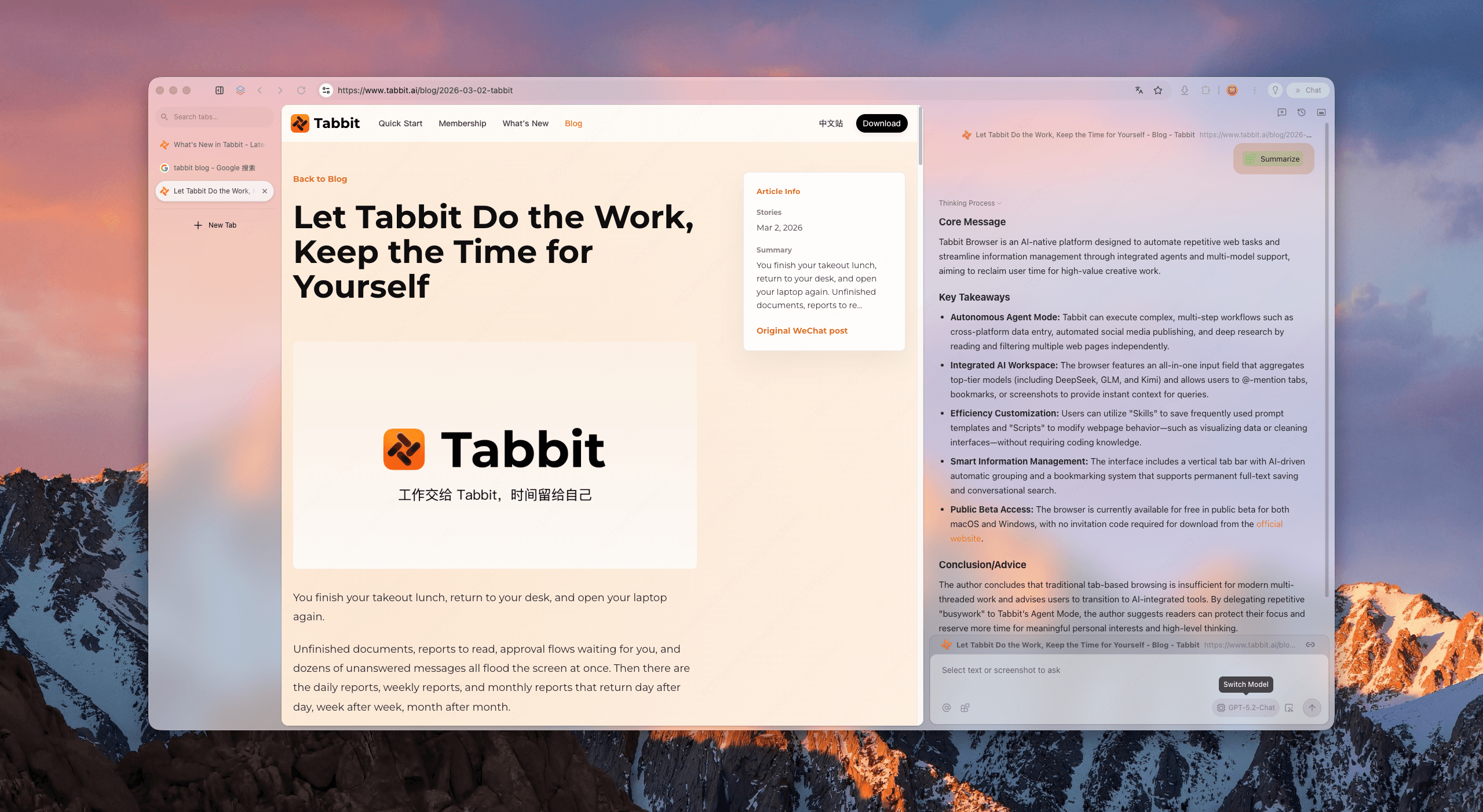
Tabbit ranks first because it combines Edge-style desktop organization with useful AI. Vertical tabs and task groups keep projects tidy. The AI can use open tabs, bookmarks, screenshots, or local files as context, so you do not have to paste the same material into a separate chat.
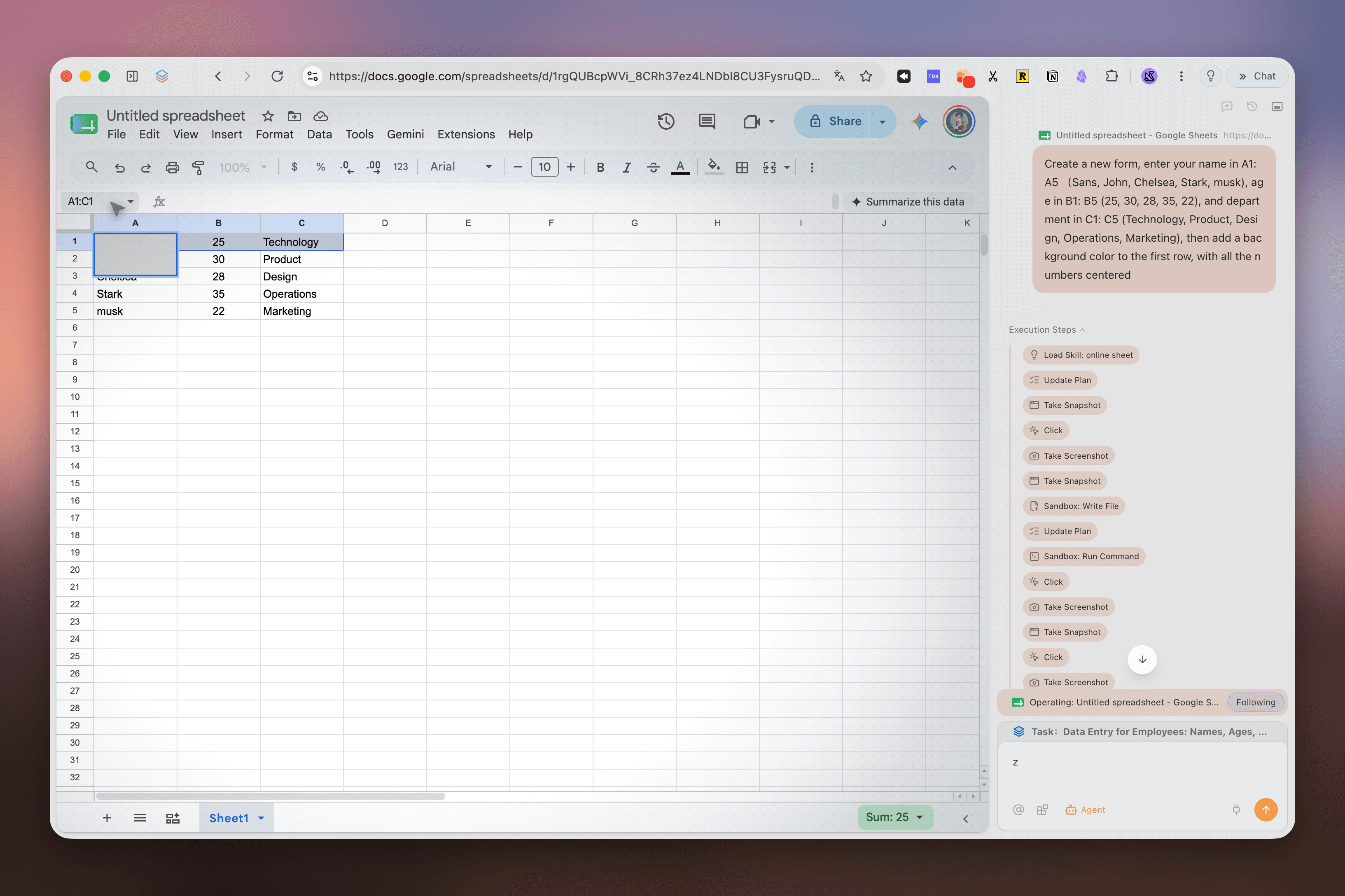
Agent Mode handles work that crosses pages, such as comparing vendors or collecting structured data. Each agent task stays in its own tab group, separate from your manual browsing.

Tabbit also supports several model families. You can compare answers or choose a model that suits the task instead of routing every question through one provider.

The catch is mobile. Tabbit is currently a desktop-first browser for Windows and macOS, so people who need phone sync should look at Vivaldi or Firefox. For more detail, see our AI browser comparison, agentic browser guide for Windows, and Tabbit workflow examples.
2. Vivaldi — closest conventional Microsoft Edge alternative
Best for people who want Edge's vertical tabs and Workspaces on more platforms.
Vivaldi is the closest conventional replacement. It has vertical tabs, tab stacks, Workspaces, page tiling, web panels, and Chrome extension support. Apps for Windows, macOS, Linux, iOS, and Android make it easier to keep the same setup across devices.
The settings can be overwhelming, and it remains a Chromium browser. Start with the default layout. Add tab stacks or panels only when you need them.
3. Firefox — best independent non-Chromium alternative
Firefox is the clearest choice if leaving Edge also means leaving Chromium. Its Gecko engine, desktop and mobile apps, profiles, sync, and mature add-on catalog cover most daily work. Enhanced Tracking Protection blocks several kinds of cross-site tracking by default.
There is no native clone of Edge Collections, and Firefox cannot install Chrome Web Store extensions. Test any company tools or niche web apps before making it your default.
4. Brave — best privacy-first Chromium replacement
Brave is the easy privacy-focused switch. It keeps Chromium compatibility and Chrome extensions, while Brave Shields blocks ads, trackers, and some fingerprinting techniques by default. It runs on major desktop and mobile platforms.
Brave does not replace Edge Collections or the Microsoft sidebar. Its optional wallet, rewards, VPN, and AI features may also need a few minutes of cleanup. Choose it when privacy defaults matter more than workspace features.
5. Google Chrome — best for compatibility and Google sync
Google Chrome has the lowest learning curve. It shares Edge's Chromium base, supports the same broad extension ecosystem, and syncs cleanly with Google accounts and Android.
It is a weak choice if you are leaving Edge because of Big Tech dependence, privacy, or clutter. Chrome changes the vendor, not the browser model. Read our Chrome alternatives guide before committing.
6. Opera One — best built-in sidebar and utility bundle
Opera One packs messaging, media controls, Tab Islands, ad blocking, a browser VPN, and Aria AI into one interface. Its Chromium base also handles most extension workflows.
This works well if Edge's sidebar was central to your day. The interface can feel busy, though, and Opera's AI is less task-oriented than Tabbit's multi-page agents. Disable the bundled tools you will not use.
7. Safari — best Edge alternative for an all-Apple setup
Safari makes sense when Edge is the odd browser in an Apple setup. Tabs, passwords, reading lists, and Handoff work across Mac, iPhone, and iPad. WebKit also gives you a non-Chromium engine.
There is no current Windows or Android version, and the extension catalog is smaller. Pick Safari only when your important devices are Apple products.
8. DuckDuckGo Browser — simplest private Edge alternative
DuckDuckGo Browser keeps setup to a minimum. It includes tracker blocking, private search, cookie-pop-up management, email protection, and a Fire Button that clears browsing data. Apps are available for Windows, macOS, iOS, and Android.
Limited extension support rules it out for many developers and researchers. It works best as a simple personal or secondary browser.
Which Edge features can each browser replace?
| Edge feature or habit | Closest replacement | What to expect |
|---|---|---|
| Vertical tabs and Workspaces | Vivaldi | Native tab positions, stacks, workspaces, panels, and tiling |
| Copilot summaries | Tabbit, Opera, Brave | All offer AI assistance; model choice and execution depth differ |
| Multi-step AI tasks | Tabbit | Agent Mode is designed to navigate and work across pages |
| Chrome/Edge extensions | Vivaldi, Brave, Chrome, Opera | Chromium creates the simplest extension migration |
| Independent browser engine | Firefox | Gecko avoids moving from one Chromium vendor to another |
| Strong privacy defaults | Brave, Firefox, DuckDuckGo | Different balances of blocking, extensions, and simplicity |
| Windows + iPhone continuity | Vivaldi, Firefox, Brave, Chrome, Opera | Confirm which data types sync before migrating |
| Apple-only continuity | Safari | Best fit for Mac, iPhone, and iPad together |
| Collections-like research | Tabbit or Vivaldi | Tabbit adds AI context and synthesis; Vivaldi organizes tabs and panels |
Export important Collections and keep a separate copy of critical bookmarks before switching.
How to switch from Microsoft Edge safely
List the Edge features you use, including passwords, bookmarks, Collections, profiles, extensions, phone sync, and Microsoft 365 sign-in.
Follow Microsoft's Edge support documentation to export your data. Collections and managed settings may need separate handling.
Install one candidate. Import a copy of your data and add only essential extensions.
Use it alongside Edge for a week. Test banking, calls, uploads, printing, company apps, and your busiest tab session before changing the default.
Keep Edge for Microsoft-specific or managed sites that do not work elsewhere. This matters more than cosmetic differences when choosing a browser for productivity.
Choose an Edge alternative by scenario
| Your situation | Best pick | Why |
|---|---|---|
| I want the best overall Edge upgrade | Tabbit | Vertical organization plus page context, model choice, Skills, and multi-step agents |
| I want the closest conventional replacement for Edge tabs and Workspaces | Vivaldi | Deep native tab, workspace, panel, and interface control |
| I want to leave Chromium | Firefox | Mature independent engine with strong add-ons and privacy controls |
| I want privacy without losing Chrome extensions | Brave | Chromium compatibility plus blocking enabled by default |
| I live in Google Workspace and Android | Chrome | Lowest sync and compatibility friction |
| I want a built-in sidebar, messaging, and utility bundle | Opera One | Native sidebar, Tab Islands, VPN, blocker, and AI assistant |
| I use only Mac, iPhone, and iPad | Safari | Native Apple continuity and WebKit efficiency |
| I want the simplest private browser | DuckDuckGo | Minimal setup and privacy-oriented defaults |
| I need Windows + iPhone sync | Vivaldi, Firefox, Brave, Chrome, or Opera | Cross-platform apps; verify the exact data each one syncs |
| I must keep company Microsoft integrations | Keep Edge for work; use a second browser personally | Separates managed requirements from personal preferences |
Final verdict
For the broad query "edge browser alternatives," Tabbit is the best overall answer. It preserves the organization that makes Edge useful on desktop, then advances the workflow with page context, multi-model AI, reusable Skills, and agents that can execute multi-step work.
Vivaldi is the closest conventional Edge replacement and the stronger choice for mobile-first synchronization. Firefox is the best principled exit from Chromium, while Brave is the easiest privacy-focused Chromium migration.
The practical rule is simple: replace the job, not the logo. Pick one browser, import a copy of your data, test it for a week, and only then make it the default.
FAQ
What is the best alternative to Microsoft Edge?
Tabbit is the best overall alternative because it combines Edge-style desktop organization with page-aware AI, model choice, reusable Skills, and browser automation. Vivaldi is the closest conventional replacement if cross-platform mobile sync is your priority.
Are Edge browser alternatives free?
Yes. Vivaldi, Tabbit, Firefox, Brave, Chrome, Opera, Safari, and DuckDuckGo all offer a free core browser as of July 29, 2026. Some sell optional services such as VPNs, premium AI, or other subscriptions.
Which Edge alternative is best for Windows 11?
Choose Tabbit for the best overall Windows 11 upgrade, Vivaldi for the closest conventional Edge-style organization, Brave for private Chromium browsing, or Firefox to leave Chromium. See the full Windows 11 browser comparison for OS-specific trade-offs.
Which Edge alternative works best with iPhone?
Vivaldi, Firefox, Brave, Chrome, Opera, and Safari all have iOS apps. Safari is best for an all-Apple setup; Vivaldi is the strongest Edge-like cross-platform option. Confirm that the browser syncs the exact data you need, such as tabs, bookmarks, history, and passwords.
Can Edge alternatives use Chrome extensions?
Chromium-based alternatives such as Vivaldi, Brave, Chrome, and Opera can use Chrome Web Store extensions. Firefox uses its own add-on ecosystem, Safari uses Safari extensions, and DuckDuckGo has limited third-party extension support.
Is Firefox better than Edge for privacy?
Firefox provides Enhanced Tracking Protection and an independent Gecko engine, which makes it a strong choice for users seeking more control and less Chromium dependence. "Better privacy" still depends on settings, extensions, sync choices, and account use; no browser makes every activity anonymous.
Is Brave faster than Edge?
There is no universal answer without a current test on your hardware, workload, extensions, and websites. Brave may load ad-heavy pages with less third-party content because Shields block resources, while Edge can be efficient on Windows. Test both with your own tab set rather than relying on a generic benchmark.
Do I need to uninstall Microsoft Edge after switching?
No. Keep Edge installed, especially on Windows or a managed work device. Set another browser as the default after testing it, and retain Edge for Microsoft-specific, legacy, or company-managed workflows that need it.