Microsoft's free Copilot is becoming less of a complete AI assistant and more of a storefront for Microsoft 365 subscriptions. That was the assessment in one WindowsForum analysis after Microsoft confirmed that Deep Research will leave the consumer Copilot app on August 18, 2026. So, does Copilot still have a deep research tool? Not for free, and not in the same place. The feature introduced in April 2025 is being retired. Its replacement, Researcher, sits inside Microsoft 365 Copilot and requires a Premium or business license.
Here is what changes on August 18, what happens to existing reports, and which alternatives make sense if you do not want to move your workflow into a Microsoft 365 subscription.
Key takeaways
Copilot's free Deep Research is retiring on August 18, 2026. Consumer Copilot users will lose the ability to create new reports after that date.
Researcher is the replacement, but it is not a free swap. It is available to Microsoft 365 Premium subscribers and eligible business/enterprise users.
Old reports are not deleted. Personal and Family subscribers can find them in chat history; Premium subscribers can open them in Researcher; everyone can export to Word.
Researcher is work-data aware. It can combine web sources with authorized Microsoft 365 content, which is its main advantage over the old consumer feature.
Free alternatives exist. Perplexity, Gemini, ChatGPT, and browser-level AI tools like Tabbit Browser can fill the gap depending on your workflow.
What Copilot's Deep Research was and why it is leaving
Microsoft introduced Deep Research to consumer Copilot on April 4, 2025, alongside Copilot Podcasts, Vision, Memory, and Actions. The idea was to turn Copilot from a chatbot into a personal AI companion. Deep Research could take an open-ended question, break it into steps, search multiple sources, and return a structured report with citations instead of a quick answer.
It was useful in several ordinary ways: students mapped unfamiliar subjects, job seekers researched companies, and hobbyists compared products. The feature also gave free Copilot something distinctive while ChatGPT, Gemini, and Perplexity were racing to add agentic AI tools.
Then, on July 2026, Microsoft announced that Deep Research would retire from the consumer app on August 18, 2026. The same date applies to Copilot Podcasts. Microsoft is not ending AI-assisted research; it is moving the most capable version behind a Microsoft 365 subscription.
The likely reason is economics. A deep-research job runs multiple searches, retrieves documents, calls large models, compares sources, and writes a long report. That costs far more than a single chat response. For a company that also owns Windows, Office, and Microsoft Graph, the paid productivity suite is an obvious home for the feature because it can use work data and enterprise governance there.
What replaces it: Researcher in Microsoft 365 Copilot
Researcher is an agent inside Microsoft 365 Copilot. Microsoft calls it a "supercharged research partner" for complex, multi-step questions and structured reports with citations. It belongs in the same broad category as other browser automation and agentic research products, but it runs inside the Microsoft 365 suite.
The important difference is context. Consumer Deep Research was mostly a web-research mode. Researcher can pull from the web and from Microsoft 365 work data you are authorized to access, including emails, meetings, files, chats, SharePoint, and third-party connectors such as Confluence, ServiceNow, and Salesforce. In a workplace deployment, it can write a briefing that cites public market news alongside internal project documents.
Researcher is also slower by design. Microsoft says responses range from under five minutes for simple queries to 10 to 45 minutes for complex ones. During that time, it plans the job, searches sources, reasons over the material, and drafts the report. The output is organized into sections with citations, charts, and next steps.
There are limits. Researcher shares a monthly quota of 25 combined queries with Analyst. It cannot currently process images as input or generate PowerPoint files or PDFs. It does not yet have memory, though Microsoft says some of these features are coming.
Researcher vs. Deep Research: what changes
| Dimension | Consumer Deep Research (retiring) | Microsoft 365 Copilot Researcher |
|---|---|---|
| Availability | Free consumer Copilot app | Microsoft 365 Premium, business, and enterprise |
| Primary data sources | Web + user-provided materials | Web + Microsoft 365 work data (with permissions) |
| Report output | Structured report with citations | Structured report with citations, charts, and visuals |
| Usage limit | Varies by tier; free access removed after August 18, 2026 | 25 combined queries/month with Analyst |
| Response time | Longer than normal chat | 5 to 45 minutes depending on complexity |
| Best for | General web research on personal accounts | Work briefings that combine public and internal sources |
This table is a snapshot, not a promise. Microsoft adjusts limits, models, and features frequently, so check the current official page before making a subscription decision.
Who keeps access and what it costs
After August 18, 2026, consumer Copilot users will not be able to start new Deep Research reports. Existing saved reports remain available in different places depending on your subscription:
Microsoft 365 Premium subscribers: can continue using Researcher and access previous Deep Research reports through it.
Microsoft 365 Personal and Family subscribers: can find old reports in Copilot chat history and open them in Word to save locally.
Free Copilot users: lose the creation capability entirely and do not get Researcher.
Researcher requires either Microsoft 365 Premium or a qualifying business/enterprise Microsoft 365 Copilot add-on. Microsoft 365 Premium launched in the US at $19.99 per month. That price bundles Office desktop apps, cloud storage, security features, and advanced agents including Researcher and Analyst. It is not a small add-on for one feature; it is a full subscription upgrade.
For someone who already works in Office, OneDrive, and Outlook every day, the bundle may be worth it. The value is much less clear for someone who used Deep Research only occasionally. The WindowsForum analysis put the issue more sharply, asking whether Microsoft saw free users as long-term customers or as a large product-testing population.
A practical option: Tabbit Browser's browser-level deep research
Not everyone wants to pay for Microsoft 365 Premium just to keep running research reports. If your work happens mainly in the browser, whether you are reading articles, comparing product pages, building spreadsheets, or writing briefs, a browser-level AI tool offers another route.
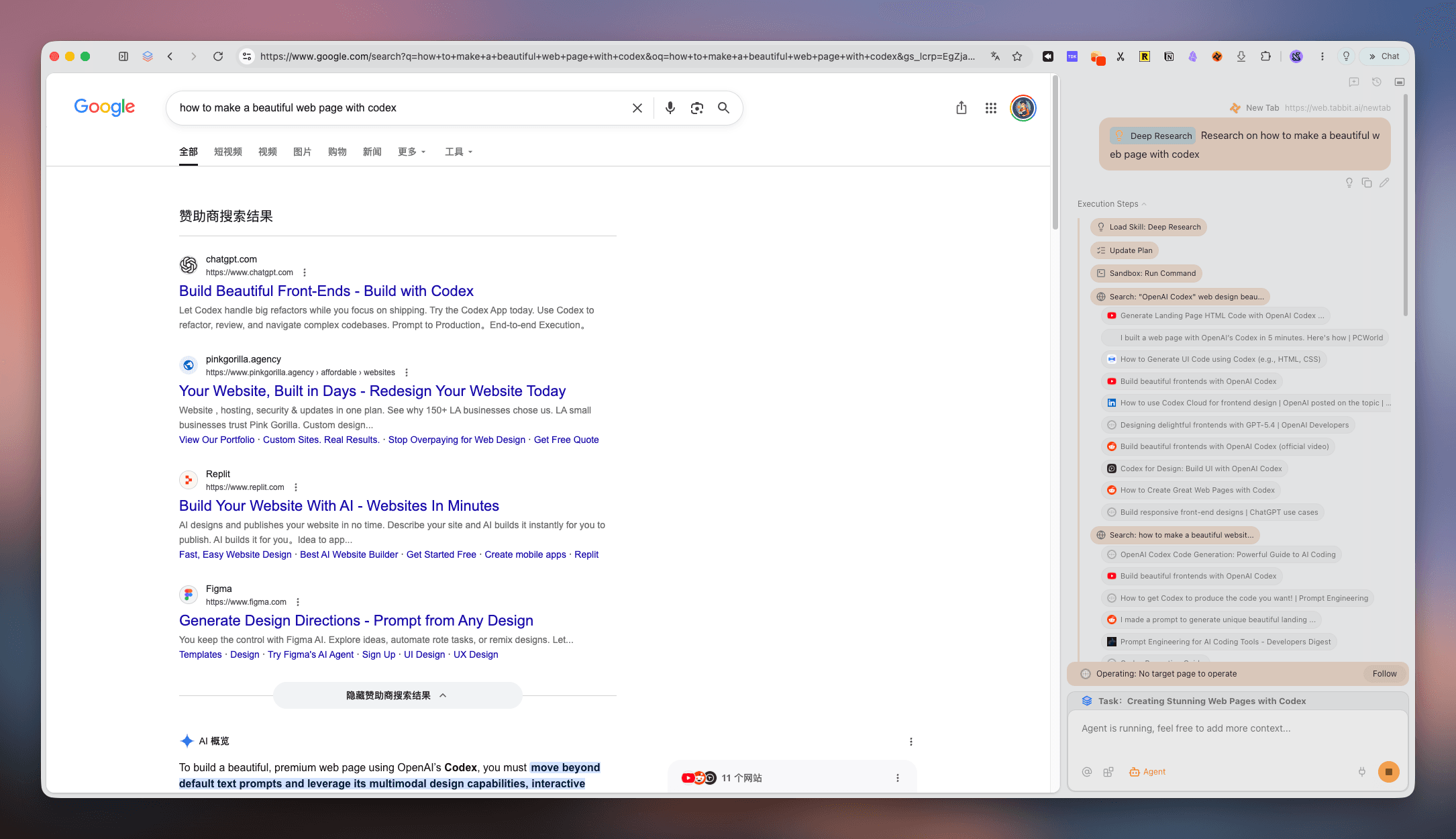
Tabbit Browser is an AI browser that connects AI to the pages, tabs, files, and screenshots you choose to share. Its Agent Mode can run a Deep Research workflow: search across sources, update its plan, and assemble a structured report while keeping the source pages visible beside the answer. If you are new to the product, start with what Tabbit Browser is.

Tabbit is most relevant here if you want multi-step research without buying into the entire Microsoft 365 ecosystem. It runs on macOS and Windows, supports multiple AI models side by side, and lets you reference open tabs, tab groups, screenshots, bookmarks, and local files with @ mentions. Check the current Tabbit pricing overview and download options before choosing a plan.
There is a trade-off. Researcher can read your authorized Outlook emails, Teams chats, and SharePoint documents through Microsoft Graph. Tabbit cannot reach into Microsoft 365 work data unless you deliberately share those pages or files as context. If your research depends on internal work content, Researcher is the more integrated choice. If your research is mostly web-based or personal-document based, Tabbit avoids the subscription jump and keeps the source pages next to the answer.
For more on how browser-level research works, see our guide to using an AI browser for research.
How the alternatives compare
If you are not upgrading to Microsoft 365 Premium, several free or lower-cost tools can replace the research workflow you used in Copilot:
| Tool | Strength | Best for | Limit to watch |
|---|---|---|---|
| Perplexity | Real-time web search with citations | Quick, source-grounded answers | Free tier has usage limits |
| Google Gemini | Deep Research mode + Google Search | General research with export to Docs | Model and feature availability varies by region |
| Gemini Notebook (NotebookLM) | Source-grounded notebooks + Audio Overviews | Study material and long documents | Requires assembling sources first |
| ChatGPT | Broad reasoning and structured output | Explaining complex topics | Free tier limits; citations need verification |
| Claude | Long-form analysis and connectors | Academic and technical reports | No live web search by default |
| Elicit | Academic literature search | Research papers and clinical trials | Narrower scope than general research |
| Tabbit Browser | Browser-level Agent Mode + multi-model chat | Research that ends in a deliverable while sources stay visible | Requires deliberate context sharing; no Microsoft Graph access |
This list draws on common recommendations, including Tom's Guide's roundup of free alternatives. For a broader comparison of AI browsers that include research features, see our AI browser comparison for 2026. The right choice depends on what your research needs most: live citations, work-data integration, control of source files, or execution inside the browser.
Final verdict: which path fits you
Stay with Microsoft 365 Premium if you are already invested in Office, Outlook, SharePoint, and Teams, and your research benefits from combining public web sources with internal work data.
Use a free alternative if you only ran Deep Research occasionally and want a simple, standalone research tool. Perplexity, Gemini, and ChatGPT cover most casual use cases.
Try a browser-level AI browser if your research happens across many tabs and pages and you want the AI to act inside your browser rather than in a separate chat window. Tabbit Browser is built for that workflow. If you are comparing it against a conventional browser, see Tabbit vs Chrome.
Cloud AI features can change tiers or disappear. If you rely on a generative tool for important work, export the result to a durable format and keep the source material. A shareable link is still not a file you control.
FAQ
Does Copilot still have Deep Research?
No. Microsoft is retiring Deep Research from the consumer Copilot app on August 18, 2026. After that date, consumer Copilot users can no longer create new Deep Research reports. Microsoft 365 Premium and eligible business users can use the Researcher agent in Microsoft 365 Copilot instead.
What is replacing Copilot Deep Research?
Researcher, an agent inside Microsoft 365 Copilot, is Microsoft's replacement. It produces structured, source-cited reports and can combine web research with authorized Microsoft 365 work data. It is not identical to the old consumer Deep Research experience.
Is Researcher the same as Deep Research?
No. Researcher is built for Microsoft 365 subscribers and work environments, while Deep Research was a free consumer feature. Researcher can access Microsoft Graph, files, emails, and meetings you are authorized to see; Deep Research was primarily web-based.
How much does Researcher cost?
Researcher requires a Microsoft 365 Premium subscription or a qualifying Microsoft 365 business/enterprise Copilot add-on. Microsoft 365 Premium launched in the US at $19.99 per month as a bundle that includes Office apps, storage, security features, and advanced agents. Prices vary by region and plan.
What happens to my old Deep Research reports?
They are not deleted. Microsoft 365 Personal and Family subscribers can find previous reports in Copilot chat history. Premium subscribers can access them through Researcher. You can also open reports in Microsoft Word and save them locally.
Can I use Researcher for free?
No. Researcher is not available in the free Copilot tier. Microsoft is directing consumer users who want a free research tool toward alternatives such as Perplexity, Gemini, ChatGPT, or browser-level AI tools like Tabbit Browser.
What are the best free alternatives to Copilot Deep Research?
Perplexity, Google Gemini, ChatGPT, Gemini Notebook (NotebookLM), Claude, Elicit, and Google AI Mode are commonly mentioned free or freemium alternatives. Browser-level AI tools such as Tabbit Browser also let you run multi-step research across open tabs and web pages without a Microsoft 365 subscription.
Is Tabbit Browser a good alternative for deep research?
Tabbit Browser is a viable alternative if you want browser-level research without Microsoft 365. Its Agent Mode and Deep Research Skill can search across sources, build structured reports, and keep the source pages visible. It is best for public web and personal workflows, not for accessing enterprise Microsoft 365 data.