
Chrome does not offer a single blocklist that follows a personal user from desktop to phone. A Reddit discussion asks about permanently blocking a site (source). The right answer depends on where the rule should live.
Key takeaways
Desktop users usually need a Chrome extension.
Children’s devices should use Family Link or Screen Time.
DNS and routers cover a network, not every network path.
Tabbit organizes permitted research; it is not a blocker.
Options at a glance
| Layer | Scope | Limit |
|---|---|---|
| Extension | One browser profile | Can be disabled or bypassed |
| Family or Screen Time | A supervised device/account | Platform and region limits |
| DNS or router | Devices on one network | VPN and cellular fallback |
| Enterprise policy | Managed Chrome | Requires an administrator |
Desktop Chrome
Use the Chrome Web Store to find a reputable site-blocking extension. Review permissions, schedules, password options, and incognito behavior. Add only the domains you need and test the exact URL plus redirects. A rule in one profile does not cover another browser or a phone. See too many browser tabs for open-tab clutter.
Android and iPhone
For a supervised child account, read Google’s Family Link guide and its eligibility notes. On iPhone and iPad, follow Apple’s Screen Time guidance. Chrome displays the page; the operating system owns the device restriction.
DNS, router, hosts, and work devices
| Need | Start here | Check |
|---|---|---|
| Personal focus | Extension | Profile and schedule |
| Home Wi-Fi | Router or DNS | Guest network and cellular |
| One computer | Hosts file | Admin access |
| School or company | Chrome Enterprise policy | Policy source and scope |
The Chrome Enterprise documentation describes administrator controls and runtime host restrictions. It is not a consumer switch. A hosts rule affects one computer. DNS and routers cover more devices, but another network or VPN can change the result.
Organize the permitted work with Tabbit
After access is restricted, you may still have research tabs and duplicate sources. Tabbit Browser keeps the source page and AI context together.
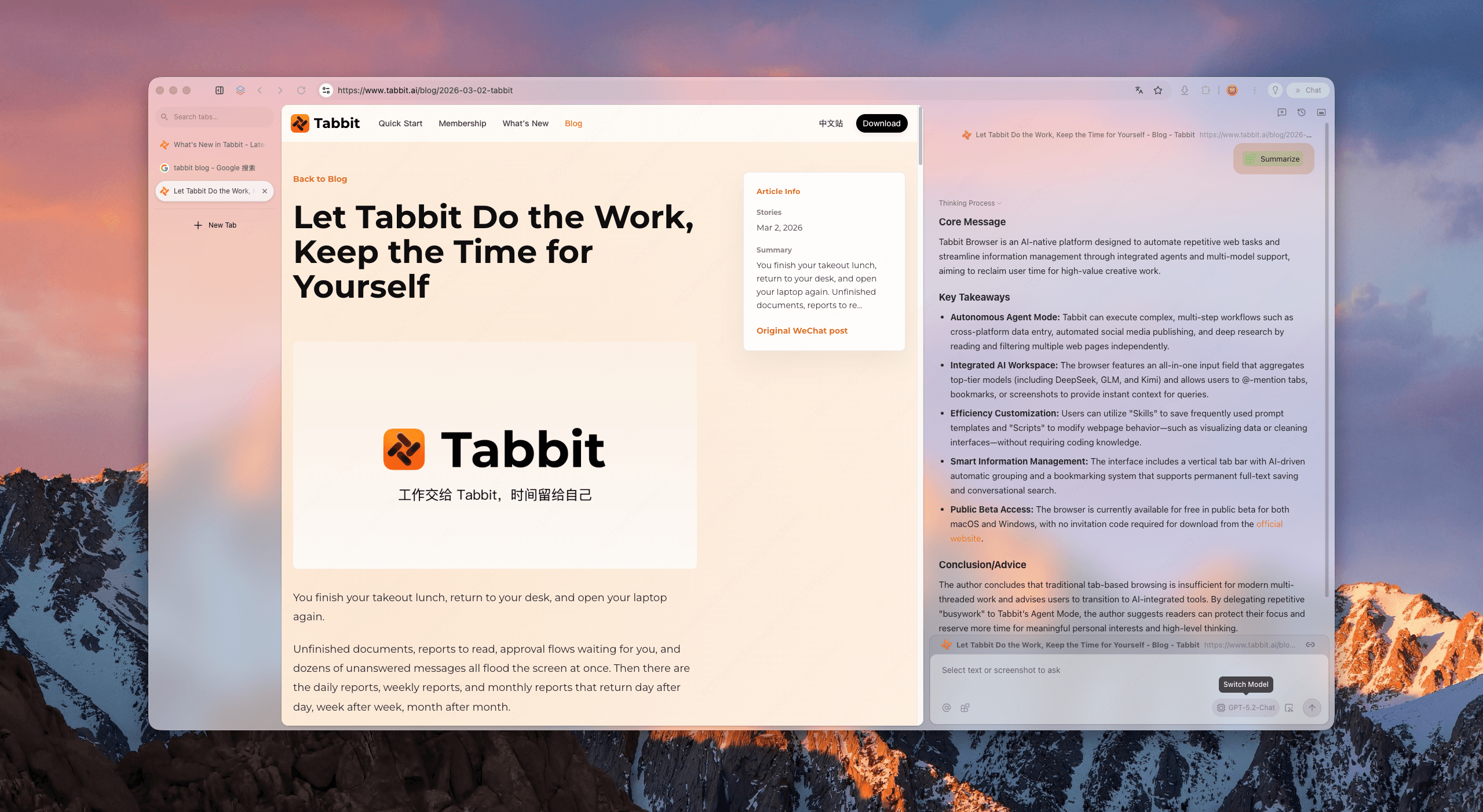
Apply the real block with the appropriate control. Then open the official instructions in Tabbit, use Chat with Page or Omnibox to capture the rule and rollback step, and group pages with Smart Tab Organization. Read about tab sleeping, browser backup, and sync problems.
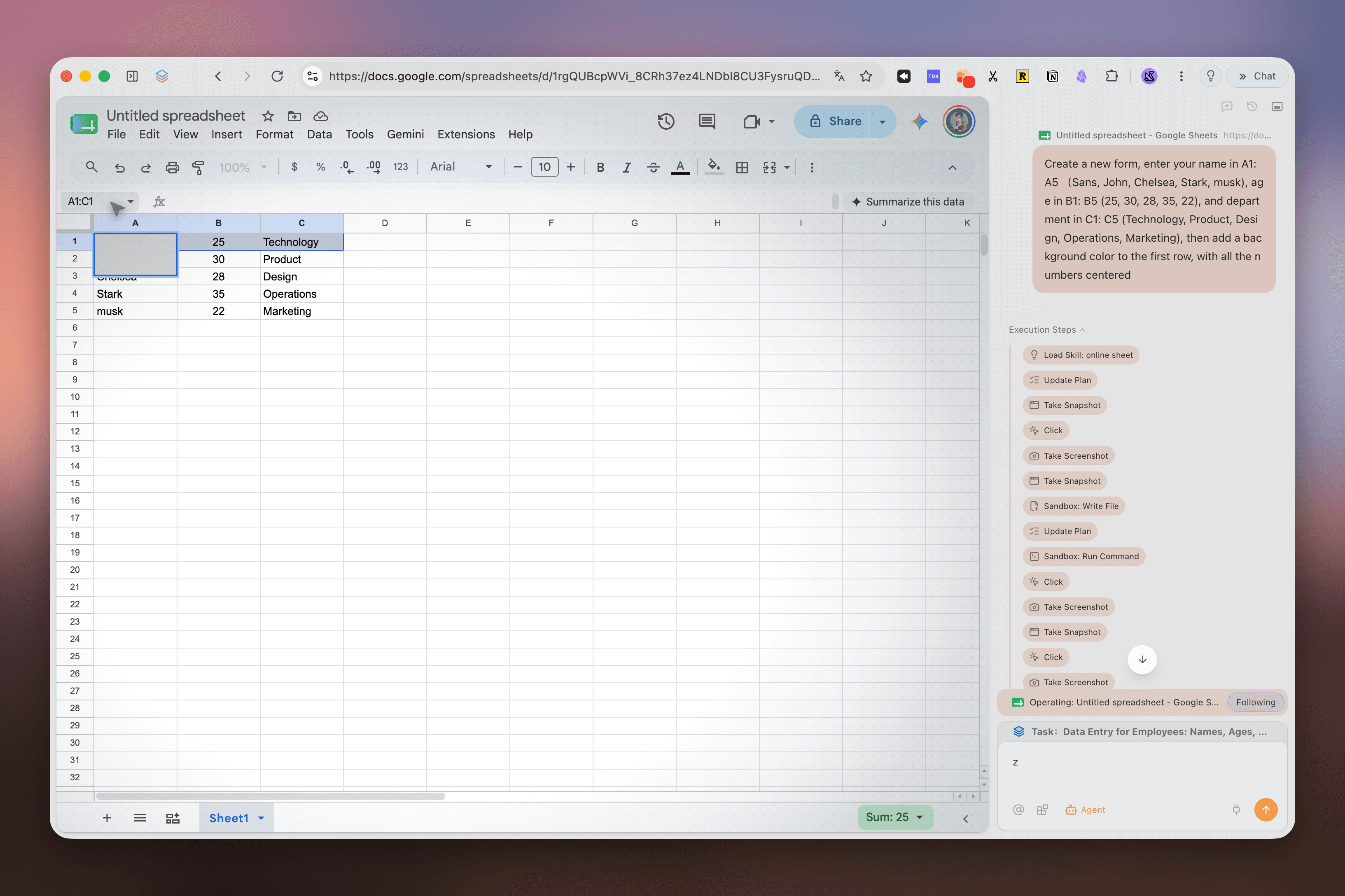
Tabbit can summarize policy pages and organize URLs, but it cannot enforce a block or replace browser automation, Tabbit vs Chrome, AI browser guidance, or agentic browser concepts. See alternative browsers if switching browsers is part of the plan.
FAQ
Scope matters more than “permanent”: identify the device owner, browser, account, and network before changing a rule.
Install Tabbit Browser to keep official instructions and rollback notes in one workspace. Use a dedicated control for blocking.

Perguntas frequentes
Does Chrome have a universal website blocklist?
Chrome does not provide one universal blocklist for every personal device. Choose a control according to the device and account.
Which method works on a desktop?
A reputable Chrome Web Store extension is the simplest personal desktop option. Check permissions.
Which method works for a child on Android?
Check Google Family Link eligibility and use its website controls for a supervised account.
Which method works on an iPhone?
Use Apple Screen Time and its web-content restrictions.
Is DNS permanent?
No. A DNS rule can be bypassed by another network, VPN, or private DNS.
Can Tabbit block websites?
No. Tabbit helps organize browser work; use a dedicated blocker.